
Last updated August 26, 2026
Free on-site gate assessment - hinges, posts, and your LiftMaster or Nice gate operator checked before anything is quoted
The assessment is free and the quote is the invoice.
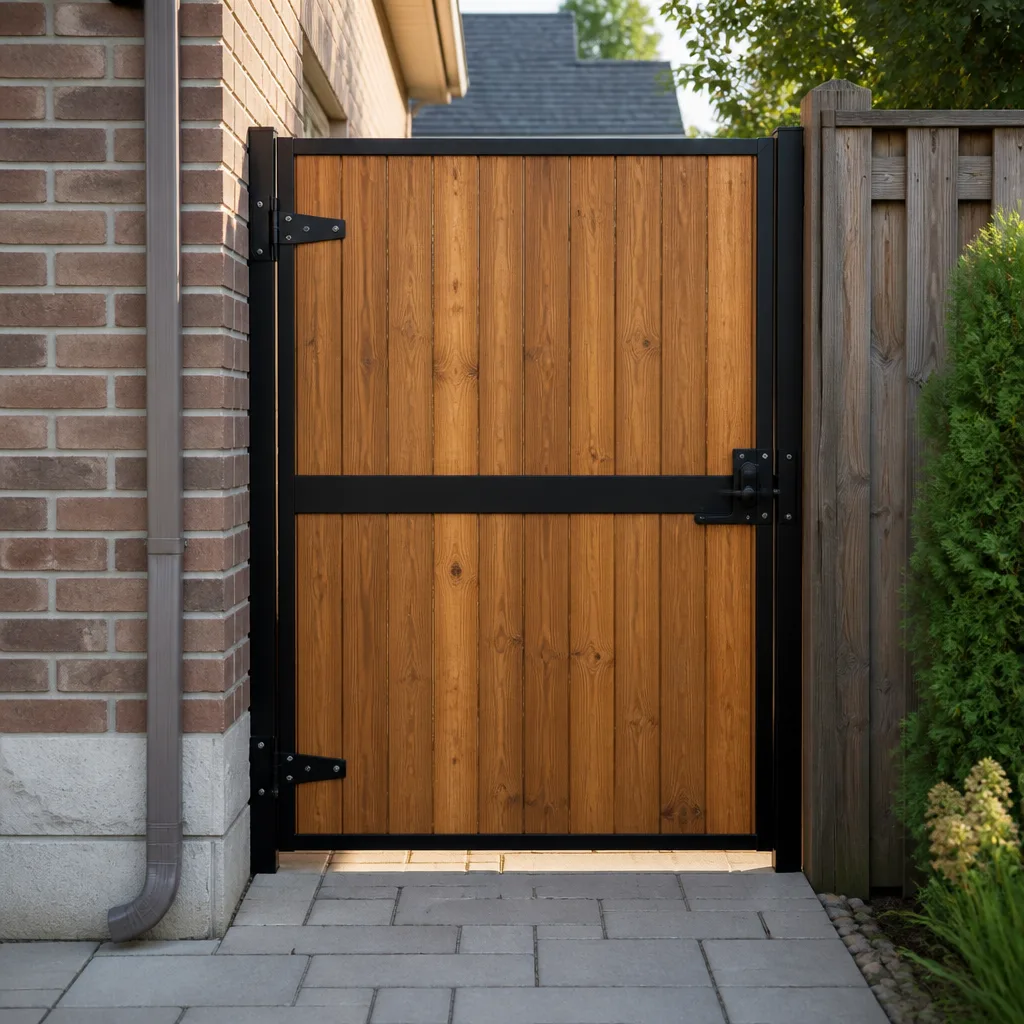
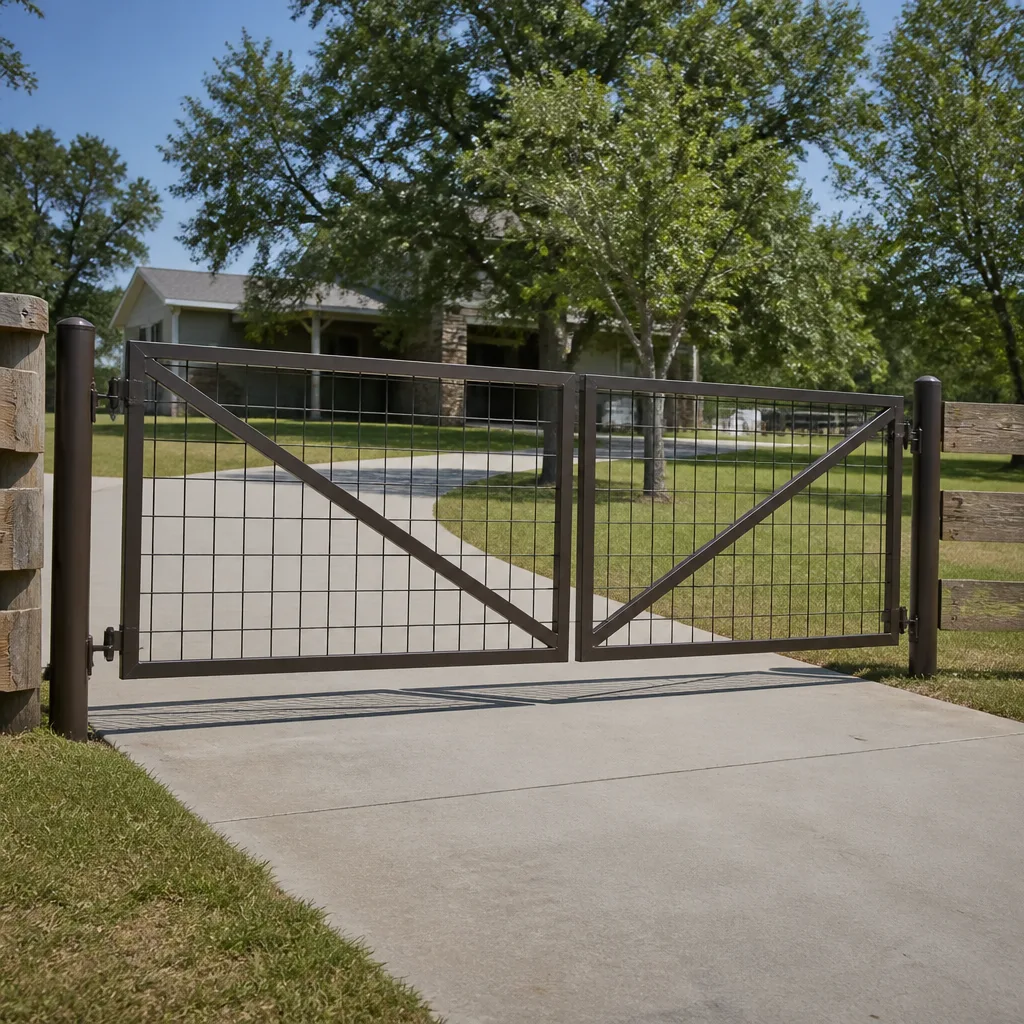
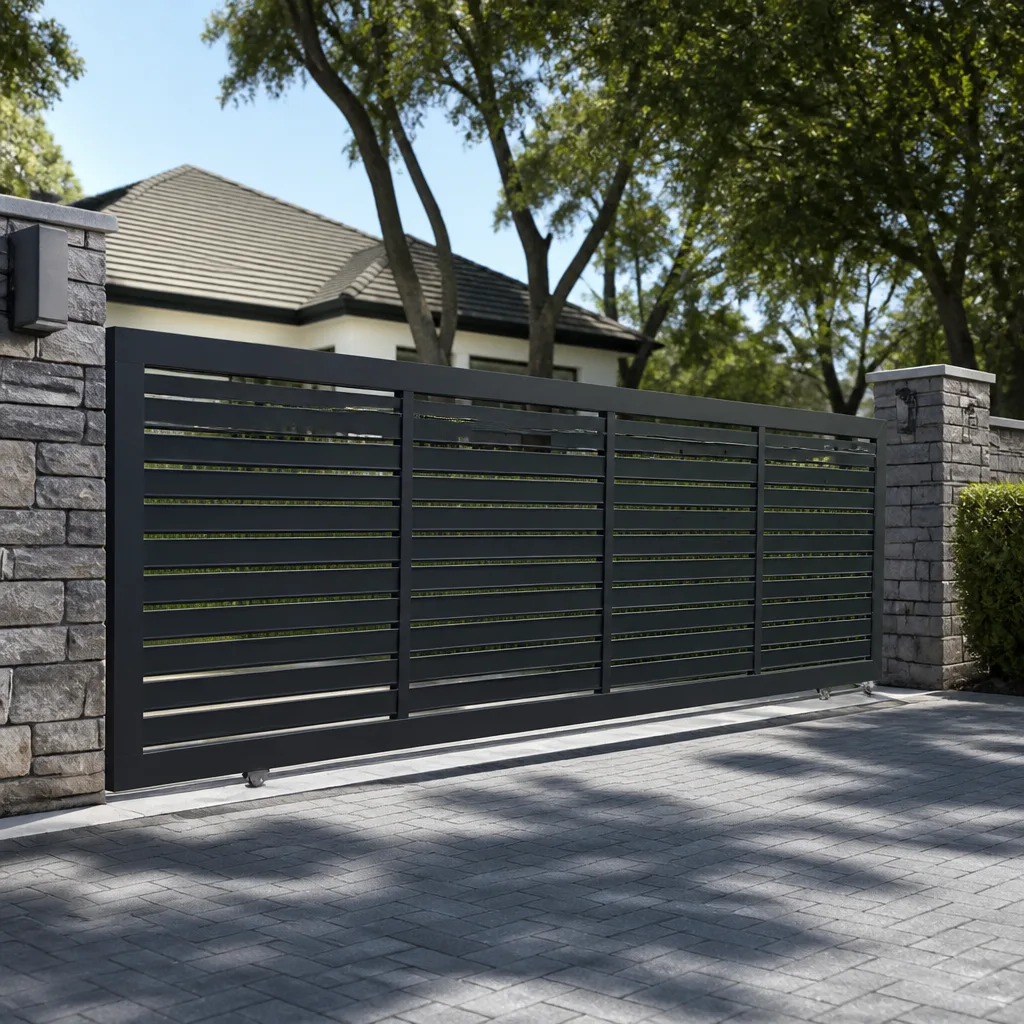
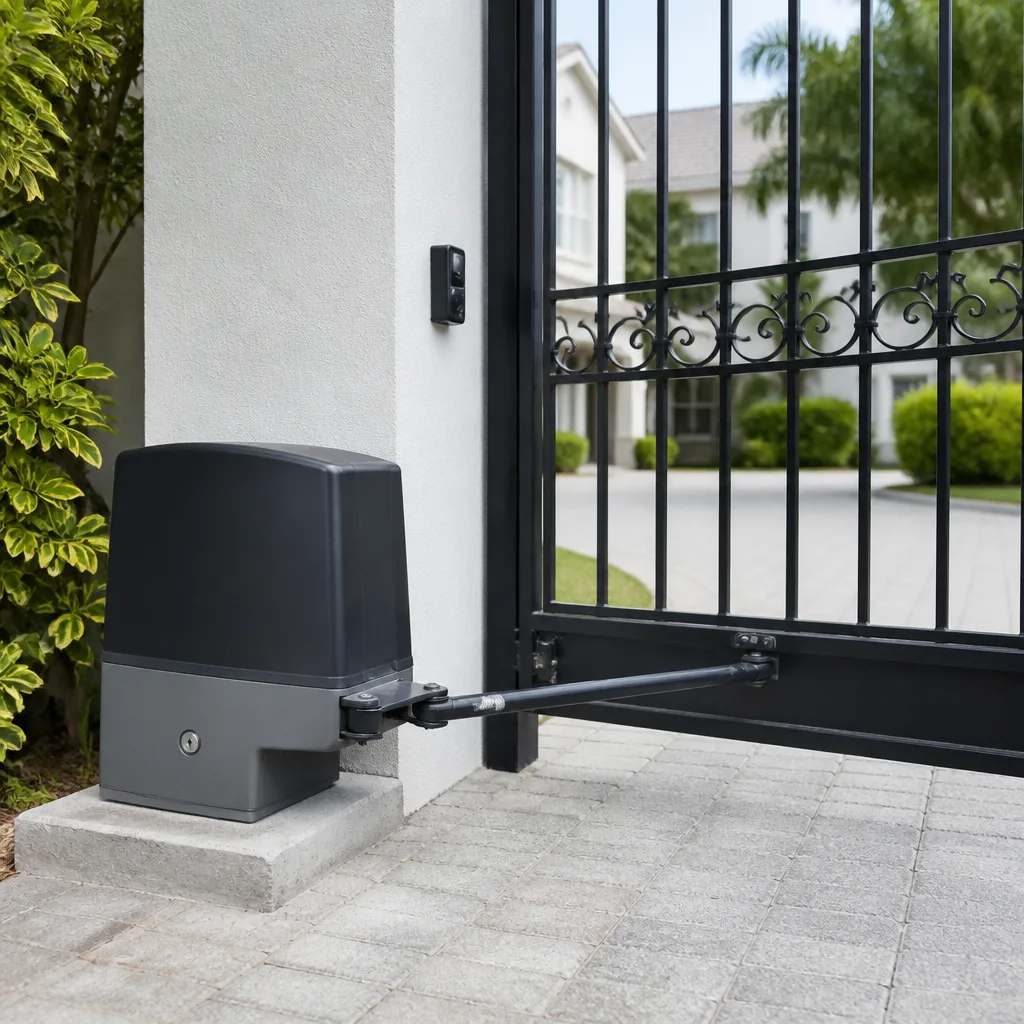
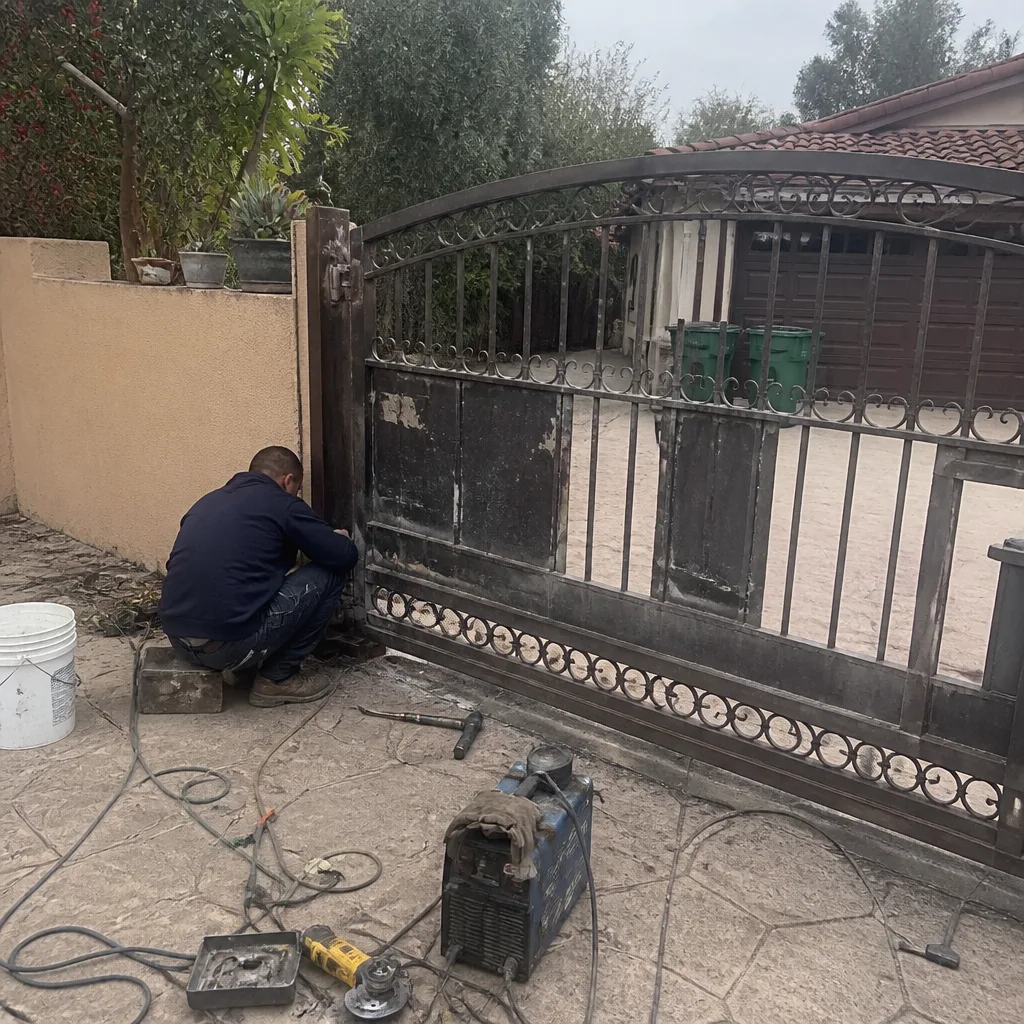 Before
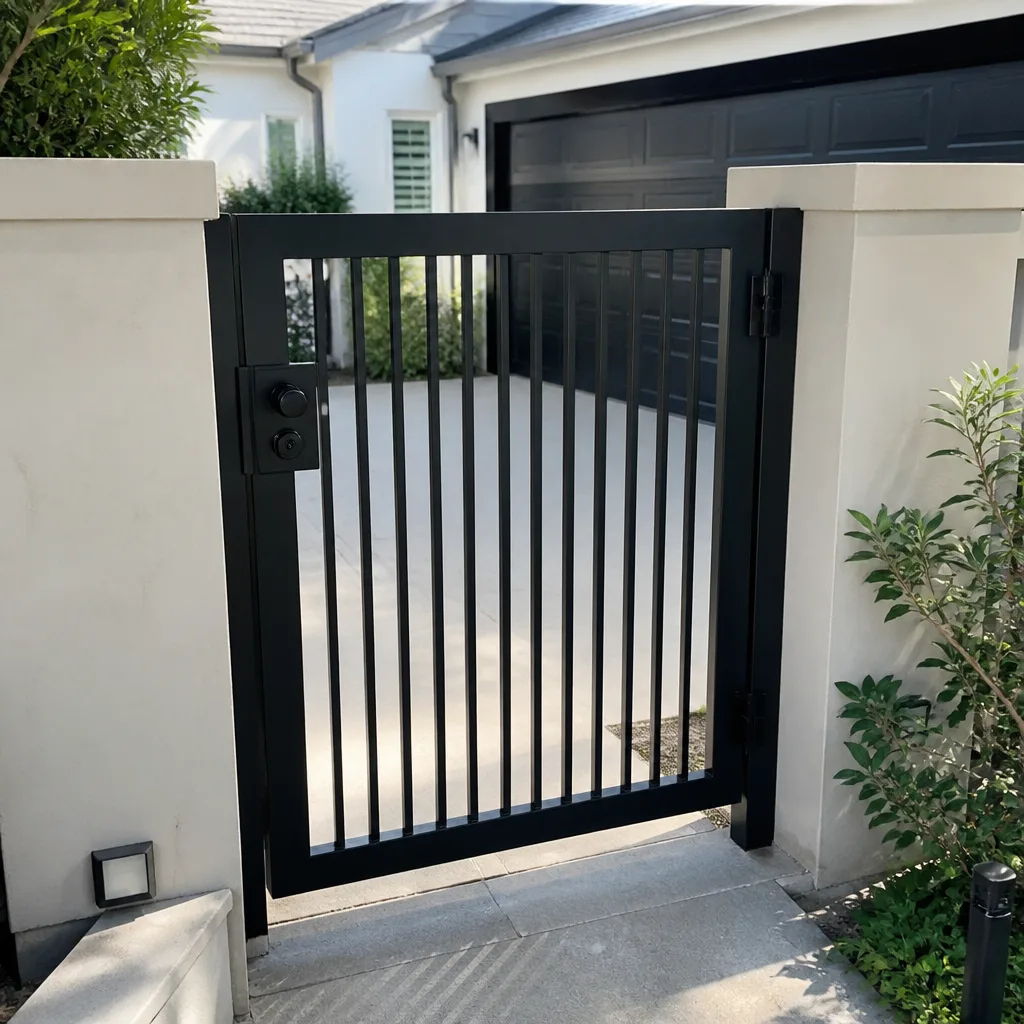 After
After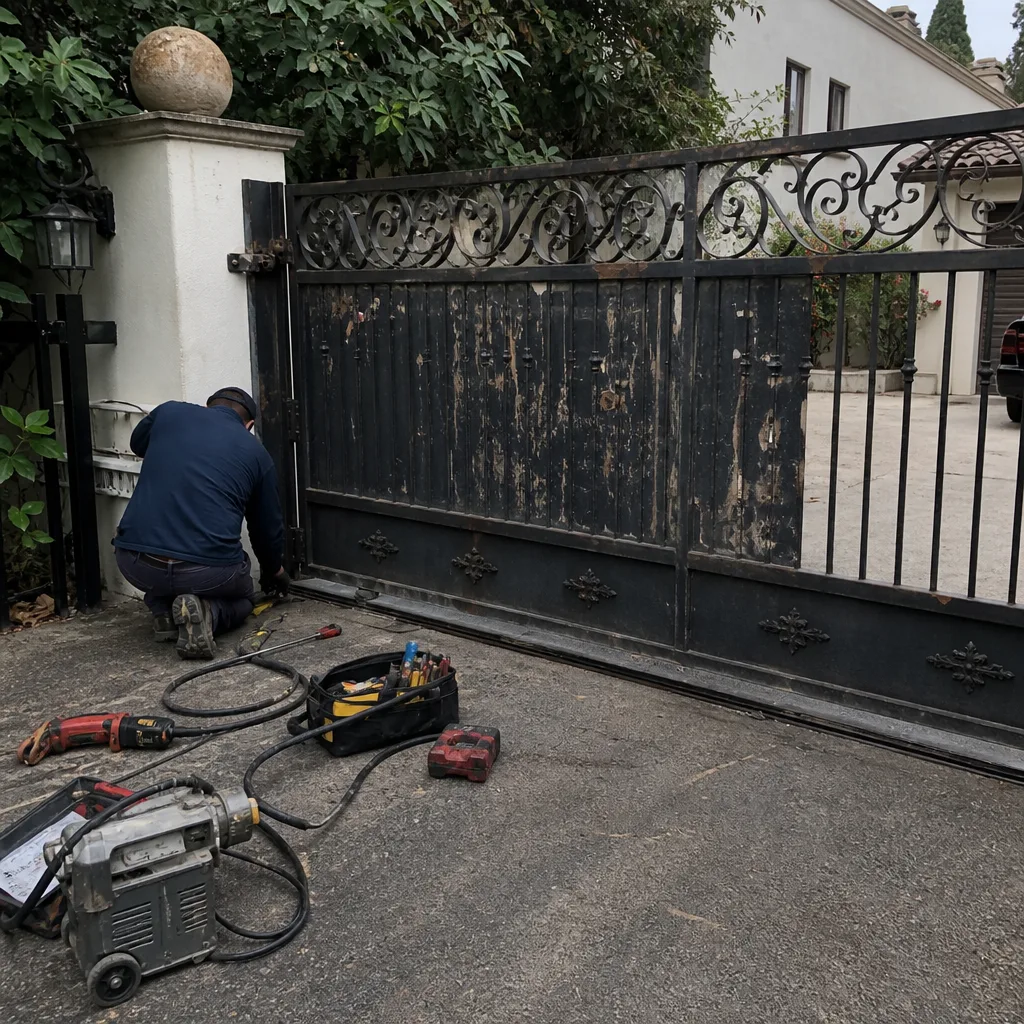 Before
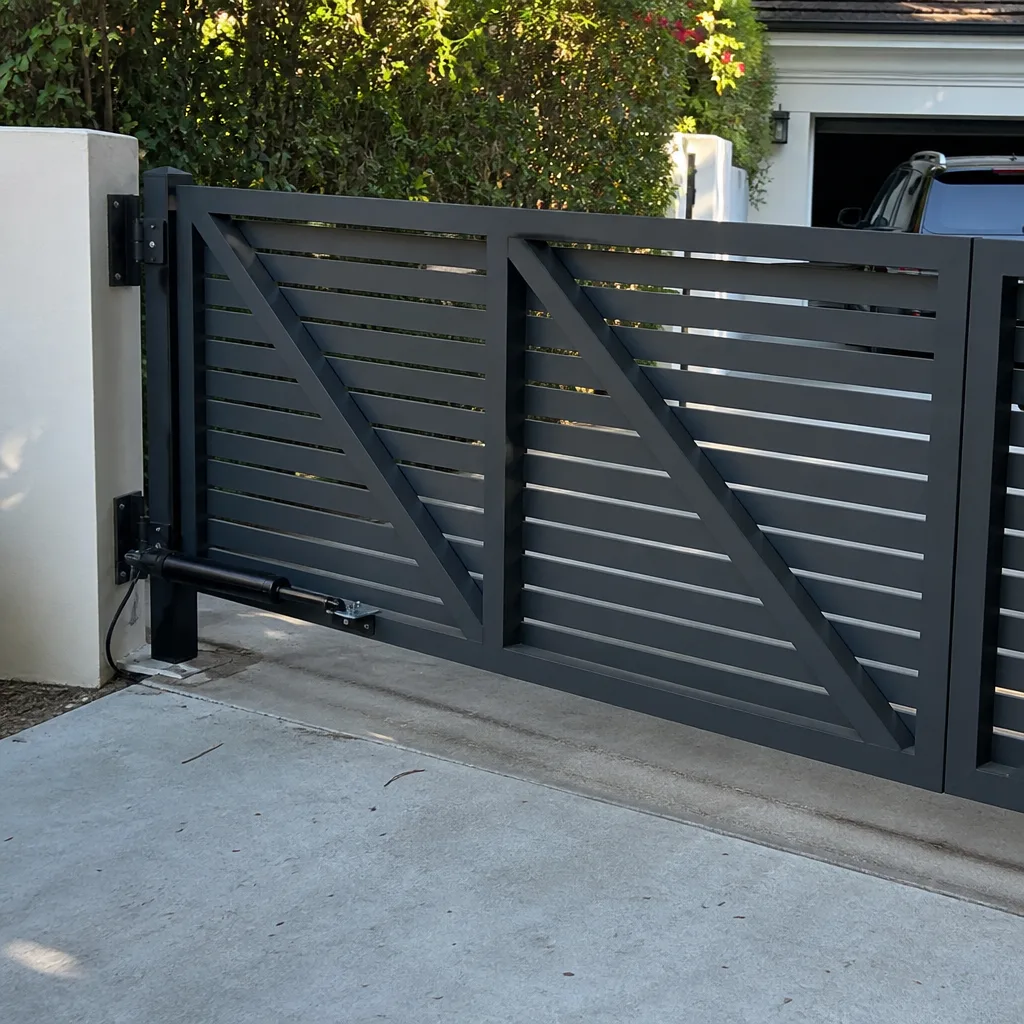 After
After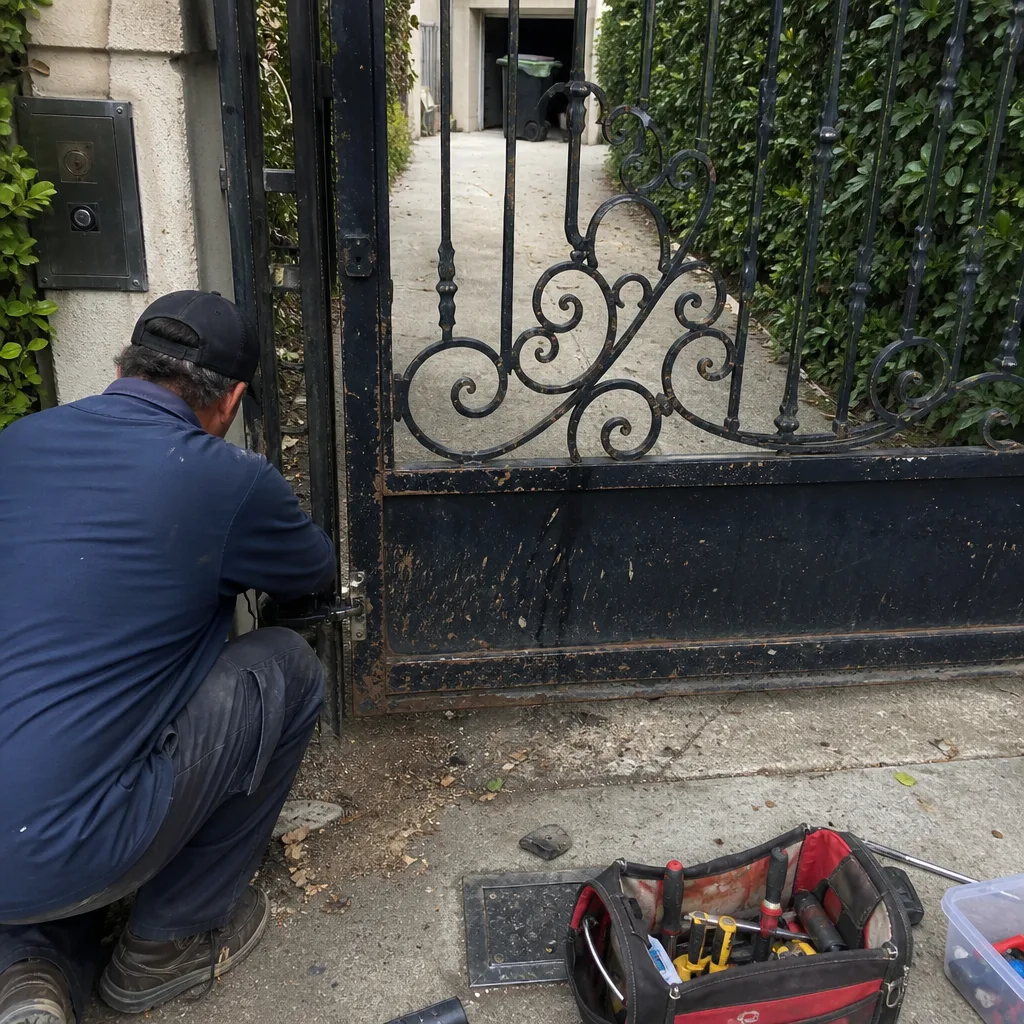 Before
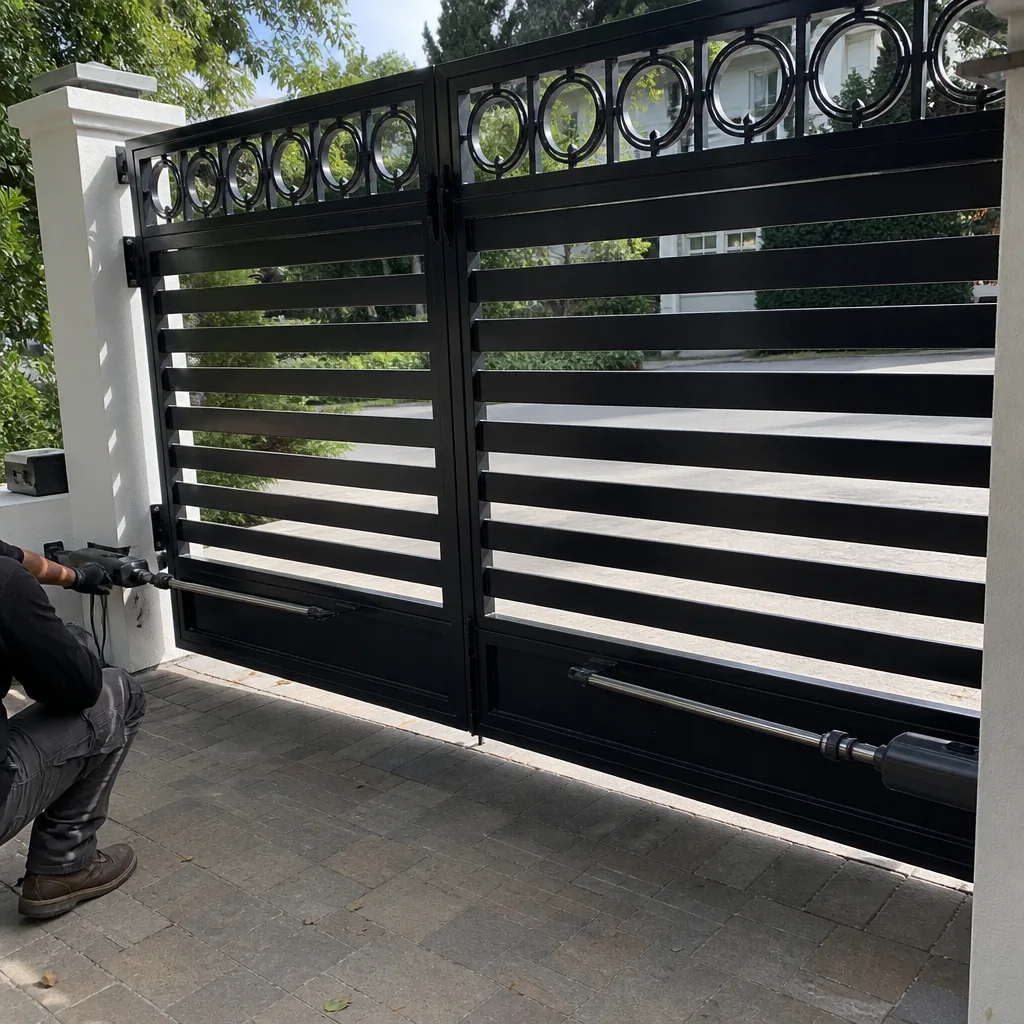 After
AfterSeasonal Gate Repair Care for Beverly Hills: Year-Round Homeowner’s Guide
The Santa Ana winds that sweep through Beverly Hills every October do more damage to gate hardware in two days than most gates see in the other eleven months combined. A sustained 40-mile-per-hour gust loads your gate like a sail, working every hinge, weld, and limit switch until something gives. And almost nobody prepares for it, because most homeowners only think about their gate when it refuses to open. This guide walks through what actually happens to a Beverly Hills gate across the full year, when to look, what to check, and when to pick up the phone. For The Complete Guide to Gate Repair in Beverly Hills, see our dedicated resource. You’ll learn the four real stress periods, not the four seasons, and what a twenty-minute quarterly routine looks like for a homeowner with one gate and a busy week.
Quick Answer
Beverly Hills gates face four recurring stress periods each year: October Santa Ana winds, winter rains on hillside posts, late-spring heat on batteries and photocells, and summer sun on black operator enclosures. A twenty-minute seasonal check four times a year catches most failures before they strand you outside your own driveway. For anything beyond tightening and cleaning, our Gate Repair services can send a specialist who welds on site to fix it in your driveway for less than the cost of a replacement panel.
Table of Contents
- October Santa Ana Winds: The Season Nobody Plans For
- Winter Rain and the Hillside Post Problem
- Late Spring: Batteries and Photocells Before the Heat
- Summer Heat and the Black Enclosure Problem
- The Twenty-Minute Quarterly Checklist
- Common Mistakes to Avoid
- When to Call a Professional
- Frequently Asked Questions
October Santa Ana Winds: The Season Nobody Plans For
Every October, when the humidity drops into single digits and the wind shifts to the northeast, we start getting the same calls from Beverly Hills homeowners: the gate worked fine yesterday, now it stops halfway. The Santa Anas do more than blow leaves. They put a live, repeated side load on the gate panel, and every seam, hinge, and weld flexes under it. Dust and grit get driven into roller tracks and chain slides. Limit switches, which tell the opener where to stop, get knocked out of position because the gate physically slams against the stops differently when the wind is pushing it. In our experience, October is the busiest month for Gate Motor & Opener in Beverly Hills calls that start with “it worked yesterday.”
The Two-Hour Prep Routine That Prevents Most Santa Ana Damage
You don’t need a maintenance crew. You need two hours, a socket set, a can of dry lubricant, and a willingness to walk the length of your gate slowly. Here is the routine we recommend every October, before the first big wind event:
- Walk the gate closed and watch the top and bottom gaps. If the latch-side gap is wider at the top than the bottom, the hinge post has moved. Wind didn’t do that; it just revealed it.
- Grab each hinge bracket and try to wiggle it by hand. Any movement you can feel with your hand is movement the wind will amplify. Tighten every bolt to snug, then a quarter turn more.
- Run a dry silicone or PTFE lubricant along the roller track, chain, and pivot points. Do not use grease. Grease holds dust, and Santa Ana dust is fine enough to turn grease into grinding paste in about three days.
- Check the limit switch settings by opening the gate fully and watching where it stops. It should stop with a half-inch cushion before the physical stop. If it slams, the switch is out of adjustment and the wind will finish the job.
- Walk the weld seams on the gate frame, especially the bottom corners and where the pickets meet the rails. Santa Ana wind causes repeated flexing that cracks old welds. A hairline crack today is a sagging panel tomorrow.
- Clear all debris from the track and the opener’s chain or belt path. One palm frond wedged in the track during a wind gust is enough to bind the gate and burn out an operator motor.
We’ve fixed gates in Beverly Hills where the October wind finished a hinge post that had been loose since March. The wind gets the blame, but the real problem was eight months of neglect. Two hours in October is the difference between a gate that shrugs off the Santa Anas and one that ends up on its back in the driveway.
Winter Rain and the Hillside Post Problem
Beverly Hills may not get a Midwest winter, but it gets something worse for gates: episodic saturation. The hillside neighborhoods above Sunset, the flats around the Golden Triangle, the canyon-adjacent streets north of Sunset Boulevard, all see the same pattern. A dry stretch, then two or three inches of rain in a day, then dry again. The soil around a gate post expands and contracts with each cycle, and over time the post starts to lean. A gate sags in the hinge post, not in the middle, and that is where we start. On a hillside, the downhill post always breaks down faster because it handles the entire cantilevered weight of the gate every time it opens.
The One Drainage Adjustment That Stops the Rot
The fix most homeowners need in Beverly Hills is not a new gate. It’s a twelve-dollar downspout extension. Here is the problem we see repeatedly: the gate post is set in concrete at the base, but a roof downspout discharges three feet away, and every rain event funnels water directly into the soil around the post footing. The soil softens, the post leans, the gate drags, and the opener binds. Here is the adjustment:
- Find the closest downspout to your gate post. If the discharge lands within six feet of the post, you’ve found the likely culprit.
- Extend the downspout so the discharge is at least ten feet from the post, moving water downslope and away from the gate entirely.
- If the post already leans, check the gap between the gate and the latch post at the top versus the bottom. A difference of more than a quarter inch means the post has shifted in the wet soil.
- For a leaning post that is still solid in its footing, a gate specialist can often straighten and re-bed it without replacing the post or the gate panel.
Winter is also when exposed welds start to show rust, especially on gates within a mile of the coast where the marine layer adds salt to the moisture. A wire brush and a coat of cold galvanizing spray on any exposed weld before the rain sets in will add years to the gate frame. This is not a cosmetic issue. Rust expands as it forms, and rust at a weld joint is pulling the joint apart from the inside. We’ve had to weld new bottom rails into Gate Repair in Beverly Hills jobs where a five-minute brush-and-spray would have prevented it entirely.
Late Spring: Batteries and Photocells Before the Heat
By late April in Beverly Hills, the sun is already strong enough to start degrading gate operator batteries. Battery-backed openers, which most hillside homes have, lose capacity faster once ambient temperatures climb. The battery says it has a charge, but the first time the gate opens without line power, it dies halfway. Late spring is the right time to service batteries and photocells, because you’re fixing a problem before the summer heat makes it worse and before a July brownout forces the battery to do real work for the first time.
What to Check in a Late-Spring Service
- Battery voltage under load. A battery can read 12 volts sitting on a meter and drop to 6 volts the moment the opener motor engages. That battery is done, even if the sticker says it should have two more years.
- Photocell alignment. The safety photocells at the base of the gate are two small boxes that shoot an invisible beam across the opening. Direct spring sunlight hitting the face of either photocell can wash out the beam, making the gate think something is blocking it. The gate refuses to close, and you stand there holding the remote like it’s a bad battery. It’s not the remote.
- Photocell lens condition. Pollen, dust, and sprinkler overspray coat the lenses all spring. Wipe them with a soft cloth and they’ll work again. Leave them coated and the gate will intermittently stop mid-close, which is the most common “phantom” gate problem we diagnose.
- Opener motor gear wear. Listen to the opener run. A smooth hum is good. A growl or chatter means the main drive gear is chewing itself. Late spring, not August, is when you want to catch that noise.
If you have a Gate Installation in Beverly Hills that’s between five and eight years old and the original batteries are still in it, plan on replacing them this season. Heat cycles are a slower killer than cold ones, and a battery that was marginal in January will be unexpectedly dead by August. That’s the pattern we see every year.
Summer Heat and the Black Enclosure Problem
This is a Beverly Hills-specific problem that national gate guides never mention: the black powder-coated operator enclosure baking in direct sun. Many gate opener control boxes are black, which looks clean and discreet, but black absorbs solar radiation. In July, a black enclosure in full sun on the south side of a Beverly Hills property can reach internal temperatures of 150 to 160 degrees even though the air temperature is only 88. Circuit boards, capacitors, and electrolytic components are rated for a maximum operating temperature, usually 85 degrees Celsius, which is about 185 Fahrenheit. The enclosure interior does not reach that, but it does not need to. Components degrade faster at sustained high heat, and a board that lived at 150 degrees for three Julys is a board that will fail in year four or five, not year ten.
Early Signs Your Enclosure Is Overheating
- Intermittent behavior on hot afternoons only. The gate works fine in the morning and at night but acts up between 2 p.m. and 5 p.m. That is a thermal failure writing its signature.
- Scorching to the touch. Place a bare hand on the enclosure at 3 p.m. in July. If you cannot hold it there for five seconds, the board inside has been cooking all summer.
- Distorted or faded labels and codes. Paper labels inside the enclosure will yellow, curl, or become unreadable after sustained heat exposure. It is a visible statement of what the electronics have been enduring.
- Battery swelling. If you open the enclosure and the backup battery looks puffed or swollen, the heat has already done damage. Do not handle a swollen battery with bare hands; have it replaced professionally.
The fix is often simpler than replacing the board. We add a ventilated louver or a reflective heat shield to the enclosure, sometimes a small thermostatically controlled fan on the worst full-sun installations. It’s a modification that costs very little compared to a new control board, and it can double the life of the operator. We see this constantly with Ghost Controls and Mighty Mule openers installed on the south-facing side of Beverly Hills properties with no shade cover. The product is fine; the installation location is the problem.
The Twenty-Minute Quarterly Checklist
This is not a maintenance crew checklist. This is a one-gate, twenty-minute routine for a homeowner who wants to know their gate is healthy without spending a Saturday on it. Do this four times a year, ideally in late September, early January, late April, and mid-July, and you will catch nearly every problem before it strands you.
The Four Times a Year, Twenty Minutes, One Gate Routine
- Watch one full open and close cycle. Stand where you can see the top gap, bottom gap, and latch. Watch for hesitation, stutter, or a slam at the end of either stroke. If the gate shakes as it stops, note it.
- Hand-wiggle the gate at half-open. Grab the latch-side end and push the panel side to side. Any movement means a hinge or post issue, not a panel issue. A solid gate should resist you.
- Inspect the track and wheels. Run a finger along the track. Remove pebbles, palm fronds, and dirt. Look at the wheels themselves; flat spots or wobble mean new wheels now, track damage later.
- Put your hand on the operator enclosure. Uncomfortably hot to hold? You need ventilation or shielding. Warm but not hot is normal in the summer.
- Test the safety reverse. Place an object in the path of the closing gate; an orange cone or a piece of wood. The gate should reverse before touching it. If it does not reverse, stop using automatic close until a professional looks at it. This is the one task on the list that involves real safety. A gate that does not reverse can injure a child, a pet, or an adult, and no amount of convenience is worth that.
- Wipe the photocell lenses. Twenty seconds, a soft cloth, no chemicals. Do not skip this; it is the cheapest repair prevention on this entire page.
- Note anything different. A new squeak, a slight lean, a door that scrapes. Write it down in the notes app on your phone with the date. When you call us in Beverly Hills, that note is worth more than a guess.
If all of that takes you more than twenty minutes, your gate is telling you something. Call. It is better to catch a loose hinge post now than to be standing in the driveway at 7 a.m. with the gate full-open and the opener smoking. That is the call we answer every day, and we are a live person on the line 24/7, not a voicemail or a call center three states away. Browse more guides & resources for year-round gate care tips.
Common Mistakes to Avoid
- Greasing the track. Grease is the enemy of every roller track. It attracts dust, and in Beverly Hills the dust is fine enough to turn grease into a grinding compound inside a week. Use a dry lubricant or a PTFE spray, never a grease gun.
- Fixing the panel and ignoring the post. A Beverly Hills homeowner will spend four hundred dollars on a new gate panel to fix a sag, only to have the new panel sag too. The panel was never the problem. The hinge post was. Fix the panel without the post and you’ll fix it twice.
- Ignoring the downspout relationship. The downspout that discharges near the gate post is not an unrelated plumbing detail. It is the single most common cause of post lean on hillside Beverly Hills properties. Extend it and your gate will thank you for a decade.
- Testing the safety reverse by waving a hand in front of the photocell. That does not test the reverse; it tests the photocell. Two different systems. Most homeowners think they tested the reverse and didn’t. Use an actual object in the path.
- Waiting for a failure to service the opener. Openers are mechanical and electrical systems that wear on a schedule, not on demand. The time to service the motor gear is before it chews itself, not after the gate stops moving at the worst possible moment.
- Spraying WD-40 on hinges and pivots. WD-40 is a water displacer, not a lasting lubricant. It cleans and then evaporates, leaving the metal dry and unprotected. Use a proper dry lubricant or a light machine oil on pivot points.
- Ignoring a door that starts to sag in October because it was “fine in June.” A sag that appears in Santa Ana season was already there; the wind just exposed it. A quarter-inch gap at the latch post in October is a full inch by February, and the repair cost climbs with every passing week.
When to Call a Professional
Some gate work is genuinely safe for a homeowner; tightening a bolt, wiping a lens, extending a downspout. But any of these situations in Beverly Hills warrants a phone call: the gate is on its back, the opener motor makes a grinding noise, a weld has cracked on the frame, the gate does not reverse on a tested obstruction, or you have a black enclosure in full sun and the board is doing things at 3 p.m. that it does not do at 9 a.m. Safety systems, high-tension hardware, and circuit boards are not the place for trial and error. And when you call, ask whether the person on the other end welds on site. That one question tells you whether you are talking to a repair shop or a parts-swapper. Gatewood Fence & Gate offers free estimates in Beverly Hills; call (559) 844-6989 and a live person answers, day or night.
Frequently Asked Questions
A seasonal inspection and tune-up in Beverly Hills typically runs between $150 and $300 depending on the gate size, opener age, and whether any parts need replacement, with the price quoted and agreed before any work starts. Routine maintenance is far cheaper than an emergency opener replacement, which can exceed $800. Call (559) 844-6989 for a free estimate; we stand behind the number we give you and the work we do.
Yes, we answer the phone live around the clock and work same-day and 24/7 emergency calls for gate failures across Beverly Hills, because a gate stuck open or closed is not a scheduling issue, it is a real problem. The name on the shop is the person who shows up, which means you are never waiting on a national dispatch queue to decide whether you matter. Call (559) 844-6989.
Usually not, and a leaning post in Beverly Hills is very often fixable by straightening and re-bedding the existing post in its footing rather than replacing the gate or the post, especially when a downspout is redirecting water into the soil. See DIY vs Professional Gate Repair: The Beverly Hills Homeowner’s Decision Guide to know when to call us. We repair gates in the driveway rather than hauling them off, which saves the cost of a new panel and keeps your gate looking like the one you chose. Get a free second opinion from us on any written estimate you already have.
We are certified to service nine major gate brands, including LiftMaster, FAAC, BFT, Linear, Viking, Ghost Controls, DoorKing, Elite, and Mighty Mule, which covers almost every opener installed across Beverly Hills homes from the flats to the hills. If your opener is not on that list, call anyway; our on-site welding and repair-first approach applies to just about any gate hardware.
Twice a year is the minimum, and the best schedule is once in late September for Santa Ana readiness and once in late April for pre-heat battery and photocell service. If your gate is exposed to direct summer sun on a black enclosure or sits on a hillside with active soil movement, bump that to four times a year using the twenty-minute checklist. We offer a free second opinion on any written estimate, so a second set of eyes in October costs you nothing.
Yes, we install and repair gates across Beverly Hills, including full new gate fabrication and Gate Installation in Beverly Hills, with the same repair-first philosophy: if we can weld the existing gate and keep it in your driveway, we do that before we ever order a new panel. Every job, repair or install, carries the 90-Day Done Right Promise in writing.
The Bottom Line
Beverly Hills gates do not wear on a calendar; they wear on a stress schedule. October Santa Ana winds, winter rains on the post footings, late-spring heat on batteries and photocells, and July sun on black enclosures. Four stress periods, four twenty-minute checks, and you will own a gate that opens when you need it and closes when you want it for as long as you own the property. The person who fixes your gate should weld on site, answer the phone as a live local human, and stand behind the work in writing. We have been doing exactly that since 2001, with a published address and license number anyone can look up. The name is on the shop, and the shop is down the road; that is the oldest accountability there is. Gatewood Fence & Gate home is a phone call away at (559) 844-6989.
Written by Hal Gatewood, Owner at Gatewood Fence & Gate, serving Beverly Hills since 2001.