
Last updated August 26, 2026
Free on-site gate assessment - hinges, posts, and your LiftMaster or Nice gate operator checked before anything is quoted
The assessment is free and the quote is the invoice.
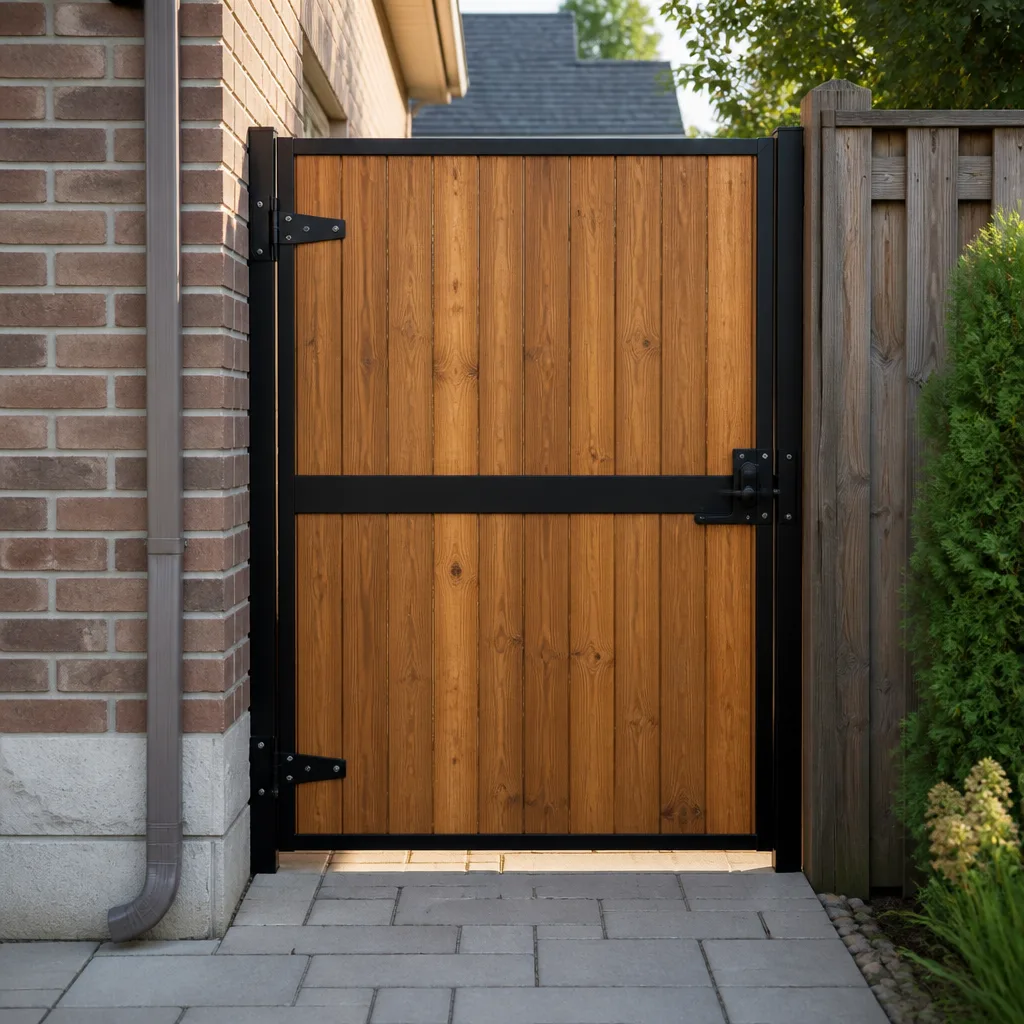
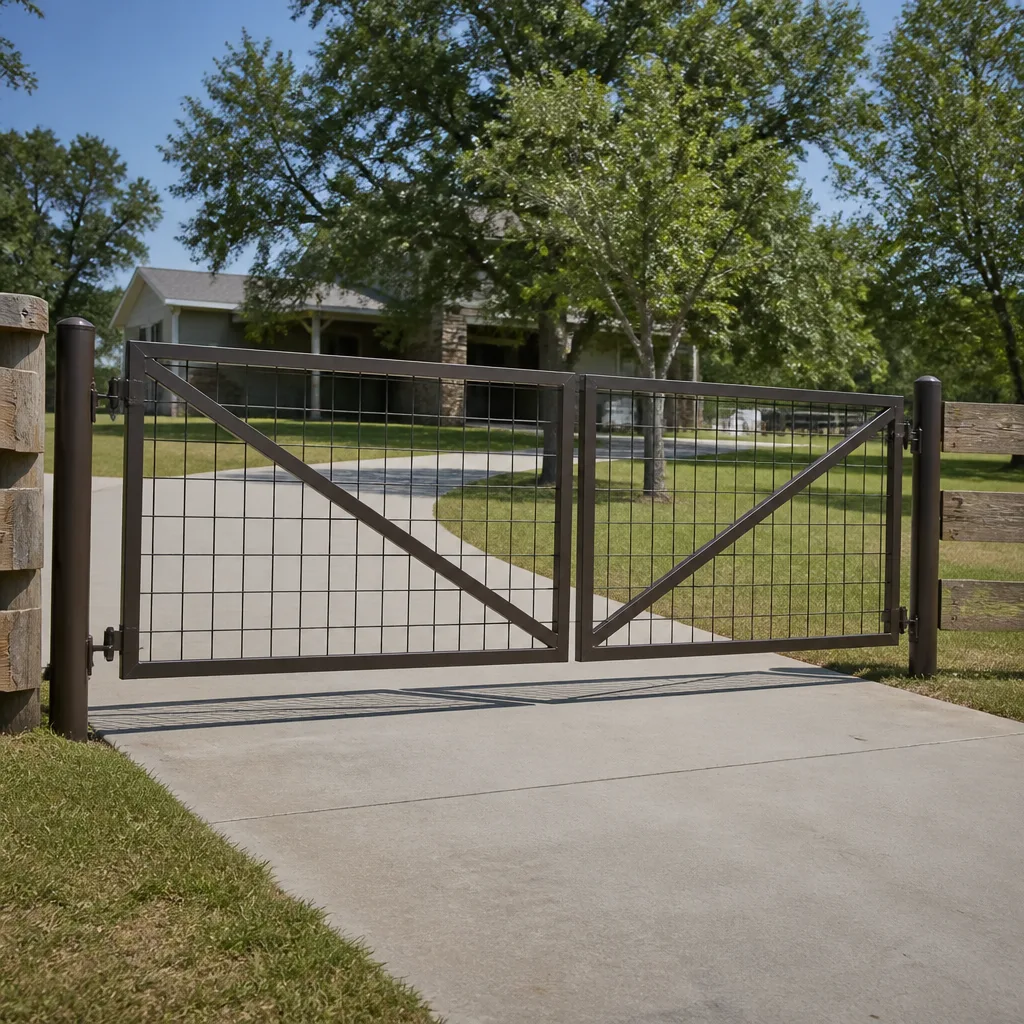
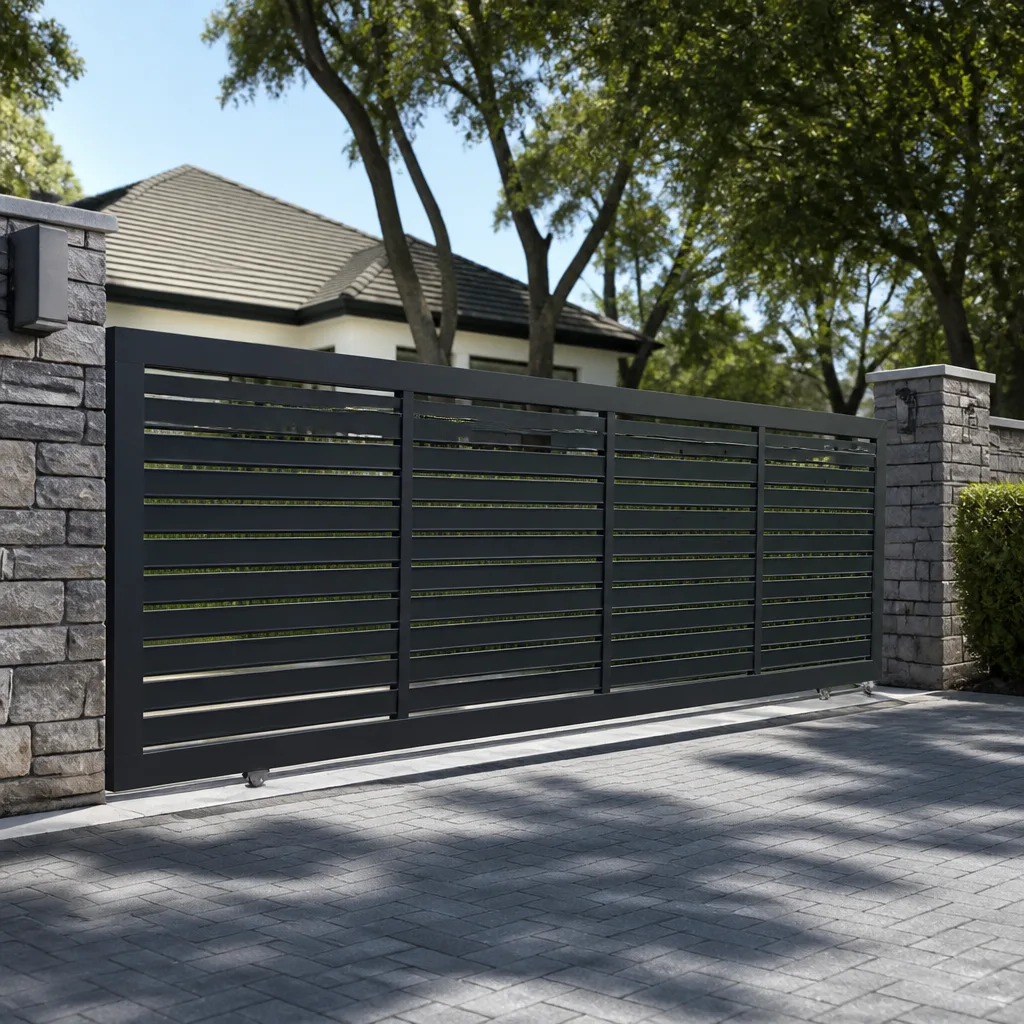
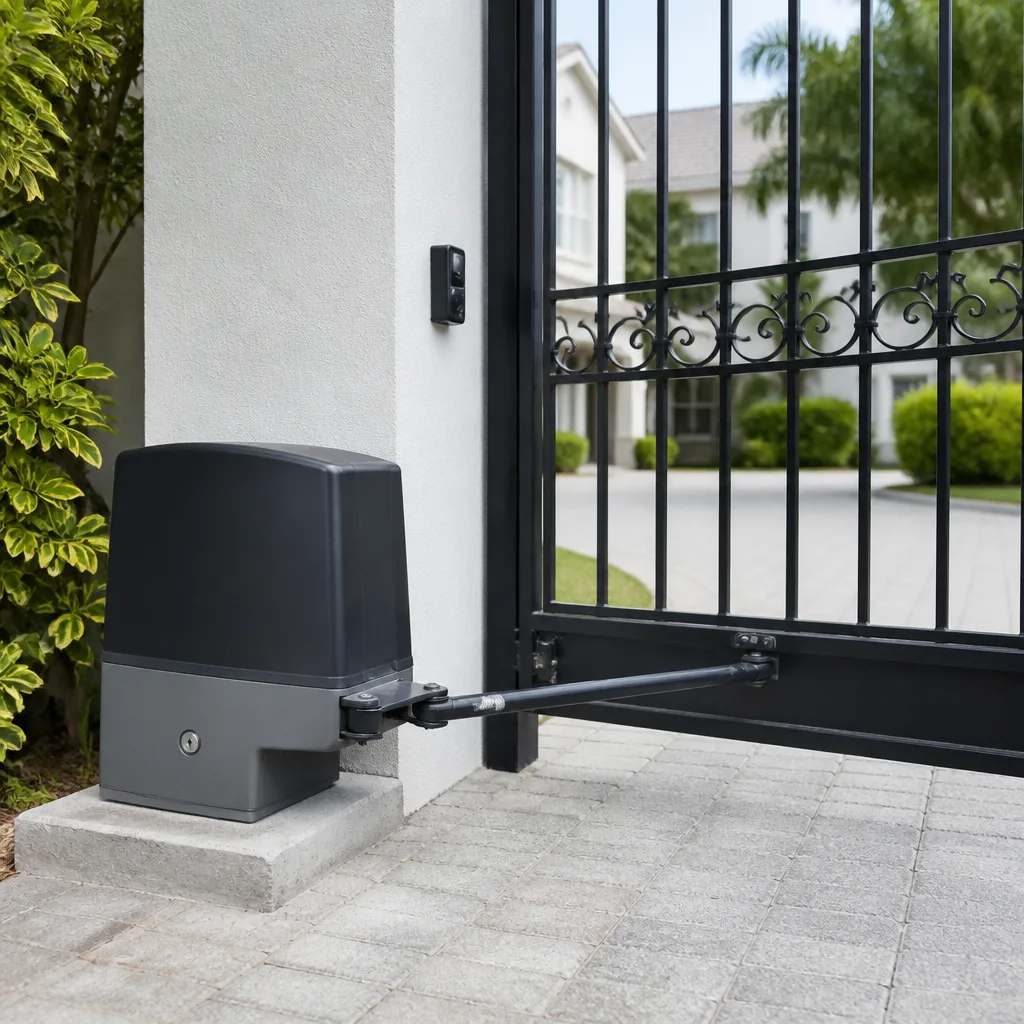
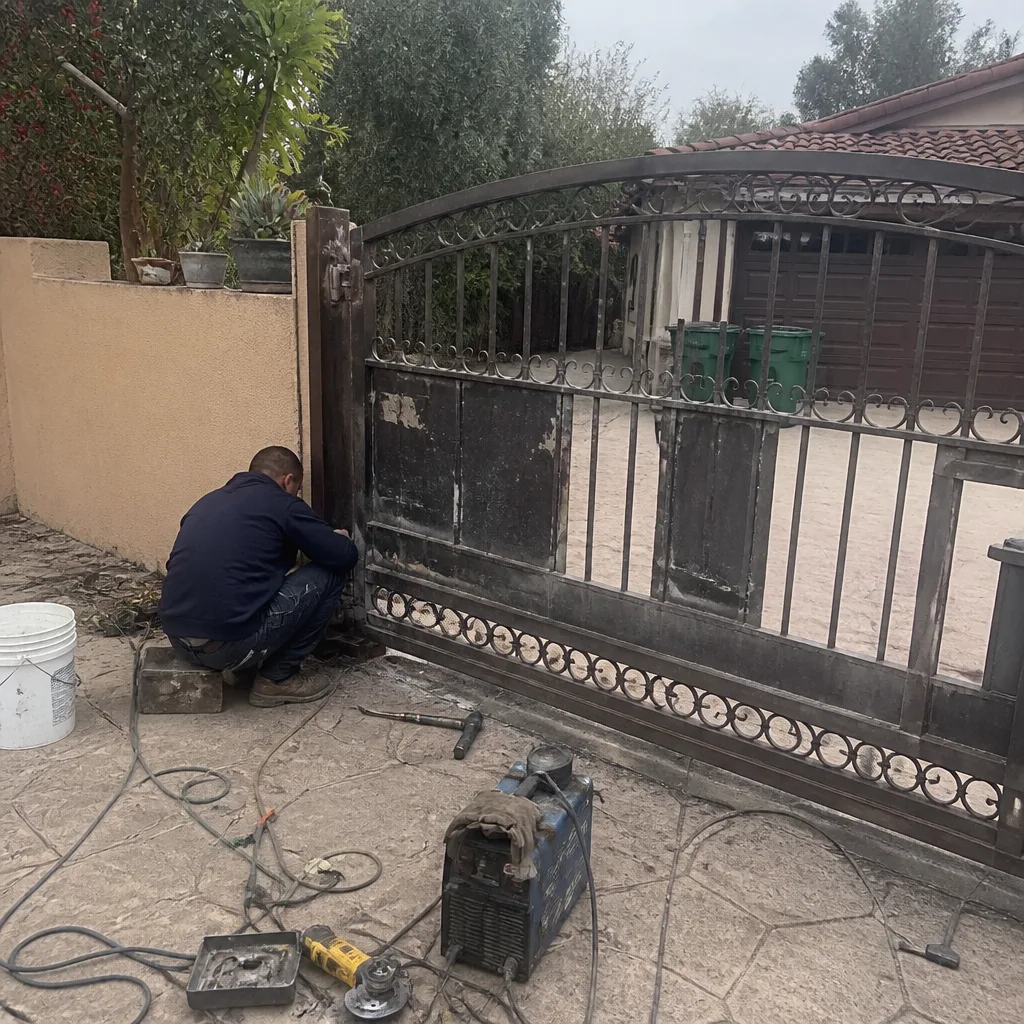 Before
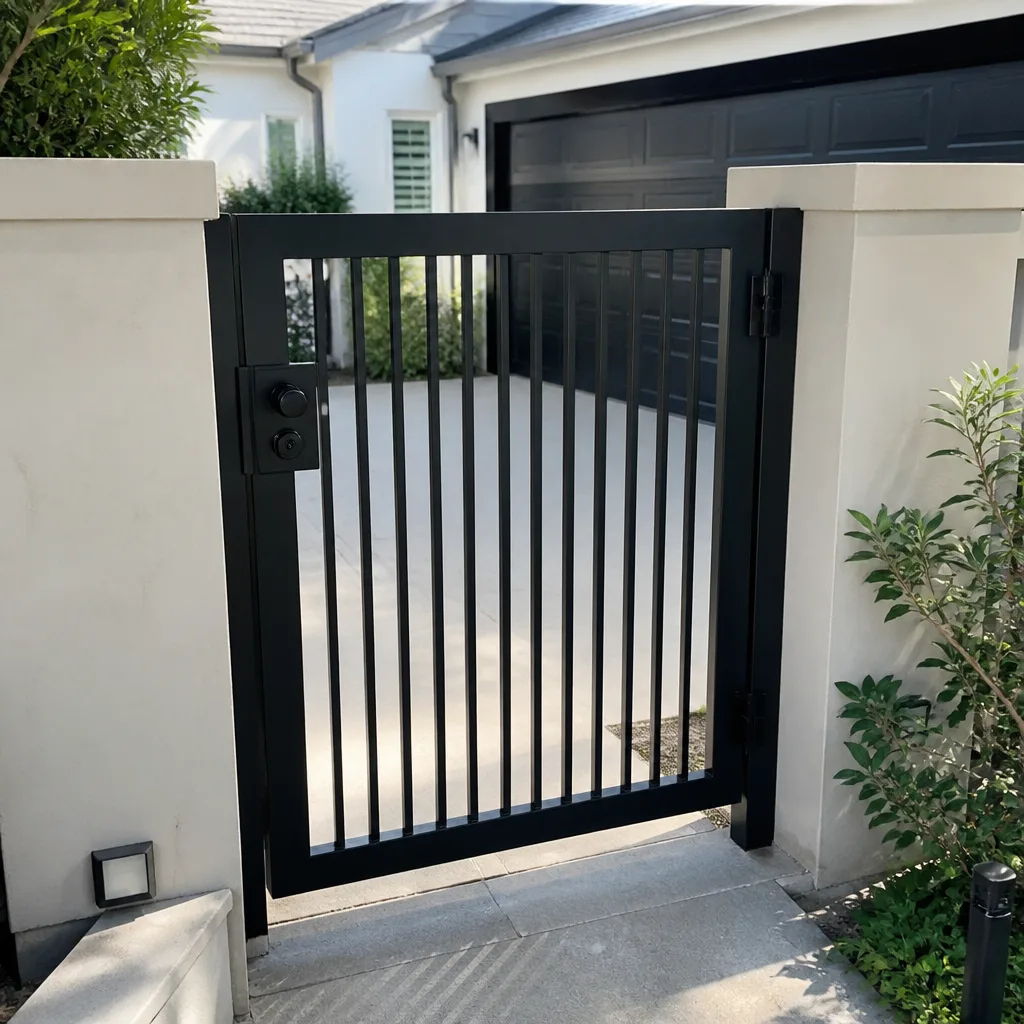 After
After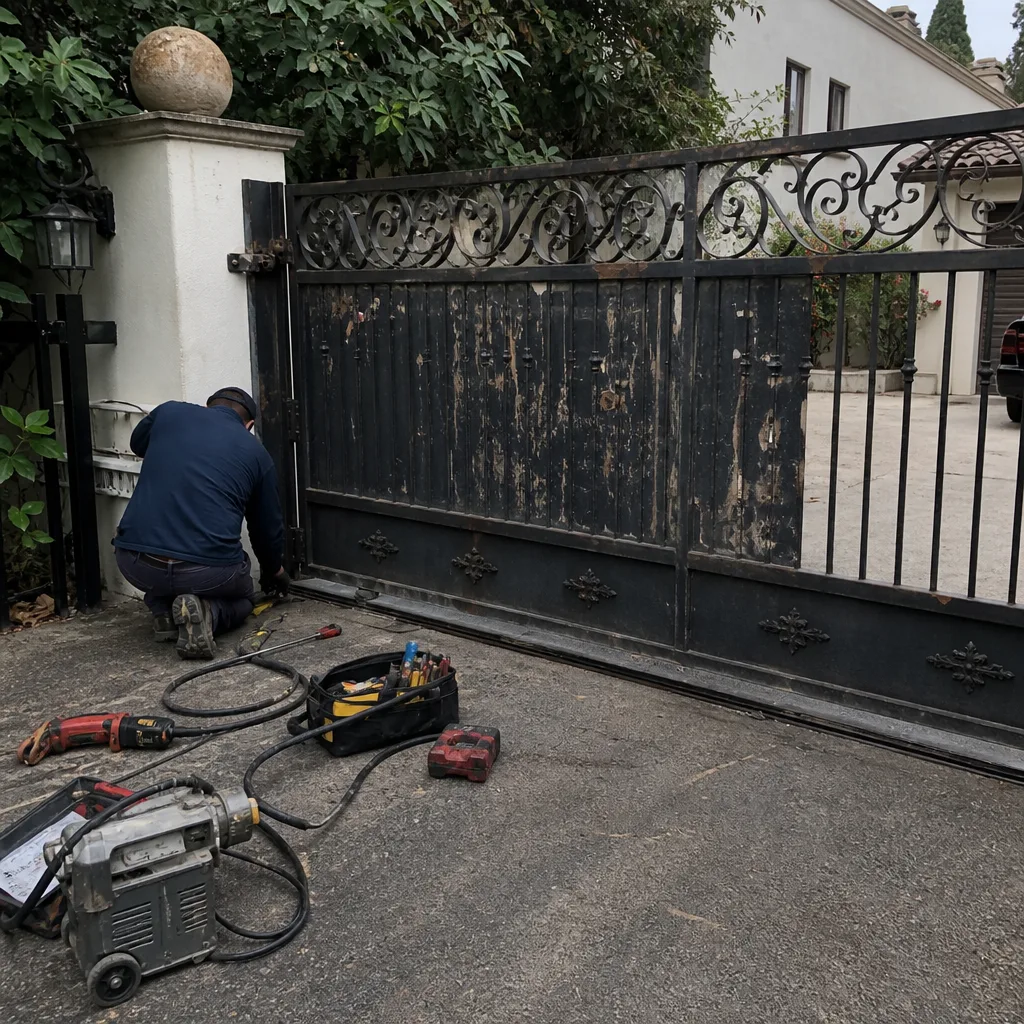 Before
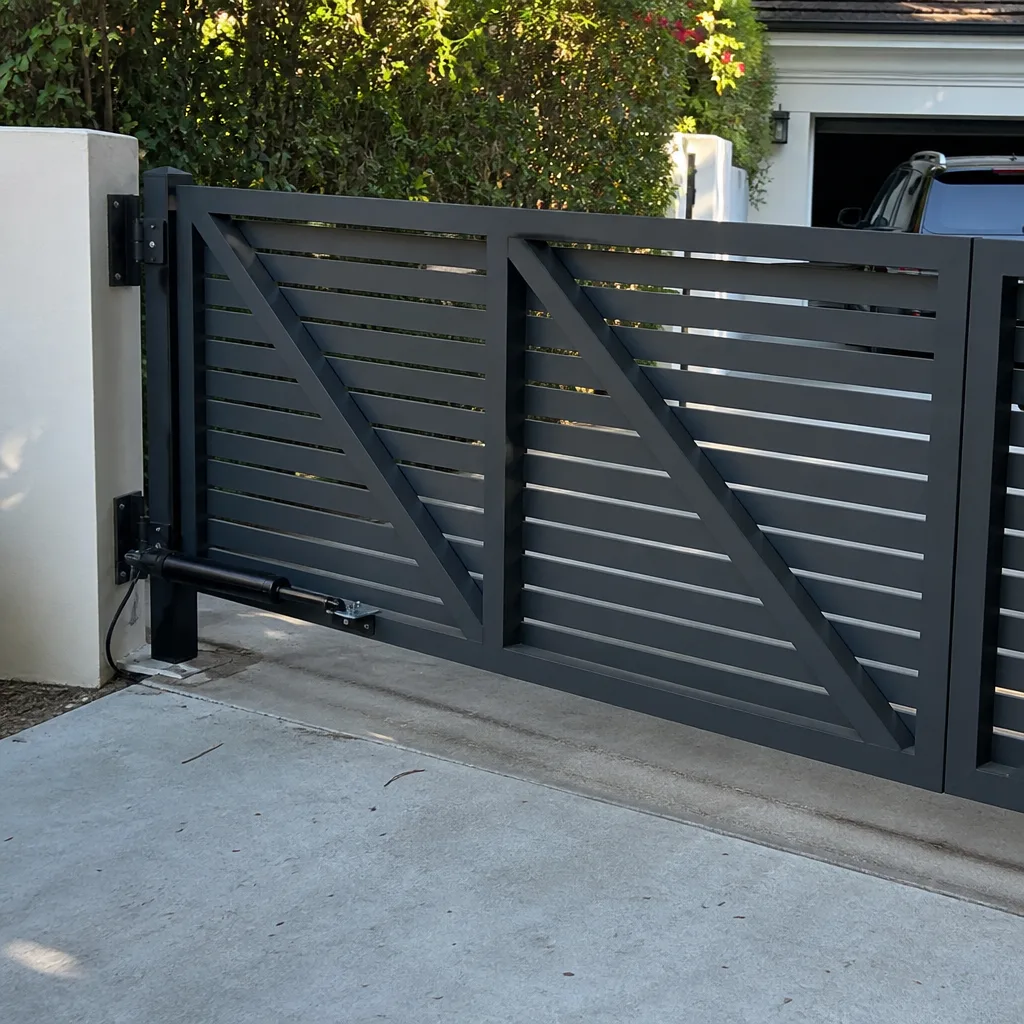 After
After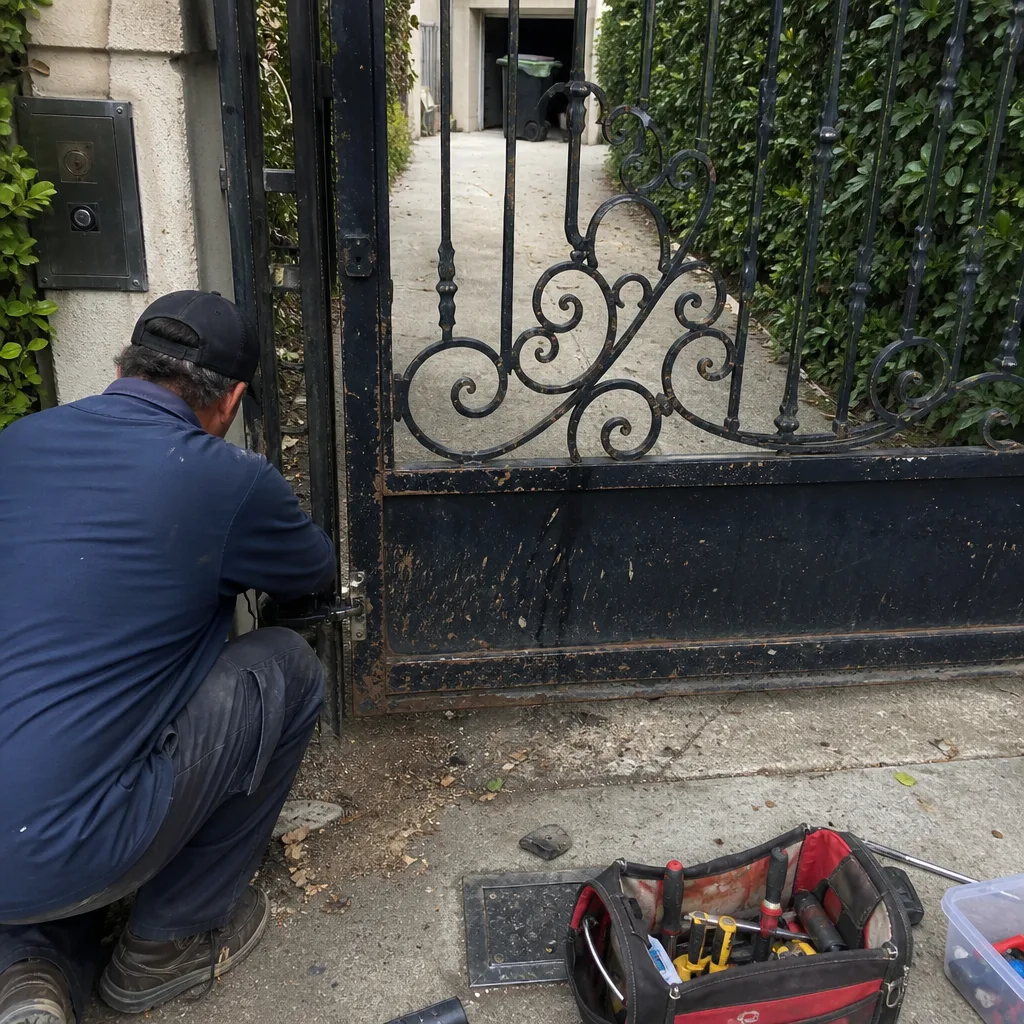 Before
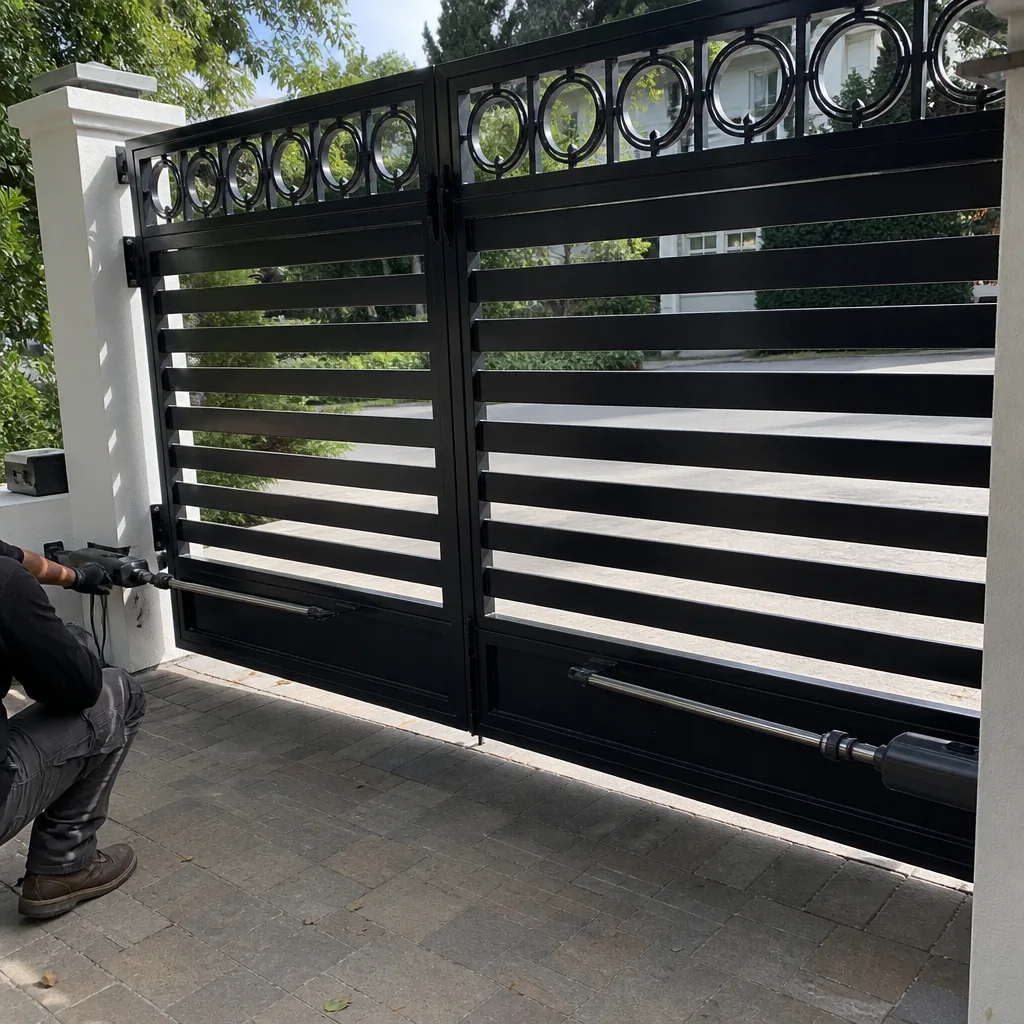 After
AfterGate Repair Permits, Codes & Inspections in CA: What You Need to Know
California defines a gate “replacement” differently than your contractor does, and that gap is what creates unpermitted work without anyone intending it. A gate you consider repaired because we welded the sagging corner and put a new motor on it might, on paper, be a replacement in the eyes of Beverly Hills code enforcement. And when unpermitted work shows up on a title report during a sale, the buyer’s lender will sometimes ask more questions than you want to answer. This guide covers where the real lines are drawn, which three repairs always require a permit, how HOAs layer on top of city code, and what to do if you have already inherited unpermitted gate work in Beverly Hills. For more detail, see our Gate Repair Warning Signs: A Beverly Hills Homeowner’s Reference Guide.
Quick Answer
Most gate repairs in Beverly Hills do not require a building permit, but three specific situations always do: structural post replacement, any change to the gate’s height, and new electrical rough-in for an automatic operator. An HOA architectural review is a separate step that runs parallel to city permits, not instead of them. If you sold or refinanced tomorrow, unpermitted gate work becomes a disclosure issue in Los Angeles County, and correcting it before listing usually costs less than negotiating it at escrow.
Table of Contents
- Where Beverly Hills Draws the Repair vs. Replacement Line
- The Three Repair Scenarios That Always Require a Permit
- When a Gate Motor or Operator Upgrade Triggers an Electrical Permit
- How HOA Architectural Approval Layers on Top of Beverly Hills Code
- What Unpermitted Gate Work Means for a Future Property Sale
- Inspections: What Actually Gets Checked and What Fails
- California State Codes vs. Beverly Hills Local Amendments
- Permit Timeline and Cost in Beverly Hills: A Realistic Picture
Where Beverly Hills Draws the Repair vs. Replacement Line
Here is where most people get tripped up: a gate “repair” and a gate “replacement” are not defined by how much work was done or how much money was spent. They are defined by what changed about the gate’s structure. Beverly Hills Municipal Code follows the California Building Code in treating work on an existing gate as a repair unless the work modifies the gate’s structural frame, changes its dimensions, or adds new systems that did not exist before. You can replace every moving part on a gate motor and opener, weld in a new hinge bracket, and rebuild the latch, and the city still calls it a repair. But swap out the hinge post because it rotted at the base, and you are now in replacement territory even if the gate panel itself never left the property.
Here is how that line plays out in practice, based on what we see regularly in Beverly Hills:
- Repair (no permit): Welding a cracked frame member, replacing a bent hinge, adjusting the gate to sit level, replacing the motor, replacing a damaged picket or infill board, adding a drop rod, replacing the latch or keypad.
- Repair (no permit): Replacing the gate’s wheel or track, straightening a bowed panel with heat and clamping, replacing a deteriorating vinyl sleeve on an existing post.
- Replacement (permit required): Cutting out and setting a new post because the old one failed structurally, even if the gate panel itself is reused.
- Replacement (permit required): Changing the gate height from 5 feet to 6 feet 6 inches, even if the new panel is the same material and same width.
- Replacement (permit required): Adding an entirely new electrical run from the house panel to a gate operator where no power existed before.
The distinction matters because permit fees in Beverly Hills are calculated from a valuation schedule, and a stop-work order on an unpermitted job that gets noticed by an inspector on the street is not something you can fix with a phone call. In the flats around Roxbury Drive and up in the Trousdale area, gate work is visible from the street, and the city does drive-by reviews. We have been called out to more than one job where a homeowner got a correction notice for work they believed was a simple repair. By the time we arrived, the original contractor was not answering calls. Hal Gatewood has been doing this in Beverly Hills since 2001, and the first question he asks on any job is not “what does it cost” but “what changed under this gate” because that answer determines whether a permit is even in the conversation.
The Three Repair Scenarios That Always Require a Permit
If you remember nothing else from this guide, remember these three. They are the situations we walk into after a contractor has already started, and they are the ones that create unpermitted work by accident. In our experience across Beverly Hills, these three account for nearly every permit headache involving an existing gate.
1. Structural Post Replacement
When a hinge post fails, you do not repair it. You replace it. That means excavation, a new concrete footing, and setting a new post in the ground. The city treats this as structural work because a gate sags in the hinge post, not in the middle, and a bad post is a safety issue. Homeowners often assume that because the gate panel stayed on site, no permit is needed. The city disagrees, and so does your insurance carrier if the gate later falls on a car or a person. In neighborhoods with mature landscaping like the flats north of Santa Monica Boulevard, root intrusion is a common cause of post failure, and that work is never a gray area. It requires a permit. We will pull it, set the post, and weld the gate back onto it in the same visit, but we will not pretend it is a repair when it is not.
2. Any Change to the Gate’s Height
Drive through Beverly Hills and you will see gates at every height from 4 feet to 8 feet, but each of those heights is tied to a permit that matched the original construction or a variance that was granted. When a homeowner asks us to make a 5-foot gate into a 6-foot 6-inch gate for privacy, that is a change to the structure’s profile. Even if the posts stay in the ground and we only add height by welding extensions onto the existing frame, the city considers it a modification. Height changes fall under zoning review because they affect sight lines at the driveway approach. On hilly lots in the Crest streets, a taller gate can block a neighbor’s view corridor, and that makes it more than a building code issue. Pull the permit first, and the height change is easy to approve for most residential gates. Skip it, and a neighbor complaint becomes a stop-work order.
3. New Electrical Rough-In for Operators
If you have an existing gate operator and we replace it with a newer model from LiftMaster or FAAC, no permit is needed because the electrical infrastructure already exists. But when you have a manual gate and you want it automated, someone has to trench a new circuit from the house panel or a subpanel out to the gate post. That new electrical rough-in requires an electrical permit in Beverly Hills, and the person or company doing the electrical work is the one responsible for pulling it. If a handyman tells you he can run the wire without a permit, he is not saving you money. He is creating a disclosure problem for the day you sell. We do the mechanical and welding work on your gate, and we coordinate with a licensed electrician when a new circuit is needed, so the permit has a name attached to it from day one. That is the only way we have ever done it in Beverly Hills.
When a Gate Motor or Operator Upgrade Triggers an Electrical Permit
Here is the direct answer: replacing an existing gate motor with a new motor in the same location, using the existing electrical supply, does not require an electrical permit in Beverly Hills. Adding a new motor where no motor existed, or running a new circuit to a new motor location, does. The line is not the motor brand, the horsepower, or the cost. It is whether any new electrical groundwork is being installed.
What “New Electrical Rough-In” Actually Means
New electrical rough-in includes any of the following:
- Trenching a new conduit run from the house panel to the gate post.
- Adding a new subpanel or a dedicated circuit breaker for the gate operator.
- Installing a new junction box at the gate that did not previously exist.
- Running a new low-voltage cable for a keypad or photo-eye sensor when the existing cable is not being reused.
Here is the practical version. A homeowner in the flats near Wilshire Boulevard has a 20-year-old Mighty Mule operator that stopped working. We replace it with a new LiftMaster unit, bolt it onto the same mounting plate, and plug it into the same existing outlet. No permit. A different homeowner has a manual ornamental gate and wants it to open with a remote. We have to run power from the house to the gate, and that means a trench across the driveway or through the landscaping. That job requires an electrical permit, period. Every reputable gate company in Beverly Hills knows this. The ones who say “we will just run the wire, nobody checks” are the ones whose work we fix later.
Who Pulls the Permit
- If electricians are doing the trenching and wiring: The electrical contractor pulls the electrical permit under their license number.
- If a gate company is doing the entire job: The gate company either uses a licensed electrician for the electrical portion or holds the appropriate contractor’s license to pull the combined permit.
- If a homeowner pulls their own permit: This is legal in Beverly Hills for owner-occupied single-family homes, but the liability for the work transfers to the owner, and insurers will sometimes raise questions if an electrical problem later causes a fire.
In our experience, the cleanest approach is the second one. When you call Gatewood Fence & Gate for gate automation in Beverly Hills, the work gets done by a licensed electrician for the electrical part and Hal’s crew for the gate itself, so there is one schedule, one point of contact, and no finger-pointing at the inspection. You do not have to coordinate two contractors. Call us at (559) 844-6989 and we will tell you on the first visit whether your operator project needs a permit or not.
How HOA Architectural Approval Layers on Top of Beverly Hills Code
In Beverly Hills, the city permit and the HOA approval are two separate tracks, and neither one satisfies the other. The city cares about structural safety, electrical code, and zoning. The HOA cares about appearance, material, color, and consistency. You can have a city-approved gate that your HOA will not allow, and you can have an HOA-approved gate design that the city will not permit because it violates height or setback rules. We see both every year.
The Order of Operations That Saves You Time
- Check your HOA’s CC&Rs first. Look for the architectural review section. Most Beverly Hills HOAs require written approval for any gate change visible from the street, including color changes, material changes, and automation additions.
- Submit HOA plans before pulling the city permit. If the HOA rejects a design element like a taller gate or a different metal finish, you can revise before paying city fees.
- Pull the city permit after HOA approval. The city will want to see that your project meets the municipal code, and having HOA approval in hand means you are not paying for a permit on a design that will not pass HOA review.
- Attach both approvals to the work order. This gives your contractor documentation that everyone is aligned, and it protects you if an HOA board member asks questions mid-project.
In practice, west side HOAs in Beverly Hills tend to move faster than city plan check. The city’s plan check can take two to four weeks for gate work depending on current volume. An HOA might turn around an architectural request in a week if the board meets monthly, or in a month if you miss the submittal deadline. The mistake we see most often is a homeowner who waits until the HOA approval is done and then discovers the city needs more time than expected. Start both at the same time, with the understanding that the city permit is conditional on HOA approval. That parallelism is how you avoid doubling your timeline.
What Unpermitted Gate Work Means for a Future Property Sale
This is the section that matters most to homeowners in their 50s and 60s and up, which is most of Beverly Hills. You may not plan to sell this year, but the gate you install today will be inspected by a buyer’s inspector in five or ten years, and unpermitted work will show up. In Los Angeles County, sellers are required to disclose unpermitted additions or modifications on the Transfer Disclosure Statement and the Seller Property Questionnaire. An unpermitted gate that replaced the original gate structure, added electrical service, or changed the height is a disclosure item. It is not a gray area.
What that means in practical terms:
- The buyer’s lender may require the unpermitted work to be permitted retroactively before funding. This is not common for a simple gate repair that did not require a permit, but it is common for an automated gate with new electrical that has no permit record.
- Insurance underwriting may decline coverage on a property with known unpermitted electrical work. If a buyer cannot get insurance, the deal can stall at the last minute.
- The buyer may use the unpermitted gate as a negotiation lever. Even if the work is solid, the permitting gap becomes a price reduction request or a repair credit demand in escrow, because the buyer knows correcting it costs time and money.
In our experience, the cheapest time to fix unpermitted gate work in Beverly Hills is the day you discover it, not the week before escrow closes. Calling the city and asking for a retroactive permit on a gate that was built five years ago is not a pleasant process, but the city of Beverly Hills is familiar with it and has a process. The worst approach is ignoring it and hoping the buyer’s inspector does not look at the gate. They always look at the gate. They look at the gate because a gate is a liability item, and an inspector who sees a new-looking gate with no permit on file will write it up.
Inspections: What Actually Gets Checked and What Fails
When a gate permit is pulled in Beverly Hills, the inspection is typically a single visit unless the electrical work is substantial enough to warrant a separate electrical inspection. The inspector is checking for code compliance, not workmanship quality. We have seen clean, well-executed welds pass inspection every time, and we have seen visually sloppy work pass too, because the code does not care if the weld bead is ugly. It cares if the post is set deep enough, if the electricity is grounded properly, and if the gate’s swing arc clears the sidewalk and the driveway approach.
What the Inspector Checks
- Footing depth for structural posts: In Beverly Hills, posts for heavy gates typically need to be set at least 24 to 36 inches deep in concrete, depending on the gate weight and soil conditions. The inspector will want to see the hole before concrete is poured.
- Gate swing direction and clearance: The gate must not swing out over the public sidewalk or into the street right-of-way. This is a common fail point on older Beverly Hills properties where driveways are tight.
- Electrical grounding and GFCI protection: Any gate operator circuit within reach of water or exterior elements must be GFCI protected, and the grounding wire must be visible and properly connected.
- Safety edges and photo-eye sensors: If the gate is automated, the inspector will verify that entrapment protection is installed. This is a direct safety requirement, not a suggestion.
- Gate weight and hinge rating: The inspector may ask for the manufacturer’s specification on the hinges or the operator to confirm they match the gate’s weight class.
What fails inspection in Beverly Hills is usually the same list every time: a post set too shallow, an operator circuit run through a hole drilled in a stucco wall without conduit, or an automated gate with no entrapment sensors. The fuses are rarely the problem. The shortcuts are. That is why we do not take shortcuts, and why the person who shows up to do your gate work at Gate Installation in Beverly Hills is someone whose name is on the work. We have been through enough Beverly Hills inspections to know exactly what the inspector will look at, and we build to that standard the first time.
California State Codes vs. Beverly Hills Local Amendments
California adopts a uniform set of building codes every three years, but local jurisdictions like Beverly Hills can amend those codes to be more restrictive. Beverly Hills does amend where gate work is concerned, and the amendments are not hidden. They are in the Beverly Hills Municipal Code under Title 9 and the city’s local amendments to the California Building Standards Code. Here is what those amendments mean for your gate project:
- Fence and wall height limits: Beverly Hills has specific height limits for fences, walls, and gates depending on the zoning district and the location on the lot. In many areas, a front-yard gate or fence over a certain height requires additional review, sometimes a minor variance.
- Design review overlay: Beverly Hills is unusual in that design review applies to many residential exterior changes, including gates, in certain neighborhoods. The city cares about the visual character of its residential streets, and a gate that matches the period architecture of the house is treated differently than one that does not.
- Driveway approach standards: The city regulates how far a gate can sit back from the property line to allow a car to pull fully off the street before the gate opens. This matters more in Beverly Hills than in most California cities because so many driveways are short.
If you are working from a generic “California gate permit guide” written for the whole state, you will miss the Beverly Hills specifics. That is not a minor detail. It is the difference between a permit that gets approved in two weeks and one that gets kicked back because the gate is 18 inches too close to the lot line. We see the kicked-back version in our customers’ hands all the time. Hal has been doing gate work in Beverly Hills long enough that he can usually tell you on the first phone call whether your project will raise a design review flag, and what to do about it before you shell out for drawings.
Permit Timeline and Cost in Beverly Hills: A Realistic Picture
Here is the honest answer, not the version you see on a national website. For a straightforward gate replacement with the same height, same footprint, and no new electrical, a Beverly Hills building permit typically runs in the range of $150 to $450 in city fees, and the plan check turnaround is usually one to three weeks depending on the season. Spring and early summer are the busiest, so a permit pulled in March might sit in plan check for a month while the same permit pulled in October is back in ten days. That is the reality of working in Beverly Hills.
For a gate project that includes new electrical for an operator, the electrical permit typically adds $100 to $250 to the city fees, and the electrical inspection is often scheduled separately. For a project that includes a height change or a setback variance, you can add several more weeks and potentially a public notice period, which is uncommon for gates but does happen in some of the historic districts.
We do not quote permits as a line item in a way that is designed to surprise you. When you call us for a gate estimate in Beverly Hills, the permit fee is included in the written estimate so there is no surprise at the end. That is how we have always structured our pricing. You know before the work starts what the job costs, and the city fees are part of that number. Gatewood Fence & Gate has been doing it that way in Beverly Hills for over two decades, and we will not change it now.
Common Mistakes to Avoid
- Assuming the contractor is pulling the permit because he said he would. Ask to see the permit number and the city’s online record before the work starts. In Beverly Hills, you can verify permits through the city’s building and safety portal, and we encourage every homeowner to do exactly that.
- Confusing an HOA approval with a city permit. Your HOA letter is not a permit, and your city permit is not an HOA approval. You need both, and neither one covers the other.
- Thinking a gate that “looks the same” as the old one does not need a permit. If the posts were replaced, the city cares. If the height changed, the city cares. If new electrical was added, the city cares. “It looks the same” is not a code argument.
- Letting a handyman run the electrical for a new gate operator to save a few hundred dollars. You are now the proud owner of unpermitted electrical work that will surface on a disclosure form when you sell. That savings costs thousands at escrow.
- Waiting until the gate is already installed to ask about permits. We can help fix an unpermitted gate, but it is easier and cheaper to do it right from the start. In our experience, a retroactive permit in Beverly Hills costs more in fees and time than the original permit would have.
- Assuming a gate permit covers the operator. The building permit for a gate structure does not automatically include the electrical work for the motor. In some cases it does, in many it is a separate electrical permit. We tell you which you need before you write a check.
- Using a gate that matches the neighborhood’s height maximum exactly. Beverly Hills inspectors measure from the finished grade, not from the top of the post. A gate that sits at the maximum height on paper can end up over code once the ground slopes toward the driveway, so measure twice and leave a margin.
When to Call a Professional
Some projects are DIY-friendly. Gate permits are not one of them. When a structural post is involved, when the gate height is changing, when new electrical is being run, or when your HOA needs drawings and specifications, you want someone who has done this exact paperwork in Beverly Hills before. Hal Gatewood has been pulling gate permits in this city since 2001, and he knows which counter at City Hall to walk up to and which details the plan checkers will flag. You do not have to figure it out alone. Gatewood Fence & Gate offers free estimates in Beverly Hills. Call (559) 844-6989 and tell us what is going on with your gate. We will tell you if it needs a permit, what it will cost, and how long it takes, before you spend a dime.
Frequently Asked Questions
No, not for a standard repair. Replacing a hinge, welding a crack, adjusting the gate to sit level, or replacing a motor on an existing operator are all repairs that do not require a permit in Beverly Hills. The exceptions are structural post replacement, any height change, and new electrical rough-in. Call (559) 844-6989 if you are unsure which category your repair falls into, and we will tell you on the phone.
A straightforward gate replacement permit in Beverly Hills typically costs between $150 and $450 in city fees, with the variation coming from the project’s valuation and the type of review. Electrical permits for new operator wiring usually add $100 to $250. The total cost is included in your written estimate when Gatewood Fence & Gate does the work, so there is no surprise fee at the end.
Yes. We have helped homeowners legalize unpermitted gate work before listing their Beverly Hills property. The process is called retroactive permitting, and it involves a permit application, an inspection, and possible corrections to bring the work up to current code. The city has a process for this, and we handle it from the first inspection to the final sign-off. Call (559) 844-6989 and we will tell you what your specific situation requires.
In most Beverly Hills HOAs, yes. Even if the city does not require a permit for swapping an existing motor, many HOAs require architectural review for any change to the gate’s appearance or operation, including adding automation where the gate was previously manual. We always recommend checking your CC&Rs before buying equipment.
The city of Beverly Hills can issue a stop-work order, require you to pull a permit retroactively, and in some cases charge doubled permit fees. If the work violates zoning rules like height limits or setback requirements, the city can require you to modify or remove the gate. The fix usually costs more than the original permit would have, which is why we pull permits correctly from the start.
Yes. Beverly Hills enforces the California entrapment protection requirements strictly, meaning photo-eye sensors and safety edges are mandatory on automated gates, and the electrical work must meet the city’s amended code for GFCI protection and grounding. The city’s design review overlay can also mean more scrutiny on the operator’s appearance and placement. If you are automating a gate in Beverly Hills, call (559) 844-6989 for a free estimate and we will walk through the rules as they apply to your property.
The Bottom Line
The line between a gate repair and a gate replacement in Beverly Hills is not where most people think it is, and the three situations that always require a permit are structural post replacement, height changes, and new electrical rough-in. HOA approval is a separate track, and unpermitted gate work becomes a disclosure item at sale time in Los Angeles County. Pulling permits correctly from the start costs a few hundred dollars and a couple of weeks. Fixing it later costs more and adds questions to your escrow. If you have a gate project in Beverly Hills, call us at (559) 844-6989 for a free estimate, and we will tell you exactly what your project needs before you commit to anything. Browse more guides & resources on gate work in the area.
Written by Hal Gatewood, Owner at Gatewood Fence & Gate, serving Beverly Hills since 2001.