
Last updated August 26, 2026
Free on-site gate assessment - hinges, posts, and your LiftMaster or Nice gate operator checked before anything is quoted
The assessment is free and the quote is the invoice.
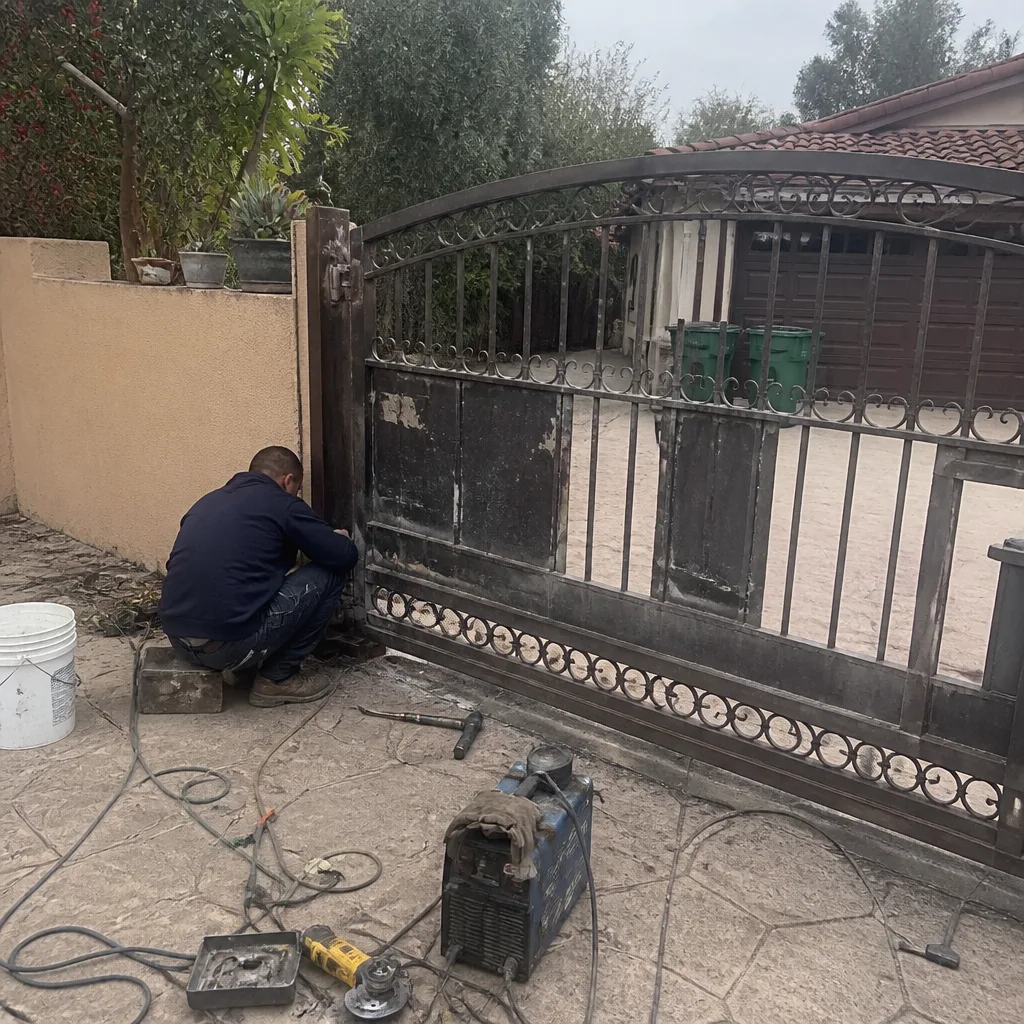 Before
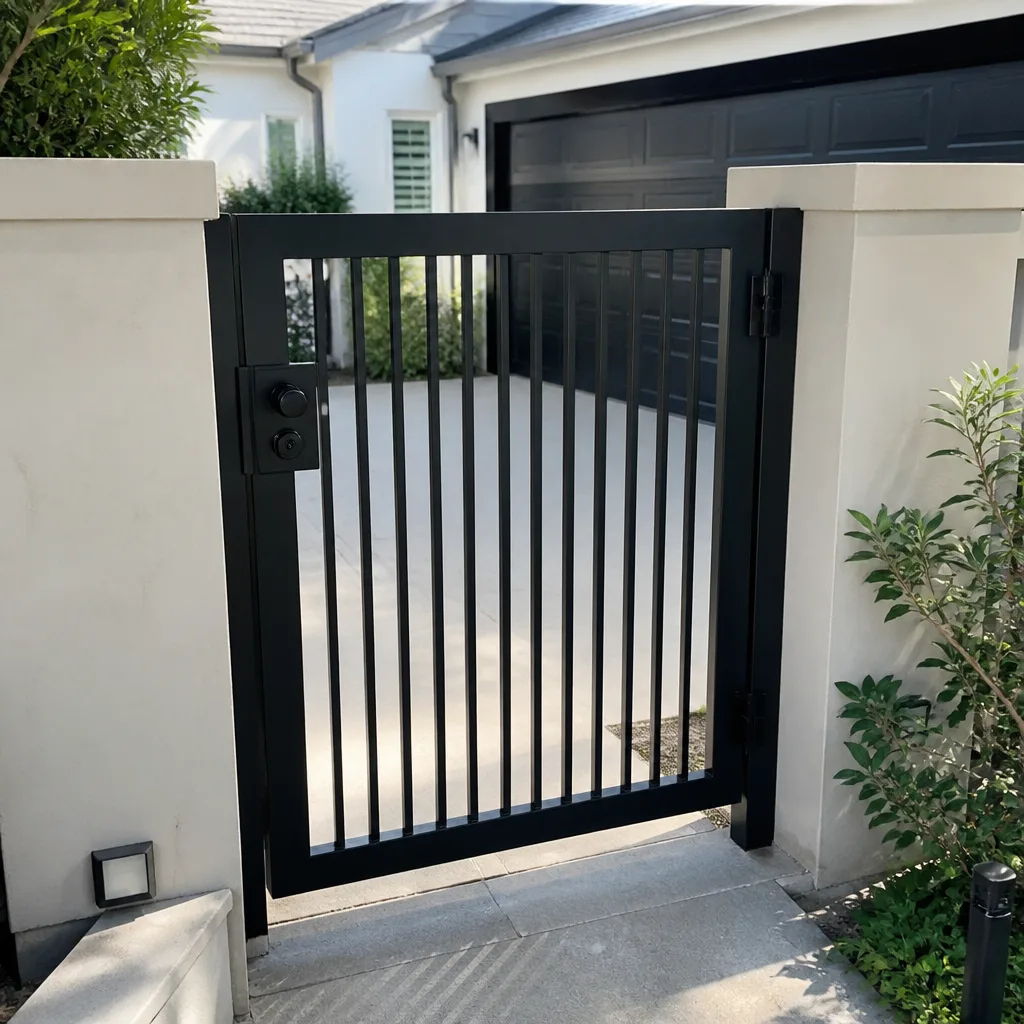 After
After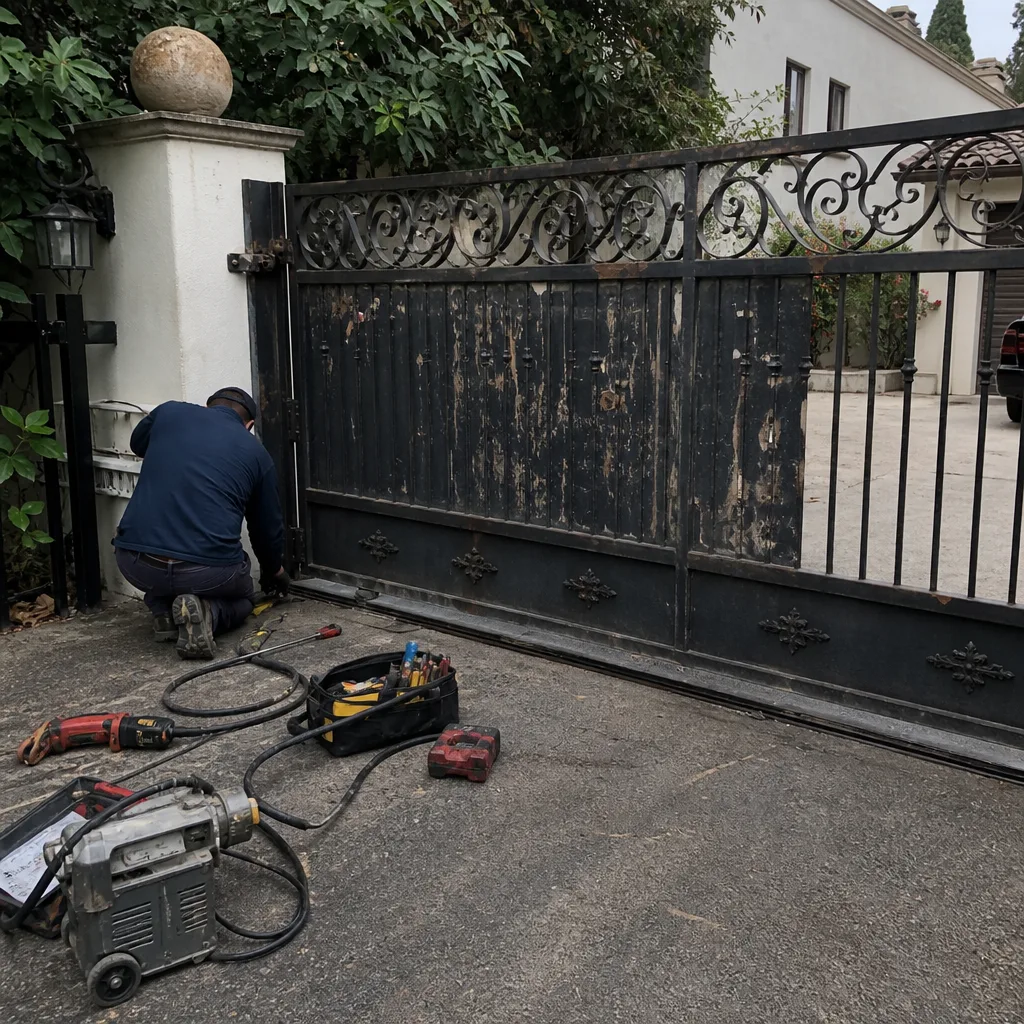 Before
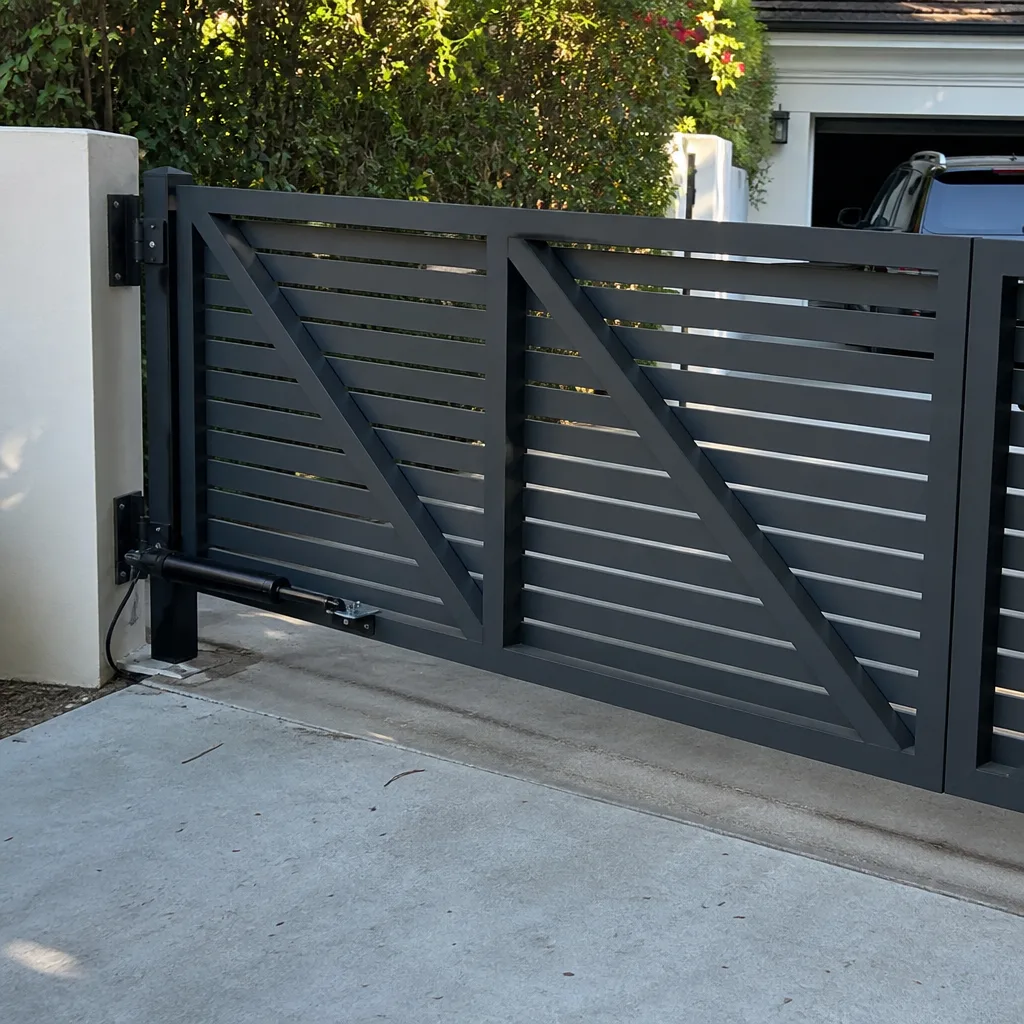 After
After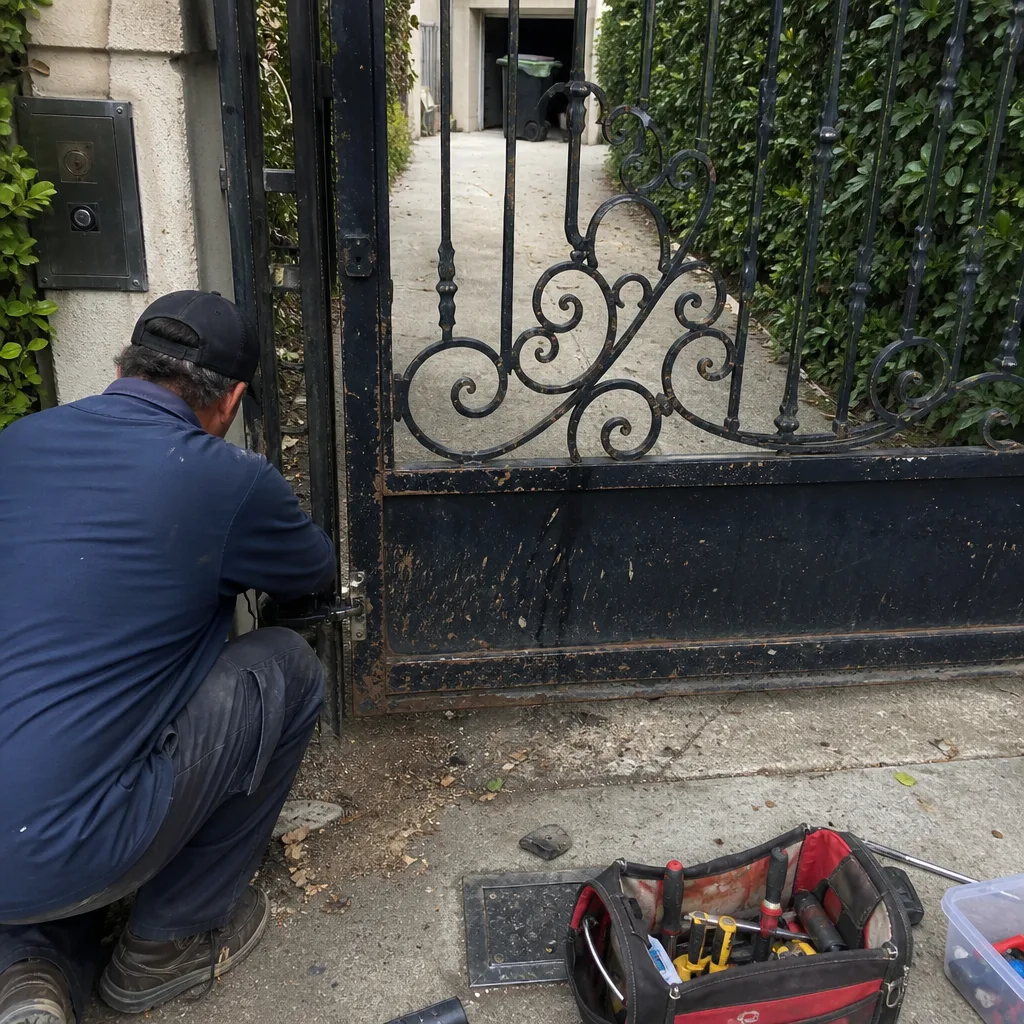 Before
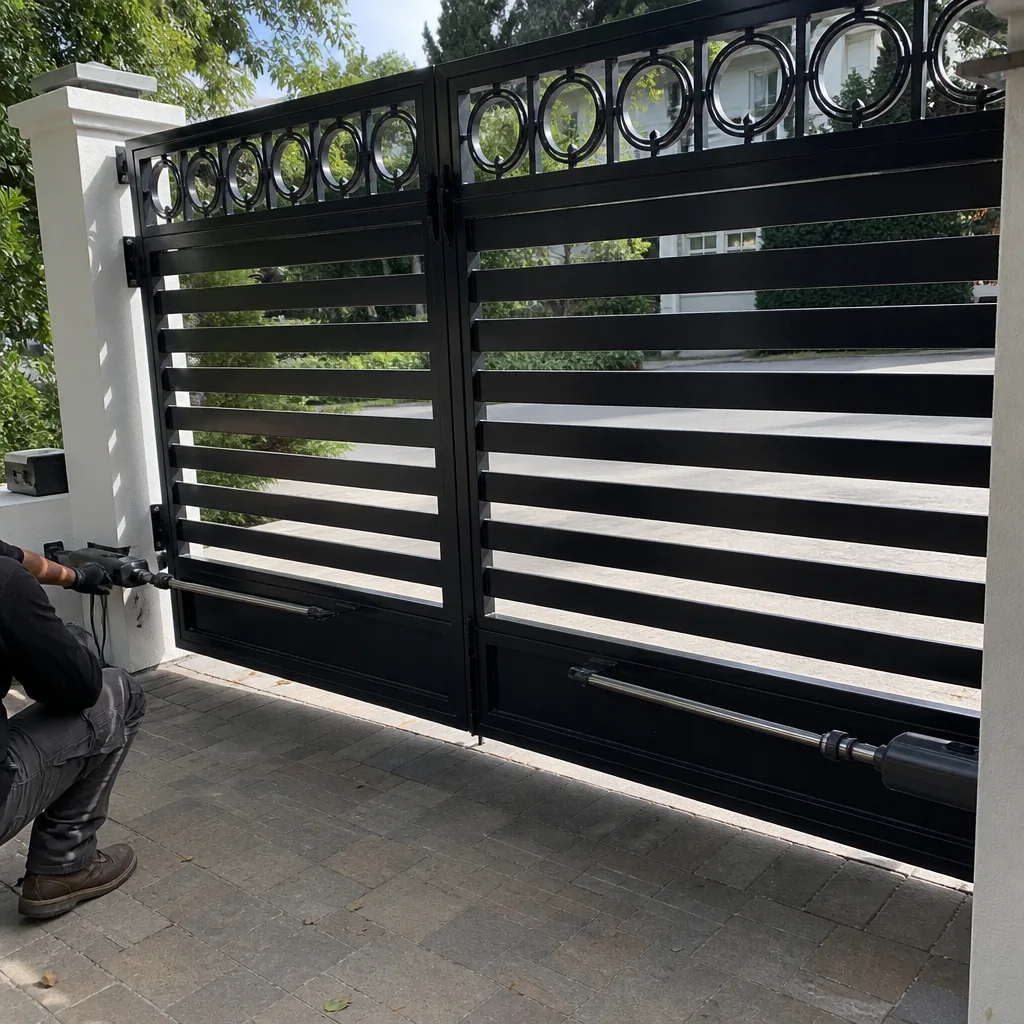 After
AfterGate Repair Maintenance Checklist for Beverly Hills Homeowners
Every Gate Repair Warning Signs: A Beverly Hills Homeowner’s Reference Guide online says “check your hinges.” Not one of them tells you what a hinge looks like two months before it cracks. That gap between generic advice and what actually happens in a Beverly Hills driveway is where gates get expensive. We wrote this guide because we keep meeting homeowners who maintained their gates exactly the way the internet told them to, and still ended up with a sagging panel or a burned-out motor. What follows is what we actually look for when we pull up to a Beverly Hills home: the failure signatures, the specific wear patterns, the spots where debris hides, and the tests you can run yourself in under ten minutes with stuff you already own.
Quick Answer
A proper Beverly Hills gate maintenance routine comes down to a few specific checks done on a schedule: inspect hinge pins and post bases monthly for the early signs of cracking, test your operator’s force settings twice a year with a cardboard tube, clear the sensor line and gate track after any wind event, and address corrosion on ironwork before it spreads beneath the coating. Professional gate repair in Beverly Hills typically costs between $185 and $650 depending on what has failed, but a disciplined homeowner who catches problems early stays at the low end of that range or avoids the repair entirely.
Table of Contents
- The Three-Point Post Inspection That Catches 80% of Structural Problems
- What Corrosion on Beverly Hills Iron Means (and What It Doesn’t)
- The Cardboard Tube Test for Gate Operator Force Settings
- Where Debris Hides on Automated Gates, Mapped by Gate Style
- A Month-by-Month Maintenance Calendar for Beverly Hills Weather
- What Actually Wears Out First: The Parts That Fail in Order
- Common Mistakes to Avoid
- When to Call a Professional
The Three-Point Post Inspection That Catches 80% of Structural Problems
Every swing gate hangs from two posts, and every post eventually tells you it is failing. You just have to know where to look and what you are seeing. The gate itself almost never fails first. What fails is the connection between the gate and the ground, or between the gate and the post. Our crews have fixed hundreds of gates across Beverly Hills, and in our experience, four out of five structural failures trace back to one of three spots on the post. Here is the inspection, and it takes about four minutes:
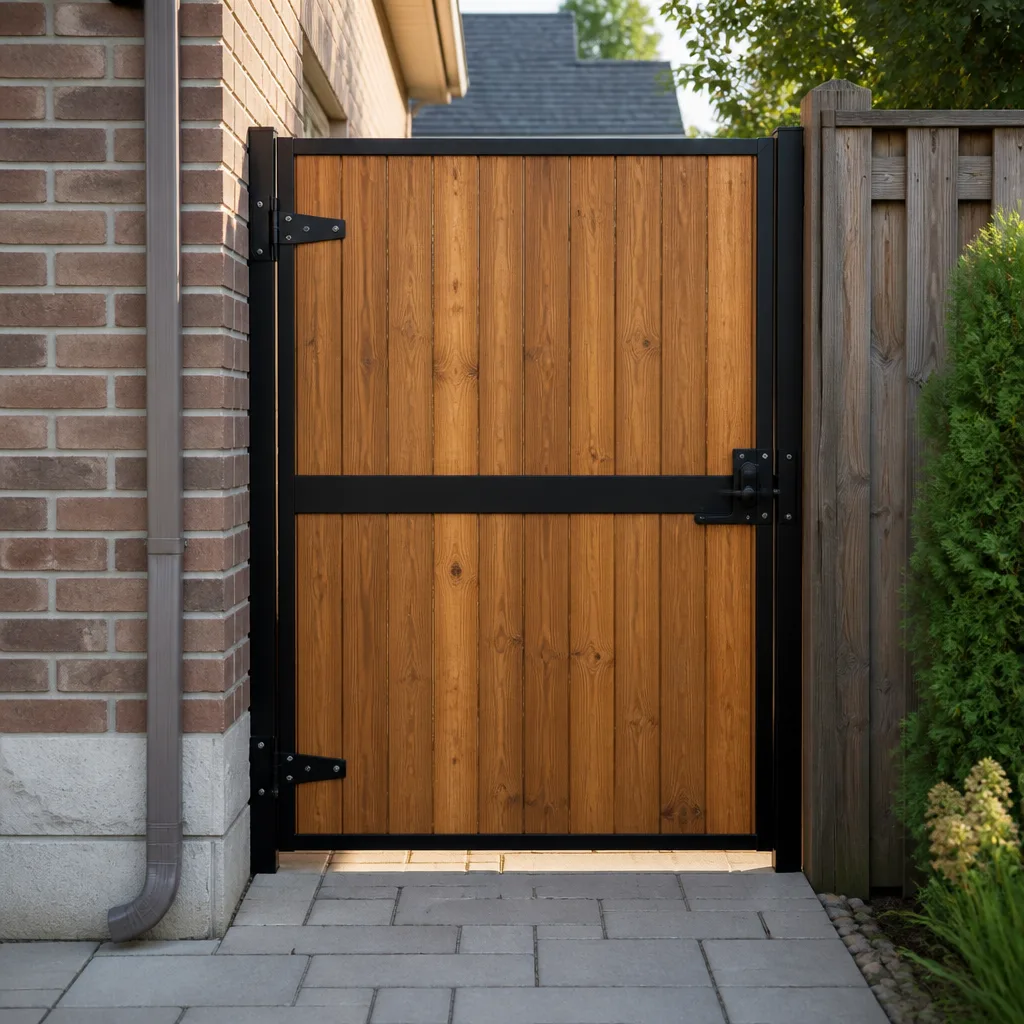
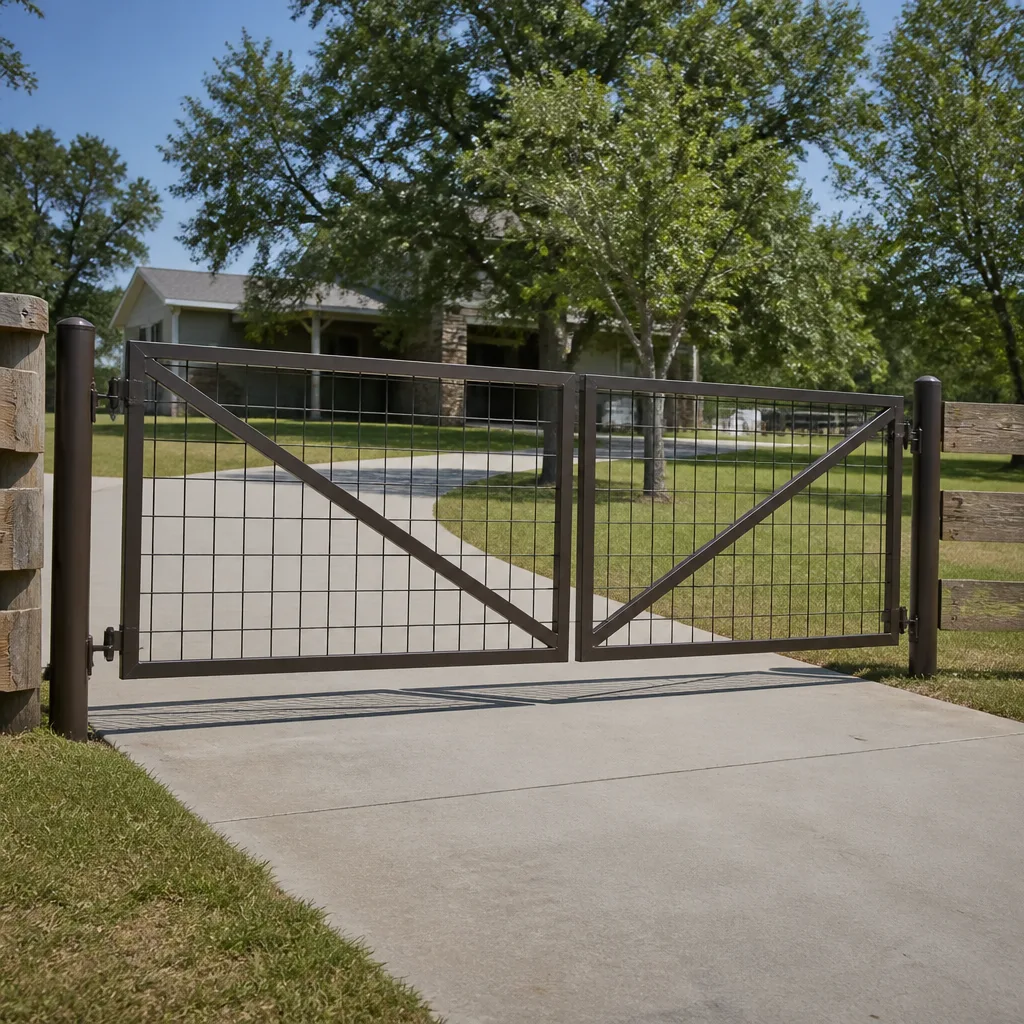
- Check the gap at the hinge side. Stand at the hinge post and look at the vertical gap between the gate leaf and the post. It should be even from top to bottom. If it is pinched at the top and wide at the bottom, the post is leaning. If it is wide at the top and pinched at the bottom, the hinge has worn and the gate is dropping.
- Press your boot against the post base. Put your foot against the bottom of the post where it meets the concrete and push firmly. A healthy post does not move. If you feel even a quarter inch of give, the post’s footing has failed or the weld at the base plate has cracked. That is not a hinge problem. That is a post problem, and no amount of hinge adjustment will fix it.
- Sight down the top rail. Walk to the latch side and sight down the top rail of the gate like you are aiming a rifle. A straight gate reads as a clean flat line. A gate with a failed middle hinge or a twisted leaf will show a hump or a dip. That tells you where the stress has concentrated, and it is rarely where the homeowner thinks it is.
Fix the panel without the post and you’ll fix it twice. We have said that to homeowners from the flats north of Santa Monica Boulevard to the hills above Coldwater Canyon. A gate sags in the hinge post, not in the middle, and that is where we start. The four minutes this inspection takes is the cheapest maintenance you will ever do on a Beverly Hills gate.
What Corrosion on Beverly Hills Iron Means (and What It Doesn’t)
Beverly Hills sits close enough to the coast that overnight marine air pushes inland through the Sepulveda Pass and settles over the city. That moisture, combined with the sprinkler overspray common on irrigated Beverly Hills lots, means iron gates here corrode differently than they do in, say, Burbank or the Valley. The first thing to understand is that not all rust is an emergency. Some of it is cosmetic and expected. Some of it means the metal underneath the paint or powder coat is being eaten away.
Here is how to tell the difference, based on what we see on iron gates installed across Beverly Hills:
- Surface staining is normal. If you see a faint orange or brown tint bleeding from a weld joint or a scratch, and the surface is still smooth when you run a fingernail over it, that is oxidation on the surface only. Wipe it, sand it lightly, touch it up. The metal is fine.
- Flaking or blistering is the problem. If the paint or powder coat is raised in bubbles, or flakes off in chips to reveal rough, pitted metal underneath, the corrosion has gotten between the coating and the steel. That means moisture has been working underneath for months. Once a blister forms, the corrosion spreads laterally under the coating even if the visible spot looks small.
- White powder is galvanic corrosion. On aluminum gates in Beverly Hills, especially those near salt air or where steel hardware touches aluminum without an isolating gasket, you will see a chalky white residue at the joints. This is not just ugly. It means the two metals are reacting and the structural connection is slowly weakening.
- Rust at the bottom rail is structural. The bottom rail of a swing or slide gate collects water. If you see rust blooming at the bottom rail where it meets the vertical pickets, especially if the rust has created a bulge, the tube may be filling with water from the inside. That is time to call someone before the rail lets go.
We have met homeowners who sanded and repainted blistered iron every year for a decade, never realizing the gate was rusting from the inside out. The fix for that is not more paint. The fix is cutting out the compromised section and welding in new steel, which we do on site in the driveway so the gate never leaves your property.
The Cardboard Tube Test for Gate Operator Force Settings
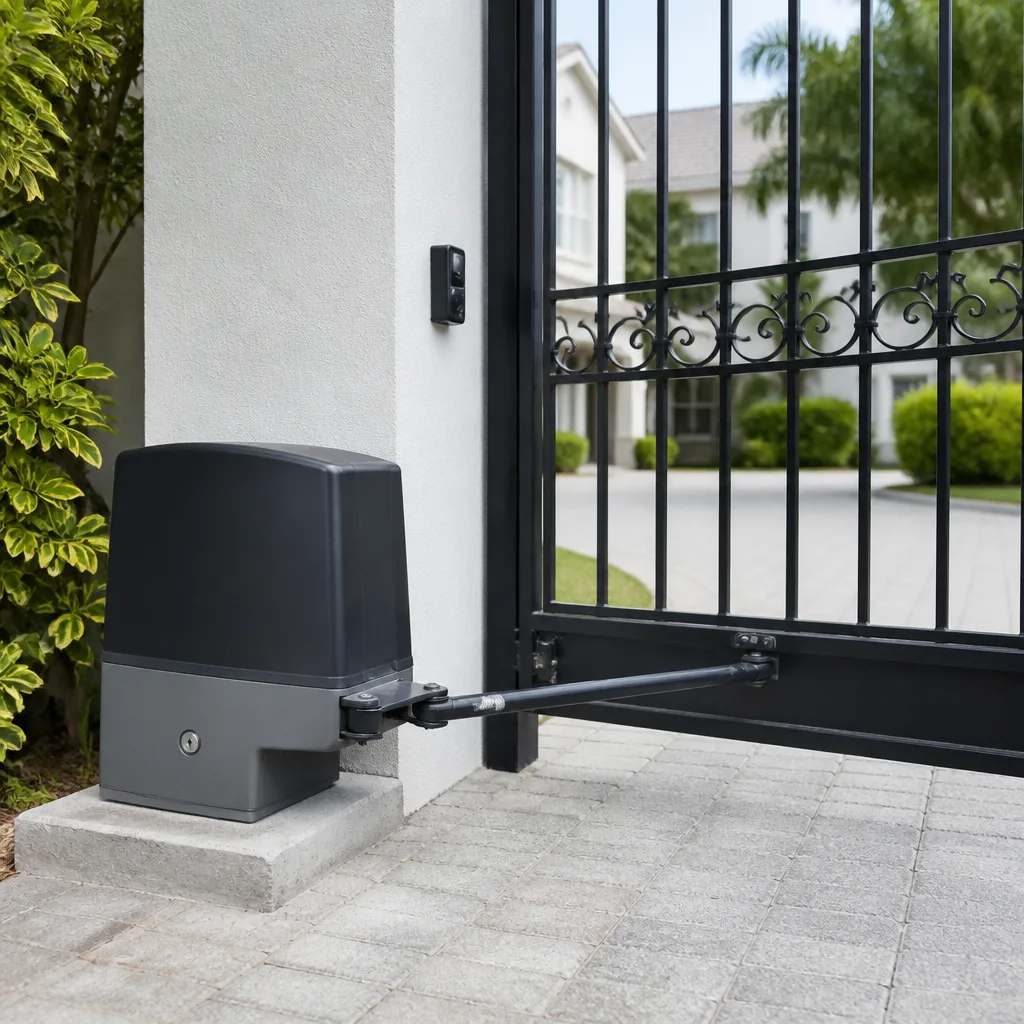
Your gate operator has two safety settings: the force at which it pushes or pulls the gate, and the sensitivity at which it reverses when it meets resistance. Both drift over time. If the force setting is too high, the gate becomes dangerous, especially to kids and pets. If the sensitivity is set too low, the gate reverses every time the wind blows and you end up with a gate that never closes. The cardboard tube test takes two minutes and tells you exactly where your operator is set.
Here is how it works, and this applies whether you have a Ghost Controls, DoorKing, Elite, or Mighty Mule operator on your Beverly Hills driveway:
- Find an empty paper towel or wrapping paper tube. It needs to be about the diameter of a kids’ forearm, something that will crush easily under pressure. If you do not have one, a rolled-up magazine works about the same.
- Stand at the closing edge of the gate. This is the spot where the gate meets the latch post or the closing stop. As the gate starts to close on automatic, hold the tube in the path so the closing edge hits it directly.
- Watch what happens. A properly adjusted operator should hit the tube, feel the resistance, and reverse within about two seconds, without crushing the tube flat. If the tube gets crushed or the gate keeps pressing before it reverses, your force setting is too high and you need it adjusted before someone gets hurt.
- Run the test on the opening edge too. Put the tube in the opening path and let the gate try to open into it. Some operators are only calibrated for the closing edge and will shove aggressively on the opening edge, which matters if a child is standing behind the gate.
- Repeat at the midpoint. The force dynamics change when the gate is halfway through its travel, especially on long driveway gates. Test there too.
If the operator will not reverse on the tube, or if it slams into the stop at full speed, do not adjust the internal limit switches yourself if you are not experienced with the control board. A gate motor that is mis calibrated can pinch hard enough to break bones. That is a calibration adjustment, and it belongs in the hands of someone who has done it a thousand times. Gate motor and opener service in Beverly Hills usually takes under an hour and keeps the operator within safety spec for the next six months.
One more thing worth knowing: the force settings are not set-and-forget. Temperature changes, gate weight changes (if you hang plants or a sign on the gate), and hinge wear all shift the load. Run the tube test every six months and after any time the gate catches on something during operation.
Where Debris Hides on Automated Gates, Mapped by Gate Style
Most automated gate faults in Beverly Hills are not motor failures. They are sensor faults caused by something blocking the sensor’s line of sight, or mechanical drag caused by debris packed into the track or the hinge path. The debris accumulates in different spots depending on what kind of gate you have. Here is the map, by gate style:
- Swing gates with photocell sensors: The photo eyes sit a few inches off the ground on the gate posts, and Beverly Hills sprinkler systems love to knock them out of alignment. Check for grass blades, jacaranda leaves, and cobwebs across the lens. A sensor that blinks or reads a fault on the control board is usually just dirty. Wipe the lens with a dry cloth, then check the alignment by closing the gate and blocking the beam with your hand. The operator should stop or reverse.
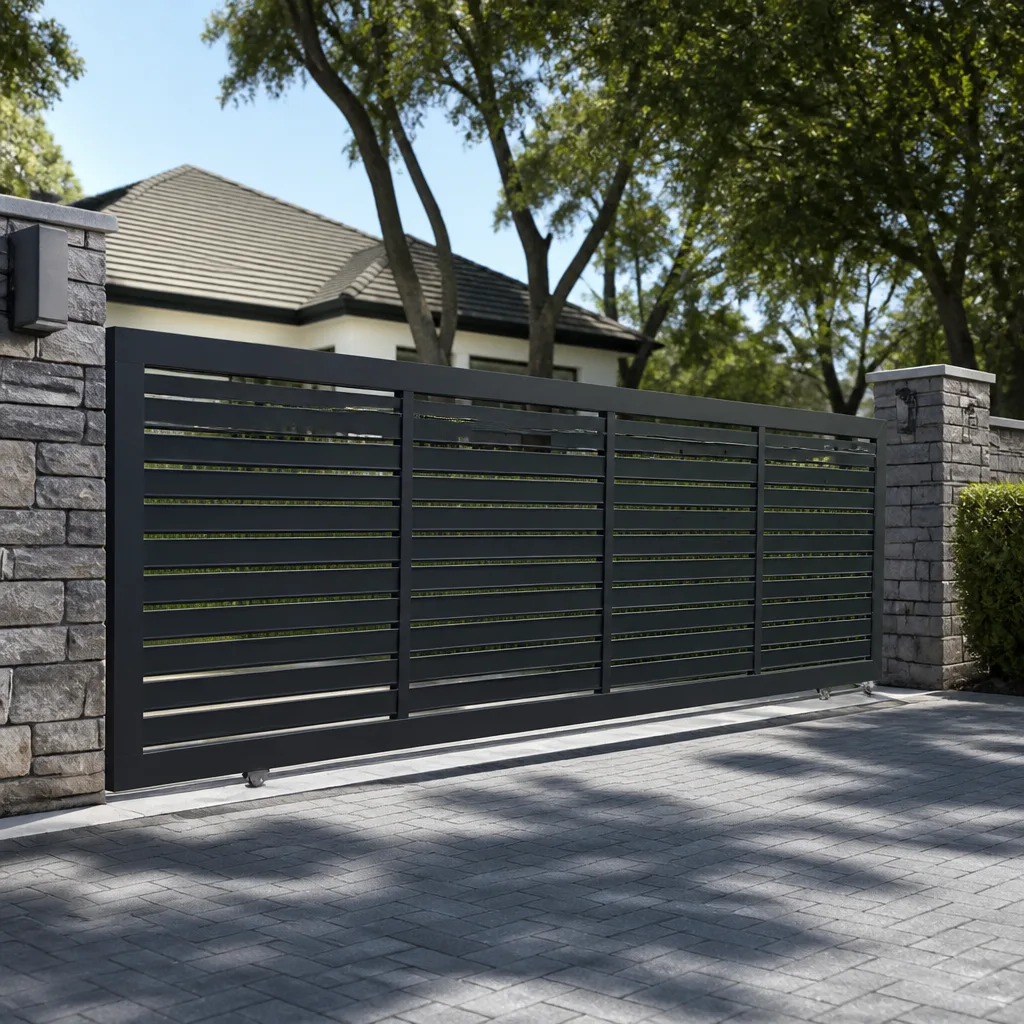
- Slide gates with a ground track: The truck wheels on the bottom of the gate run in a steel channel set into the driveway. In Beverly Hills, decomposing magnolia leaves, eucalyptus bark, and dirt from hillside runoff pack into that channel. When the track fills enough, the gate drags, the motor overheats, and the limit switch trips. Clear the track with a screwdriver or a stick, not your fingers, because the gate can move without warning.
- Slide gates with a cantilever design: Cantilever gates ride on rollers set above the driveway, with no ground track. The debris problem here is not in the channel, it is in the roller carriages. Dirt and dust from Beverly Hills’ dry summers collect on the rollers, then the winter rains turn that dust to grit. Check the rollers monthly and clear any packed material from the carriage guides.
- Hydraulic swing operators (common in the hills): These operators sit below ground in a box at the hinge side. The box collects water after irrigation or rain. If you lift the lid and see standing water, the seals need replacement and the fluid level is likely compromised. That is not a homeowner fix, but noticing the water early saves the entire operator.
Show me the gate closing on its own and I’ll show you where it’s failing. We have stood in enough Beverly Hills driveways to know that the operator that “just stopped working” was usually trying to push against three inches of packed leaves for a month before it gave up. The sensor and track check takes ten minutes and prevents most of the no-open/no-close calls we get.
A Month-by-Month Maintenance Calendar for Beverly Hills Weather
Beverly Hills has a climate most cities would envy, but it is not uniform. The rainy season, usually December through March, followed by the long dry stretch from April through November, creates a predictable maintenance rhythm. Here is the month by month schedule we recommend, and it is built specifically for Beverly Hills weather patterns, not a generic Southern California calendar:
- January: Rain is usually at its peak. Check the low spots on your gate’s bottom rail for standing water, and check the operator’s below-ground box if you have one. Run the cardboard tube test after any heavy storm, because wind can damage the gate and shift the force settings.
- February: The air is still damp. Inspect ironwork for new surface rust and dab any scratches with rust-inhibiting paint. Lubricate hinge pins and roller bearings with a light machine oil, not WD-40, which washes off in rain.
- March: The Santa Ana winds sometimes start this month. After any windy week, recheck the track and sensor alignment, because wind-blown debris is at its worst. Test the operator’s force settings again.
- April: Spring growth in Beverly Hills means sprinklers ramp up. Walk the gate line and check that irrigation is not spraying the gate or the operator housing. Overspray is the leading cause of early corrosion on iron gates we have seen from Roxbury Park to Trousdale Estates.
- May: Do the three-point post inspection. The ground is drying after the winter rains, and that is when post movement shows itself. Check the gap uniformity and the base push test.
- June: The dry season is here. Grease the opener chain or belt if you have a slide gate, and check the battery backup on your operator if you have one. Beverly Hills has enough brownouts during summer peak that a dead battery backup means a gate stuck closed when you need to leave for work.
- July: Heat stresses motors. Check the operator’s cooling vents for dust and clear them with compressed air or a vacuum. If the motor is too hot to touch after a full open-close cycle, it is working too hard and something is dragging.
- August: The hottest month. Run the full inspection again: hinges, track, rollers, sensors, force settings. Heat makes metal expand, which changes clearances and sometimes causes gates to bind that worked fine in spring.
- September: Pre-rain prep. Touch up any paint chips now, before moisture gets into them. Check the seal around the operator box, and replace any cracked weatherstripping.
- October: The first Santa Anas of fall. After the first big wind event, clear debris from the track and recheck the photo eyes. This is also a good month for a professional inspection before the rainy season.
- November: Check that your gate’s drain holes on the bottom rail are clear. They clog with dust over the summer and then the first winter rain fills the rail with water.
- December: Full end-of-year pass. Run the complete checklist: three-point inspection, corrosion check, tube test, sensor clean, and a track clear. Make note of anything that changed during the year.
Save this list. Better yet, pick the first Saturday of every month and spend fifteen minutes on the relevant tasks. The homeowners who follow this calendar in Beverly Hills are the ones we rarely hear from, except for the yearly tune-up call.
What Actually Wears Out First: The Parts That Fail in Order
Not everything on your gate ages at the same rate. Some parts are designed to wear and be replaced. Others should last for decades if the gate was built and installed correctly. Here is the order in which we see failures across Beverly Hills, from most common to least:
- Hinge pins and bushings. These are wear items by design. They take the full weight of the gate every day and they slowly oval out. Expect to replace hinge bushings every five to eight years on a used-daily swing gate.
- Photo eye sensors. Not because the sensors themselves fail, but because they get knocked out of alignment or cracked by weed whackers and dogs. A sensor replacement is cheap compared to most gate parts.
- Operator capacitors and batteries. Caps fail slowly over time, often showing up as a gate that struggles to start on cold mornings. Back-up batteries last three to five years and then die without warning, usually right before a power outage.
- Slide gate rollers or truck wheels. On slide gates, the wheels under the gate take the abuse. They flatten over time, especially if the track collects grit. A flat spot on a wheel makes the gate thump at one point in its travel.
- Welds on the frame. On iron gates, weld failures happen at stress concentration points, usually where the top rail meets the hinge stile. A cracked weld shows up as a hairline line through the paint. Do not ignore it; a crack that starts as a hairline grows into a broken gate.
- Operator motors themselves. These last fifteen to twenty years if the gate stays balanced and the track stays clear. Most motor burnouts are not motor failures, they are failures of everything else around the motor that made it work too hard.
Understanding what wears first changes how you budget. You should expect to replace hinge bushings and clean sensors on a schedule. You should not expect to replace a motor unless the gate has been dragging for years or the operator has been abused by a misaligned track. And here is the thing worth knowing about the repair-first philosophy: Gatewood Fence & Gate home is built on the idea that fixing the gate in your driveway beats replacing it, and we have been doing exactly that since 2001. We have welded the same Beverly Hills gate frame three times over the years for one homeowner, and it is still the original gate his dad installed in 1987.
Common Mistakes to Avoid
- Lubricating without cleaning first. Spraying oil over packed dirt just makes a dirt-and-oil abrasive paste that wears pins faster. Wipe the hinge or roller clean, then lubricate.
- Using WD-40 on gate hardware. WD-40 displaces water but it is not a lasting lubricant. Use a lithium grease for hinge pins and a light machine oil for roller bearings. WD-40 on a gate hinge washes off within a couple of weeks.
- Painting over rust without addressing it. Paint over active corrosion buys you six months of appearances and then the blistering comes back worse. The compromised metal needs to be addressed first.
- Forcing a gate that will not open with the operator. If the operator cannot move the gate and you put your shoulder into it, you can do more damage to the hinges and operator than the original problem ever did. Disengage the operator first, then move the gate manually.
- Adjusting the force settings to “fix” a dragging gate. If the gate drags and you crank up the force setting to push through it, you are not fixing the drag, you are creating a safety hazard and shortening the motor’s life. Fix the drag.
- Ignoring a gate that reverses mid-cycle. A gate that starts to close, then reverses and opens again, is trying to tell you something. It is usually a sensor alignment issue or a track obstruction, and the problem worsens while the gate keeps working harder.
- Letting sprinklers spray the gate or operator. In Beverly Hills, irrigation overspray is the number one cause of premature iron corrosion and operator housing rot we see. Adjust the spray heads or the gate will pay for it.
When to Call a Professional
If your three-point inspection shows post movement, if the cardboard tube test fails, if you see blistered or flaking corrosion that has penetrated beneath the coating, or if the gate makes a screeching or grinding noise that you cannot trace to a specific hinge or roller, call someone. Those are not homeowner fixes and they do not improve with time. And if you are not sure what you are looking at, or you found a written estimate from another company and want a second set of eyes on it, that is what a second opinion is for. Gatewood Fence & Gate offers free estimates in Beverly Hills, and a free second opinion on any written estimate. Call (559) 844-6989.
Frequently Asked Questions
Monthly for the quick checks (hinges, track, sensor lenses) and twice a year for the deeper tasks (force settings, post inspection, corrosion treatment). Beverly Hills’ dry summers and winter rain cycle make a spring and fall schedule the practical minimum. Call (559) 844-6989 if you want a maintenance schedule matched to your specific gate and property.
Gate Repair services in Beverly Hills typically range from $185 for a minor sensor realignment or hinge pin replacement to $650 for operator board replacement or structural welding. A full operator replacement runs higher. Every quote is agreed before work starts, and no Beverly Hills job carries a trip charge inside the county.
If the sag is from worn hinge bushings, a mechanically inclined homeowner can often replace them. If the sag is from a leaning post or a cracked weld, no amount of hinge work will fix it, and the gate needs structural repair. The three-point inspection in this guide tells you which one you have.
We service DoorKing, Elite, Ghost Controls, and Mighty Mule among others, and the honest answer is that any of them can last fifteen years or more if the gate stays balanced and the track stays clear. Operator failure is almost always the symptom of a mechanical problem elsewhere. Pick a brand that has local service support, because the part availability matters more than the logo.
Run the cardboard tube test described above. A properly set operator should reverse from a crushable tube within two seconds without flattening it. If it does not, the force setting needs adjustment before someone gets hurt, and the motor should not be operated until it is checked.
Yes. We service nine major brands including DoorKing, Elite, Ghost Controls, Mighty Mule, LiftMaster, FAAC, BFT, Linear, and Viking. If you have an older gate or a brand that is not on the list, call (559) 844-6989 and we will tell you honestly whether we can help.
The Bottom Line
Gate maintenance in Beverly Hills is not about doing more, it is about doing the right checks in the right order. The three-point post inspection takes four minutes and catches most structural problems before they become emergencies. The cardboard tube test tells you whether your operator is safe in two minutes. The corrosion knowledge tells you what needs attention today and what can wait. And the month-by-month calendar keeps all of it on a schedule that matches Beverly Hills weather. Spend fifteen minutes a month, and you will be one of the Beverly Hills homeowners who calls us for a tune-up every few years instead of an emergency at eleven at night. For more guides & resources, visit our blog. And if you ever want a second set of eyes, the name is on the shop, the shop is down the road, and we answer the phone when you call.
Written by Hal Gatewood, Owner at Gatewood Fence & Gate, serving Beverly Hills since 2001.