
Free on-site gate assessment - hinges, posts, and your LiftMaster or Nice gate operator checked before anything is quoted
The assessment is free and the quote is the invoice.
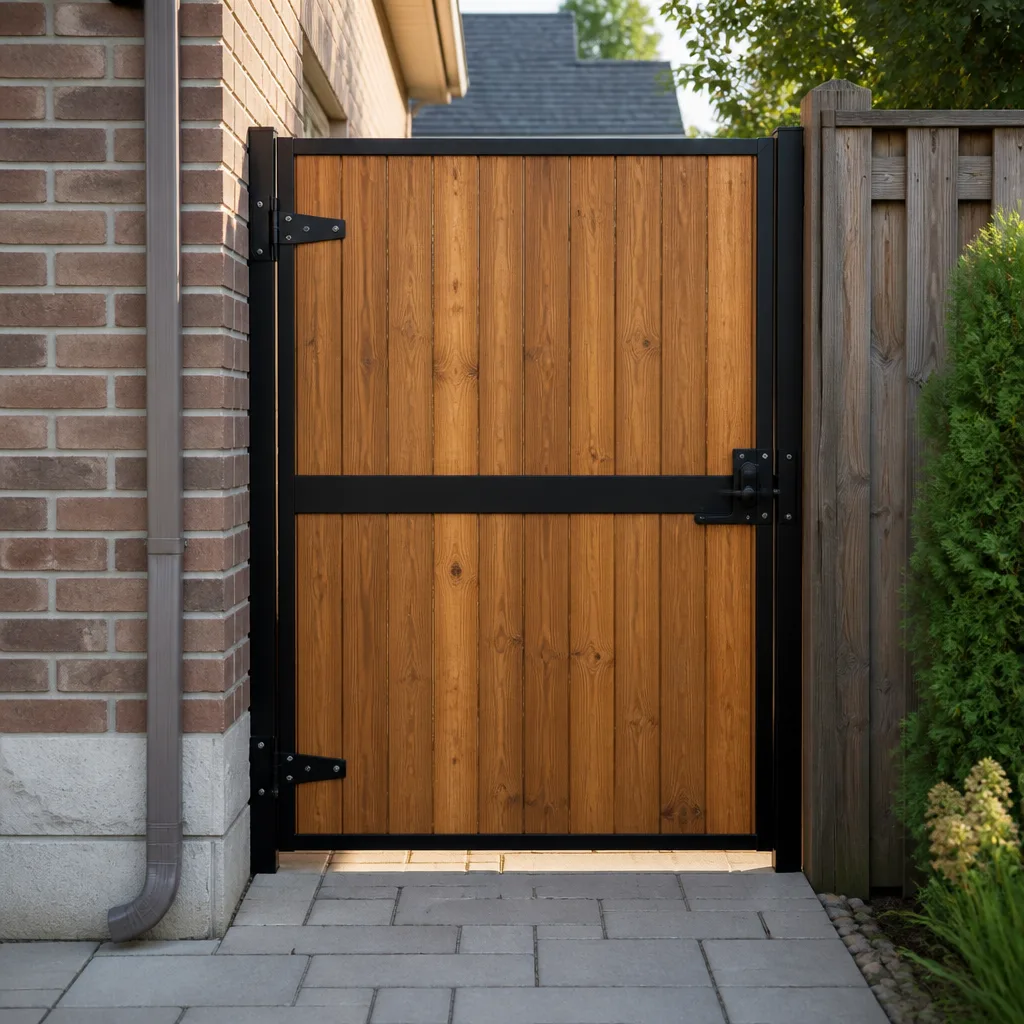
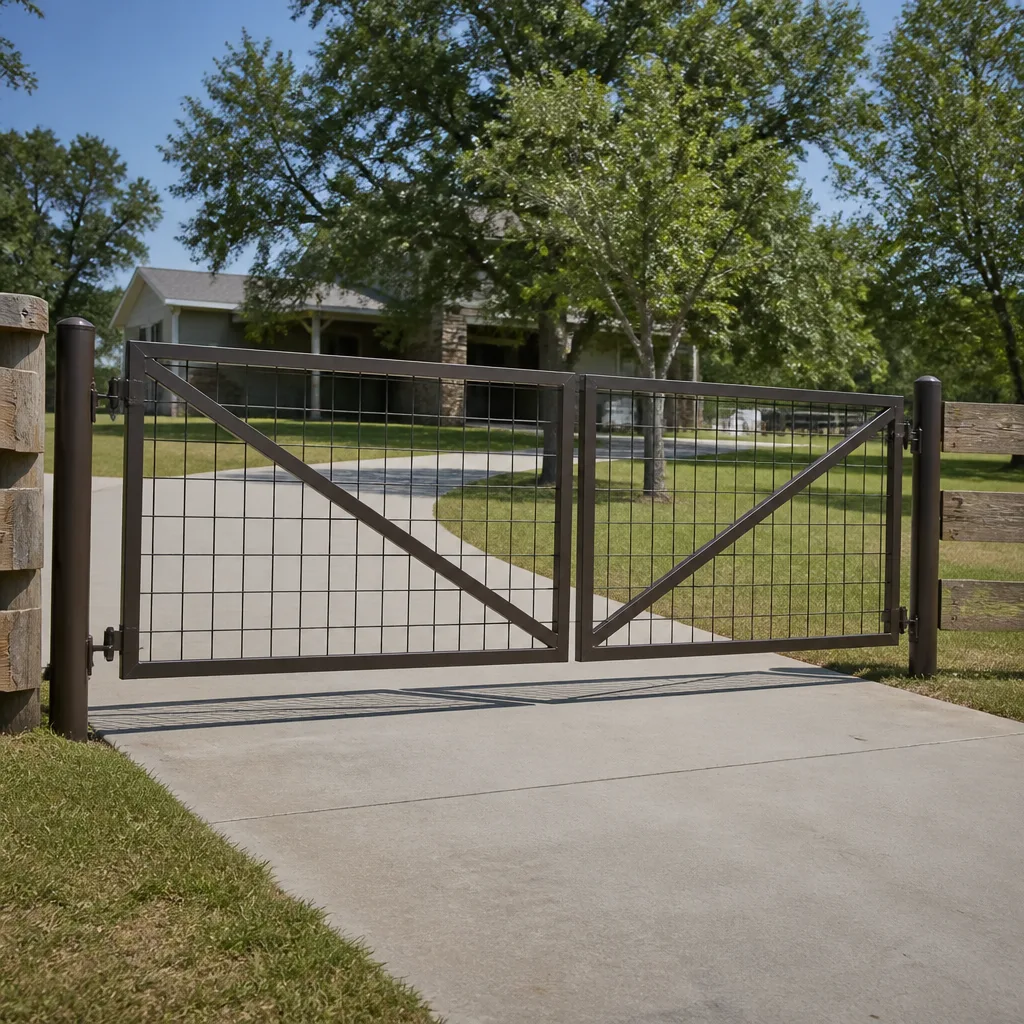
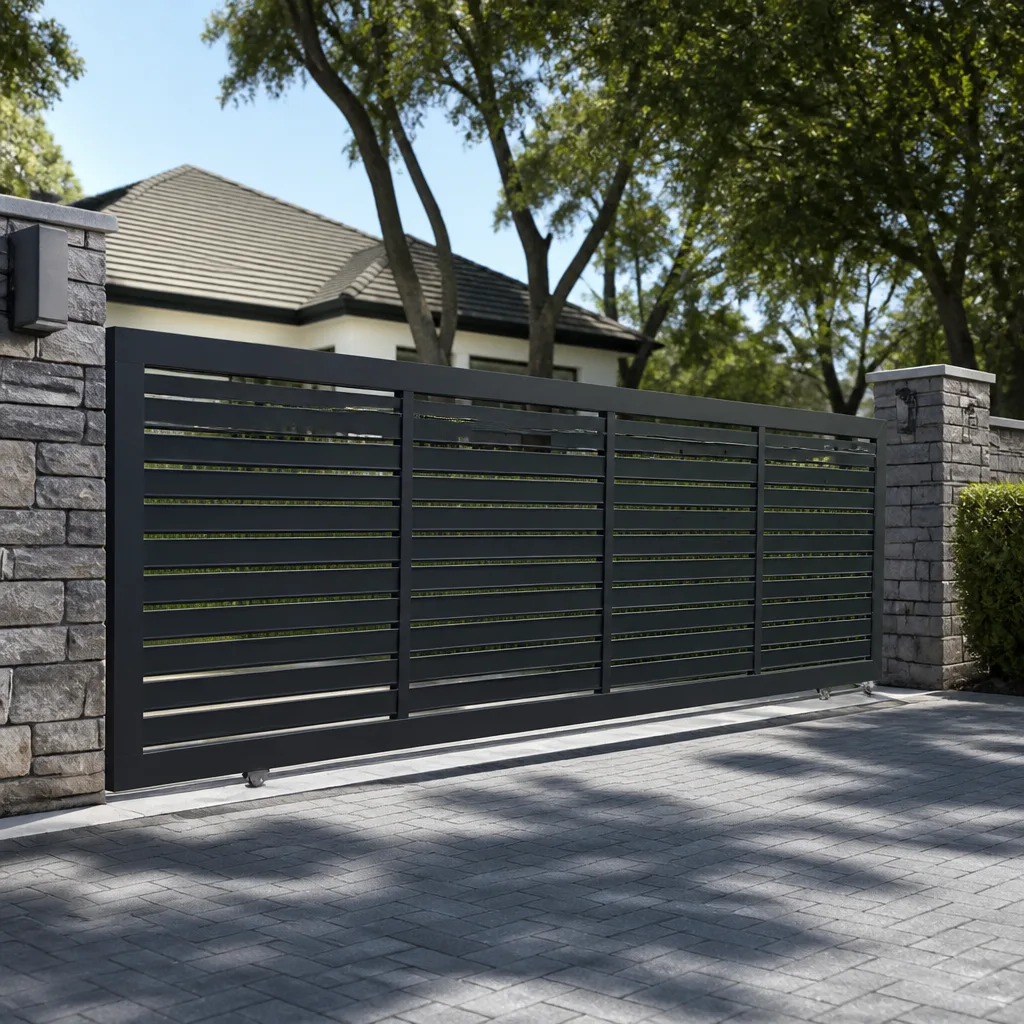
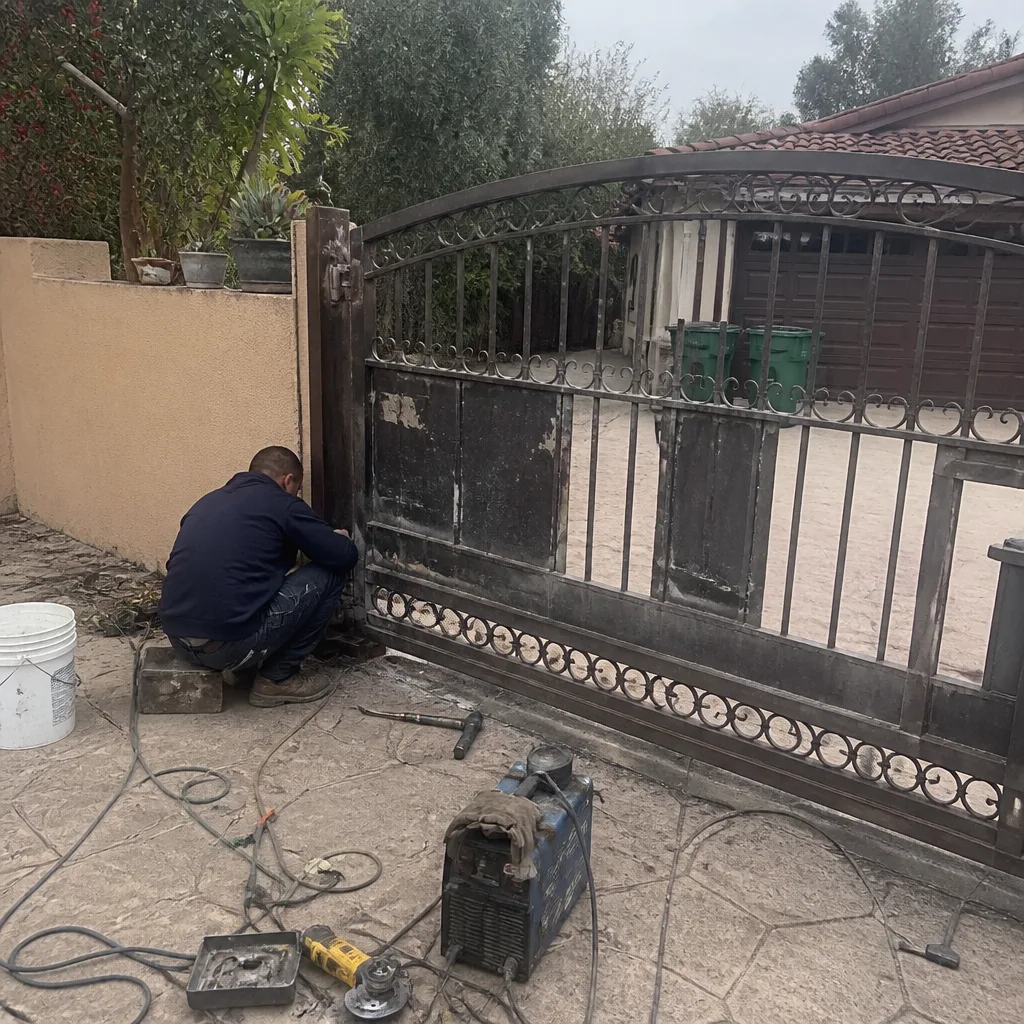 Before
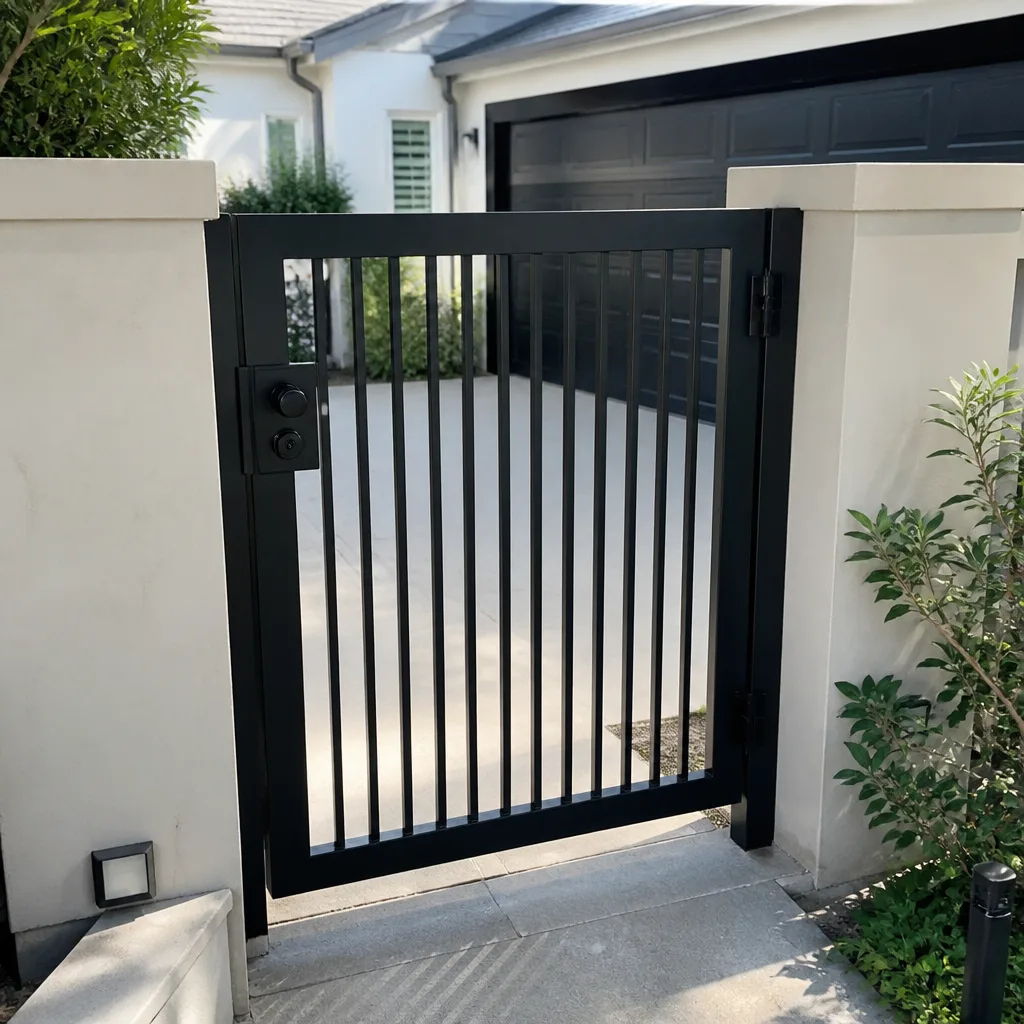 After
After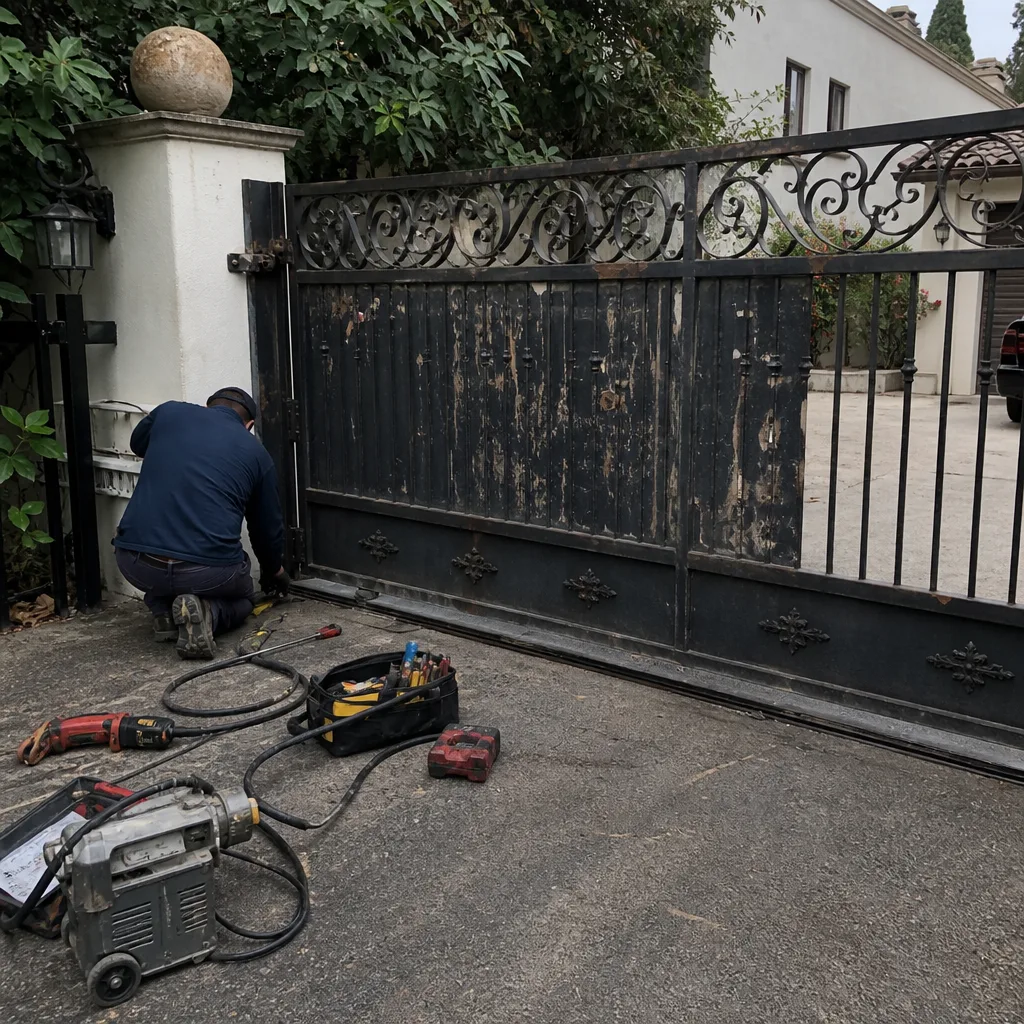 Before
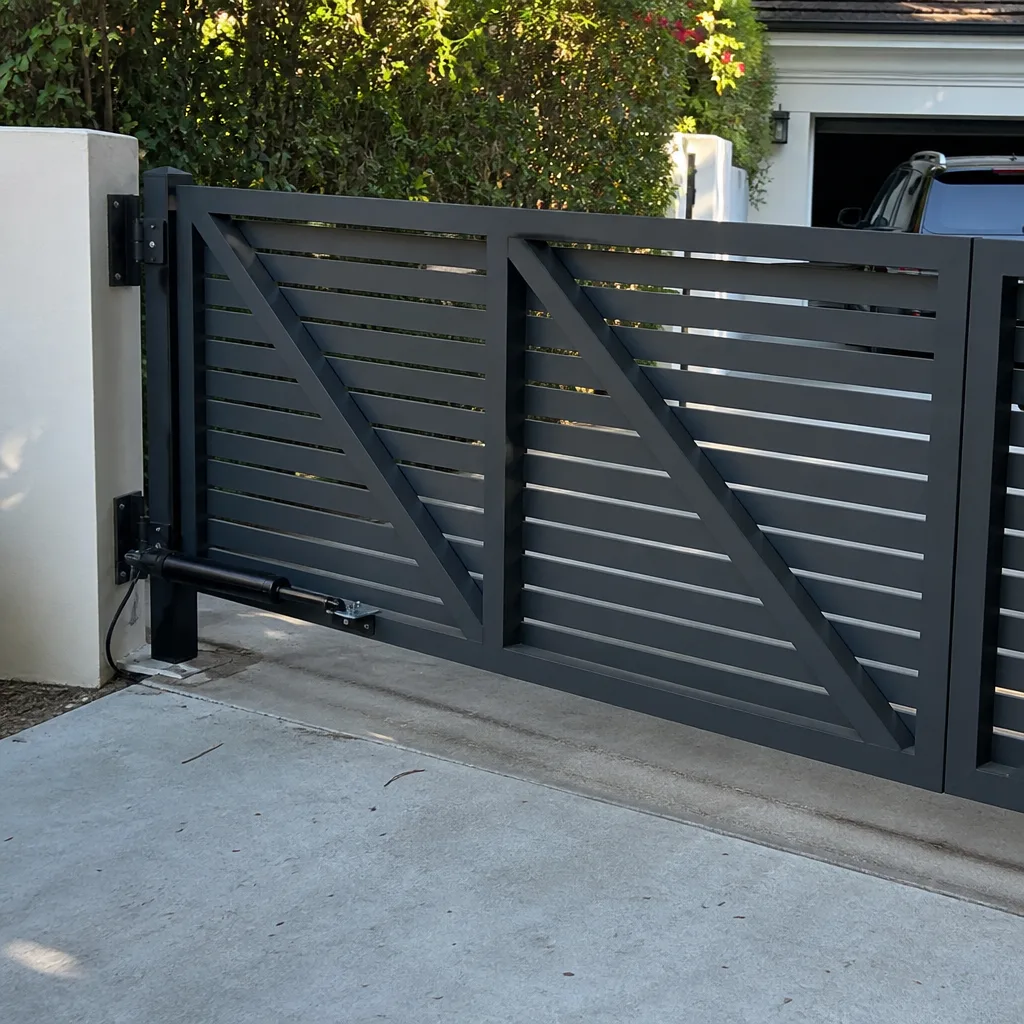 After
After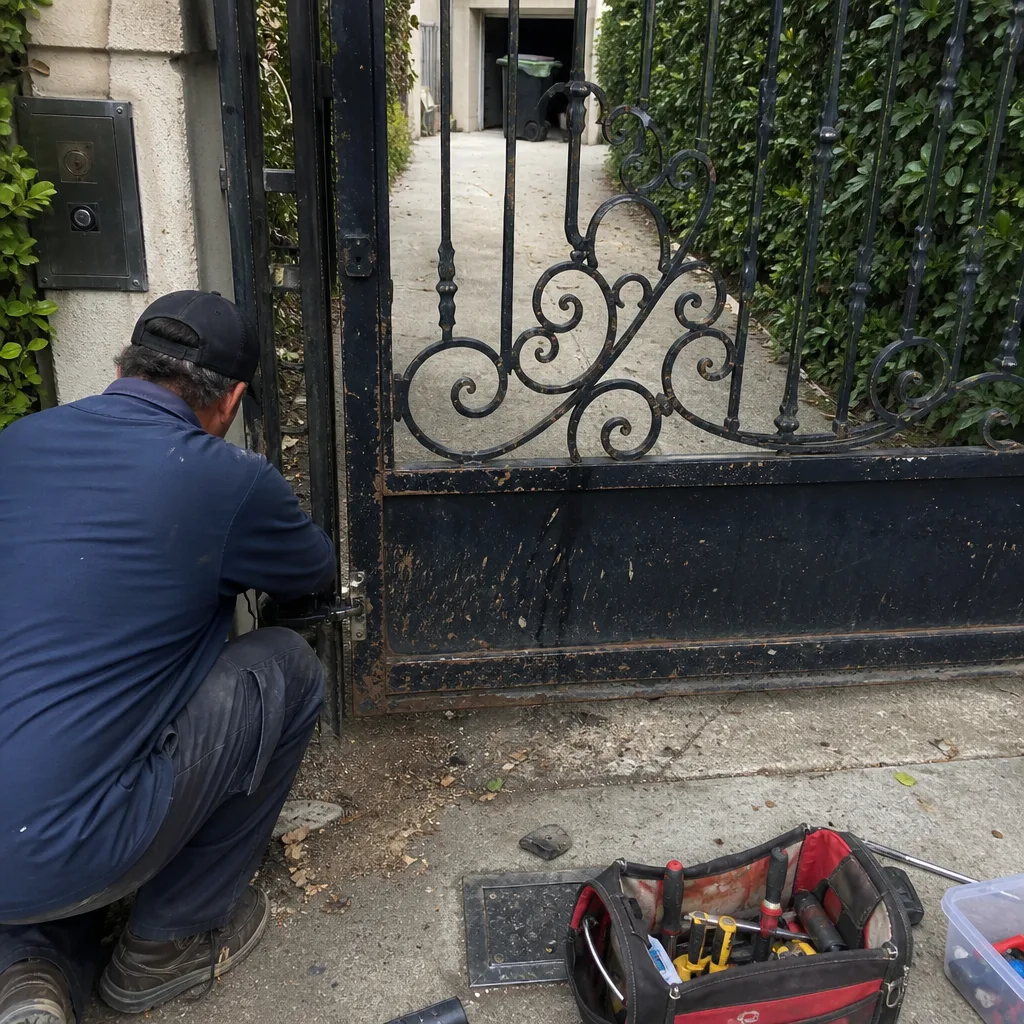 Before
 After
AfterFAAC Welding & Fabrication: The Beverly Hills Owner’s Guide
FAAC welding and fabrication in Beverly Hills typically runs $220 to $480 installed, and Gatewood Fence & Gate stocks the steel, brackets, and hinge assemblies to do most of it same-day once we’ve looked at the gate. The way most people find us is simple: the gate worked fine for years, then one day it didn’t. A corner dropped. A weld cracked. The opener started straining against a gate that no longer swings true. By the time you’re reading this, you’ve probably already pushed, pulled, or wedged that gate one too many times, and you’re wondering whether it’s fixable or whether somebody’s going to try to sell you a whole new gate. Here’s the short answer: we fix it. That’s the whole point of this page.
We’re an independent shop. We’re not affiliated with FAAC, but we’ve serviced their operators and gates since 2001, back when Hal Gatewood was still driving a truck with a cracked windshield and a toolbox held shut with a bungee cord. We know how these gates are built, where they break, and how to weld them so they don’t break in the same place twice.
Which FAAC Models This Applies To
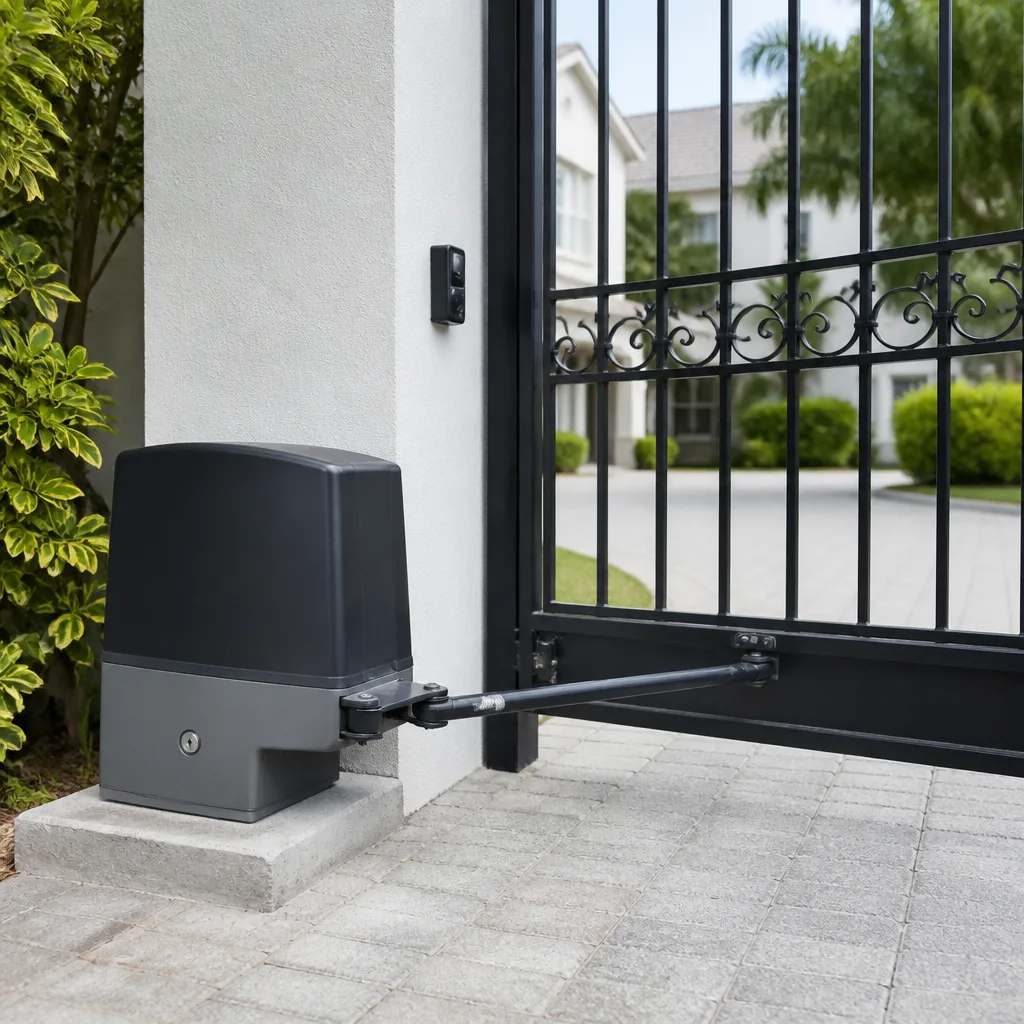
If you have a FAAC swing gate or slide gate operator, the welding and fabrication work we do falls into three buckets: hinge plates and pins, bracket mounts for the operator arm, and the gate frame itself, which is usually steel or aluminum. The FAAC 400, 402, 412, 415, 750, 760, 770, and 844 series operators all bolt to steel brackets that someone has to weld or tap into the gate frame. Those brackets fail before the operator does. We see it every week in Beverly Hills, especially on the older estates north of Santa Monica Boulevard where gates have been swinging since the 1990s.
One thing to know about FAAC compatibility: the bracket geometry changed between the 412 and 415 series. A 412 bracket won’t line up cleanly on a 415, and if somebody welds it anyway with an adapter plate slopped on top, you get a gate that shudders at the end of its travel and an operator motor that burns out early. We’ve pulled apart more than a few of those. If you can’t read the model plate, look for the FAAC logo cast into the operator housing, then check the four or five digit number stamped under the cover. If the plate’s gone, we’ll match the arm geometry and stroke length to the gate’s weight and travel, and we’ll tell you honestly whether an OEM bracket or a fabricated one is the right call.
For steel gate frames, aftermarket steel is almost always just as good as the original, provided it’s the right wall thickness and the welder knows what they’re doing. For aluminum gates, we weld with spool gun MIG and use 5356 filler, because 4043 filler corrodes faster in the marine layer that rolls through the canyons. That’s the kind of detail that matters on a gate that faces Santa Ana winds in October and salt air the rest of the year.
Signs Your FAAC Welding & Fabrication Is Failing
- A corner of the gate sags or drags. This is usually a failed weld at a hinge post or a hinge plate that’s torn loose from the gate frame. The gate isn’t heavy in the middle. The failure is where the gate attaches, and that’s where we start.
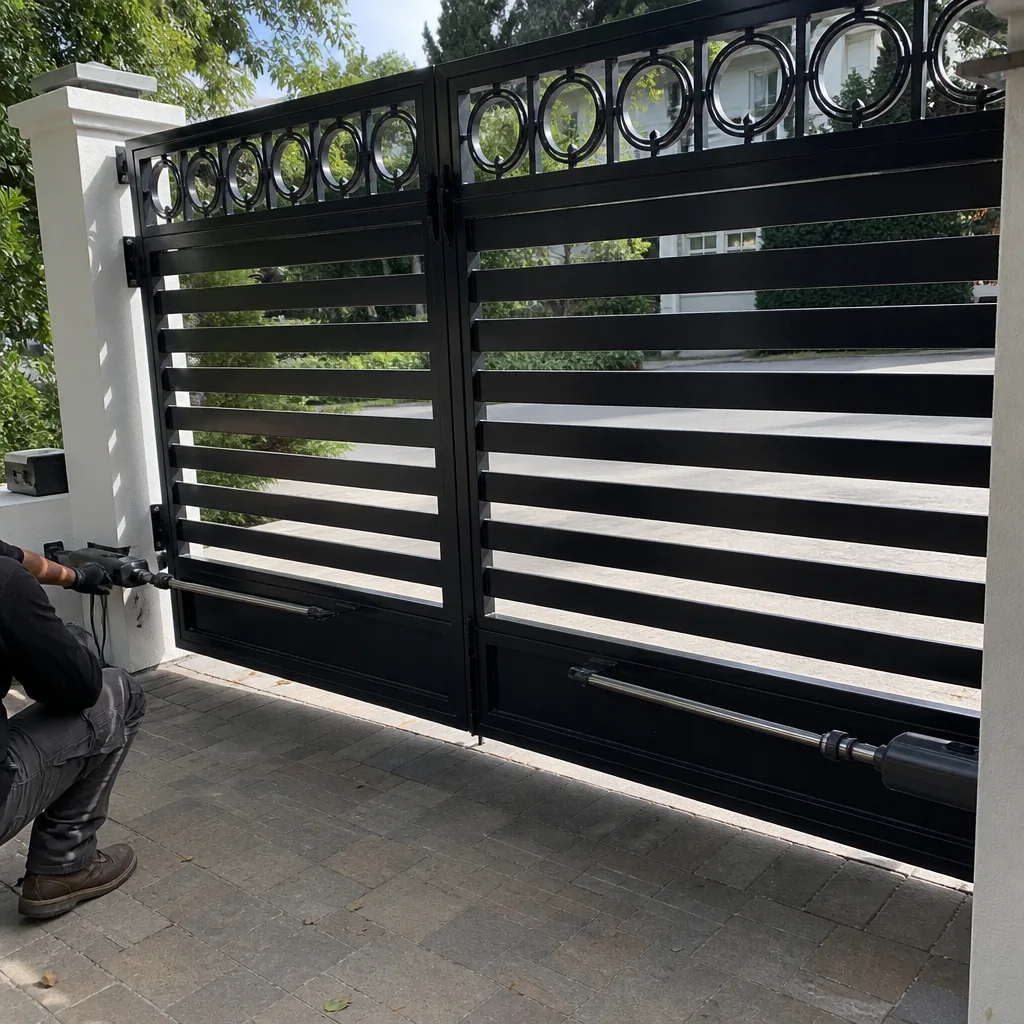
- The operator arm is pulling away from the gate. FAAC operators push and pull from a fixed bracket. When that bracket starts to flex or crack, the gate hesitates, stutters, or reverses mid-travel. If you can see daylight between the bracket and the gate, the weld is already gone.
- A crack you can see at the hinge or the frame corner. Surface rust along a crack means it’s been failing for a while. If you can flex the crack by pushing the gate, don’t keep flexing it. Every cycle widens it.
- The gate makes a grinding or popping sound at the same spot in its travel. That’s metal shifting against metal. A weld has broken and the pieces are moving under load. It never gets quieter on its own.
- The gate drifts open or closed when it should be stopped. A bent or broken hinge pin, or a frame weld that’s failed, changes the gate’s balance. The FAAC operator has to work harder, and you’ll notice the motor running longer and hotter.
None of these are things you should ignore. A gate that sags at the hinge is putting load on a weld that was never designed for it. When it lets go, it lets go fast, and a swinging gate panel weighs more than most people expect.
Replacement Cost & What’s Included
In Beverly Hills, you’re looking at $220 to $480 for most FAAC welding and fabrication work, parts and labor included. A simple hinge plate replacement on a single swing gate usually lands around $220 to $300. Rebuilding a gate corner or fabricating a new operator bracket runs $300 to $420. A full steel gate frame repair, where we cut out the failed section and weld in new steel, is $400 to $480 and up depending on how much of the frame has to be replaced.
What drives the range is access and material. If your gate post is set in a tight planter with three feet of clearance, that’s slower work. If we’re matching the patina on a wrought-iron gate so the repair doesn’t stick out like a sore thumb, that takes extra time. But the price is the price before we start. We quote it up front, you agree to it, and we don’t add a surprise line item when the job’s done. Every weld carries our 90-Day Done Right Promise: if it’s not done right, we make it right. That’s in writing.
We also have standing offers that don’t require haggling: $40 off any repair over $200, no trip charge inside the county, and a permanent 10% discount for seniors and veterans. Call (559) 844-6989 and we’ll give you a real number before we ever show up.
DIY or Call Us?
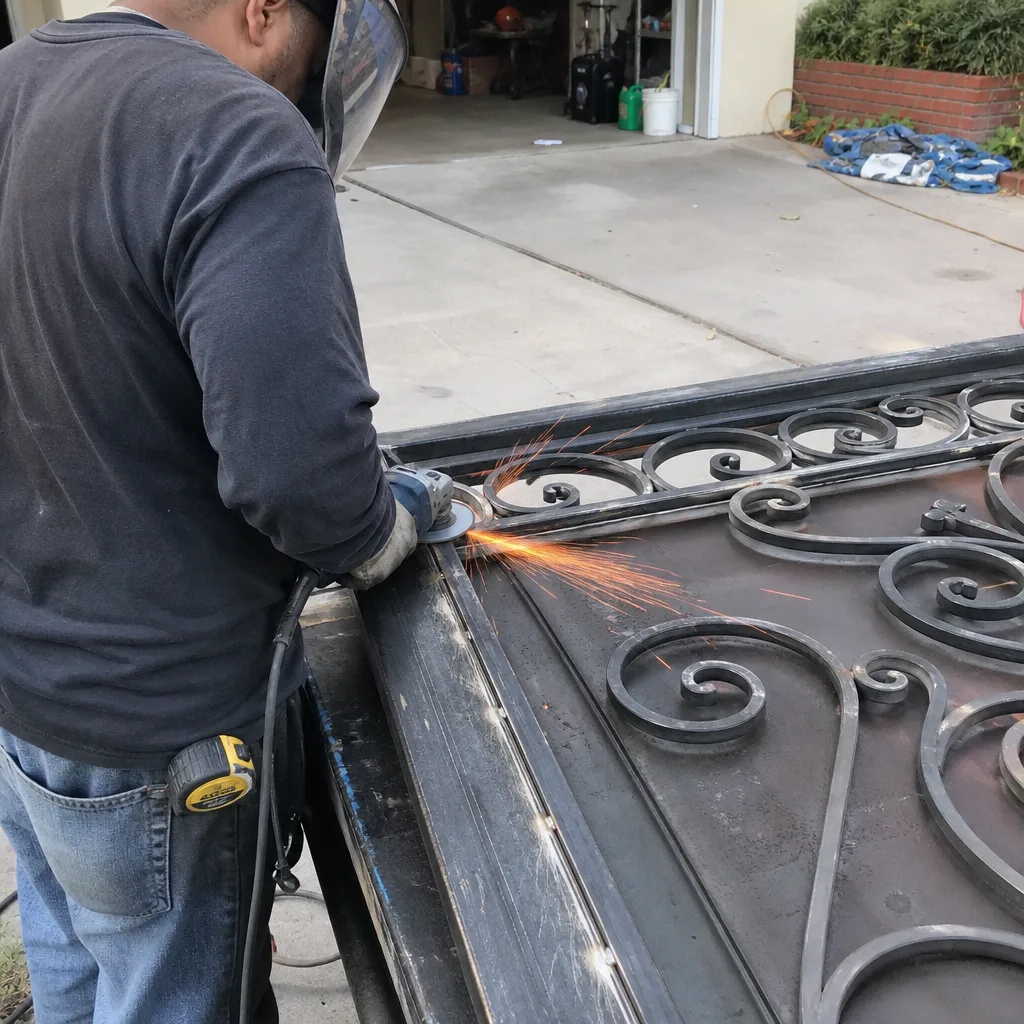
Honestly, most of this isn’t a safe DIY job. Welding a gate frame means cutting out failed steel, grinding clean surfaces, and laying down a penetrating weld that holds under cyclical load. If the weld fails, a gate panel can come off its hinges, and that’s a serious injury risk to anyone nearby. The same goes for welding brackets on a gate that’s still connected to a FAAC operator. That operator has to be disconnected at power and the gate properly braced before anyone puts a torch or a welder to it.
What you can do safely is take pictures. Open the operator cover, photograph the model plate, and photograph the failed bracket or crack. Text those to us or describe them over the phone. Tell me what it’s doing and I’ll tell you what it needs, no guessing, no runaround. If it’s something we can patch on-site, we’ll do it at your house in Beverly Hills and you’ll never have to haul a gate panel anywhere. Call (559) 844-6989 and talk to a real person. We don’t do voicemail.
FAQs
A properly welded repair on a FAAC gate frame, done with the right filler and good penetration, should last 10 to 15 years in Beverly Hills, where the marine layer and salt air chew through bad welds in three or four. The welds we lay down today outlast the original hardware they’re attached to. Call (559) 844-6989 if you want eyes on yours.
Most cracked brackets can’t be repaired safely, because the fracture has already fatigued the surrounding steel. We cut out the bracket and weld in new steel or a fresh OEM bracket, which costs less than a full gate replacement and keeps your FAAC operator running true.
Most FAAC bracket replacements and hinge repairs are done in two to four hours on-site, including grinding, welding, cooling, and a full cycle test on the operator. A full frame rebuild might take a day, but we’ll tell you up front before we start.
Yes, we keep FAAC-compatible hinge plates, operator brackets, and steel stock on the truck, along with parts for LiftMaster, Mighty Mule, and Ghost Controls. If we don’t have a specific FAAC part, we can fabricate it from steel in the shop and bring it to your gate.
Written by Hal Gatewood, Owner, Gatewood Fence & Gate at Gatewood Fence & Gate, serving Beverly Hills and nearby areas.