
Free on-site gate assessment - hinges, posts, and your LiftMaster or Nice gate operator checked before anything is quoted
The assessment is free and the quote is the invoice.
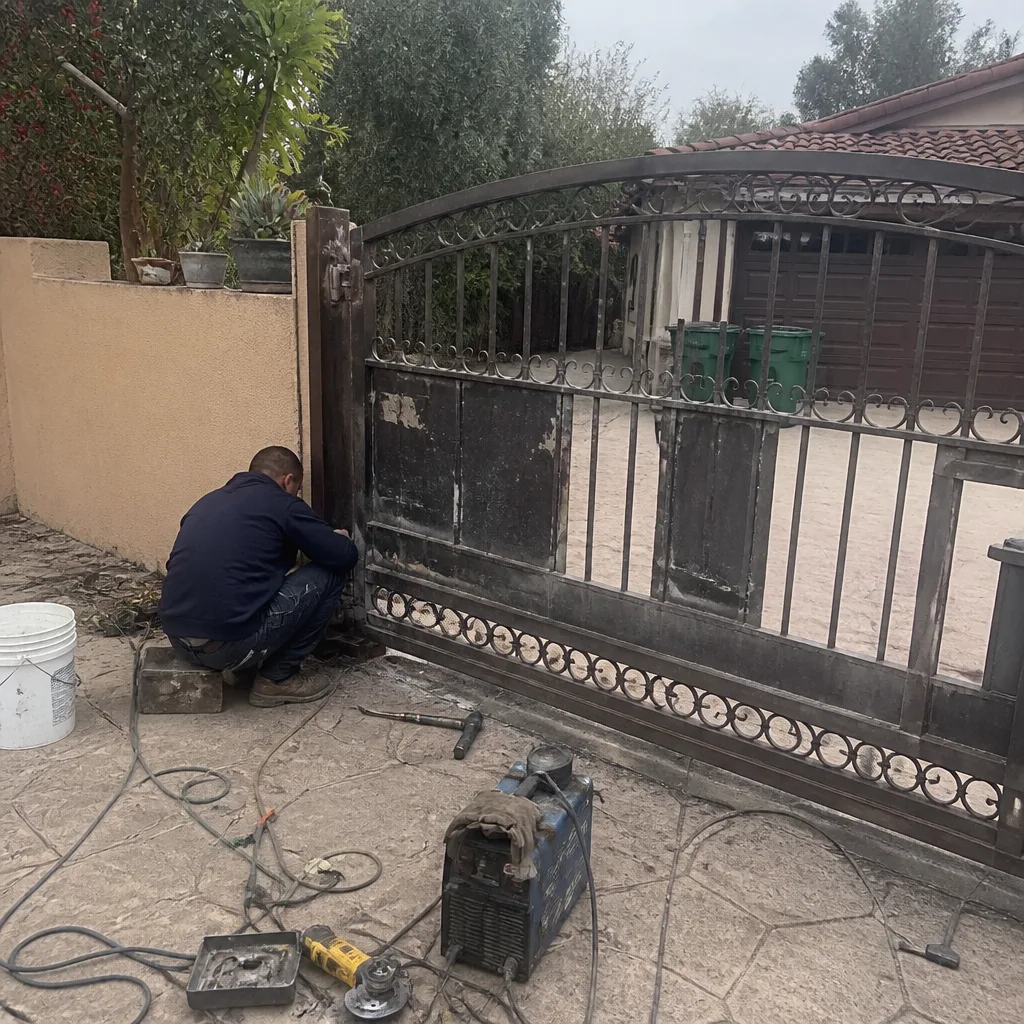 Before
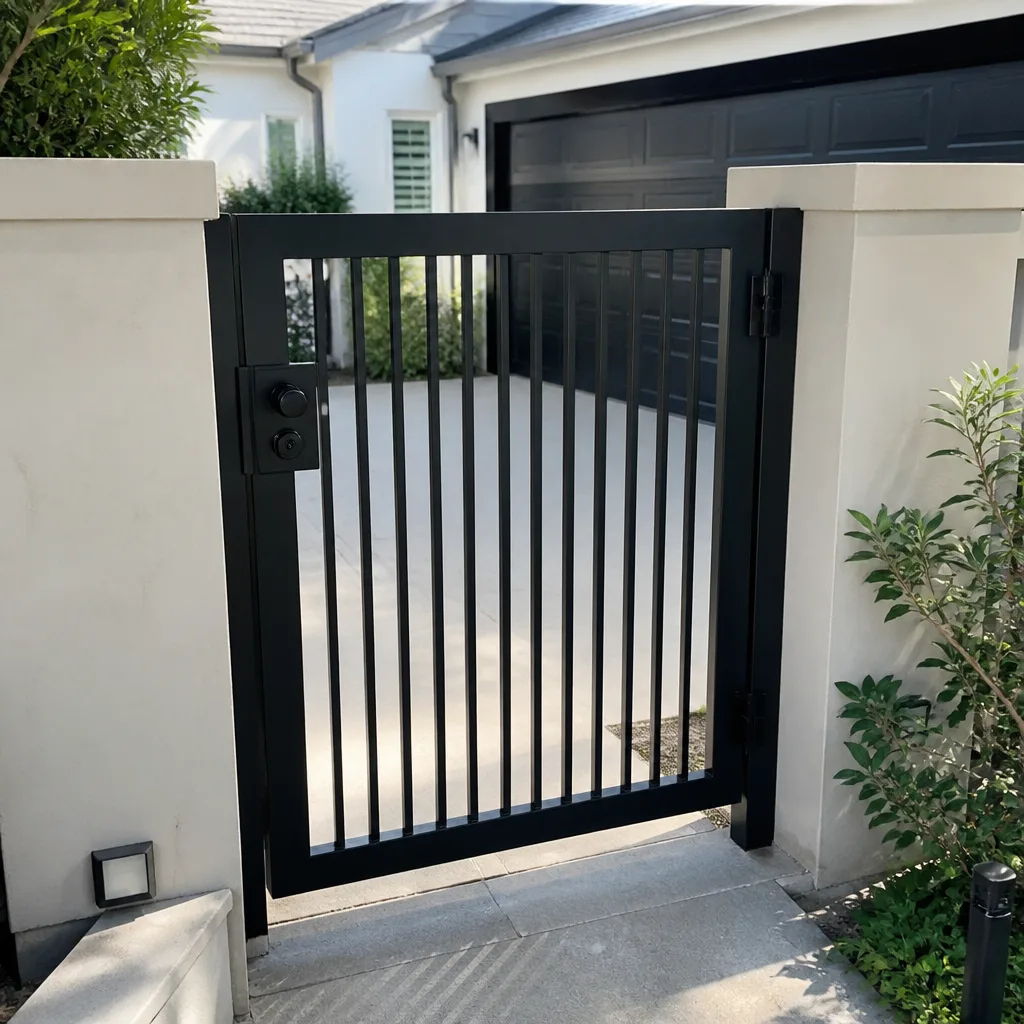 After
After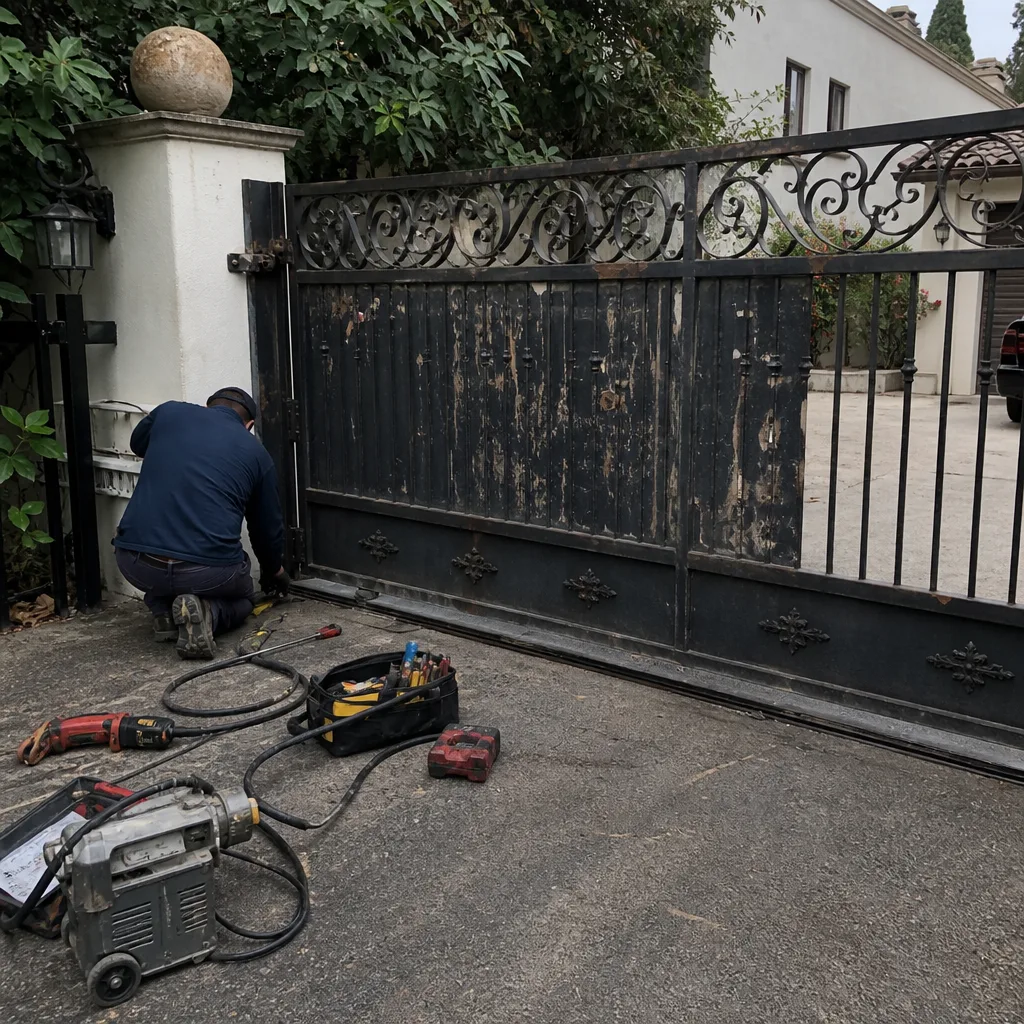 Before
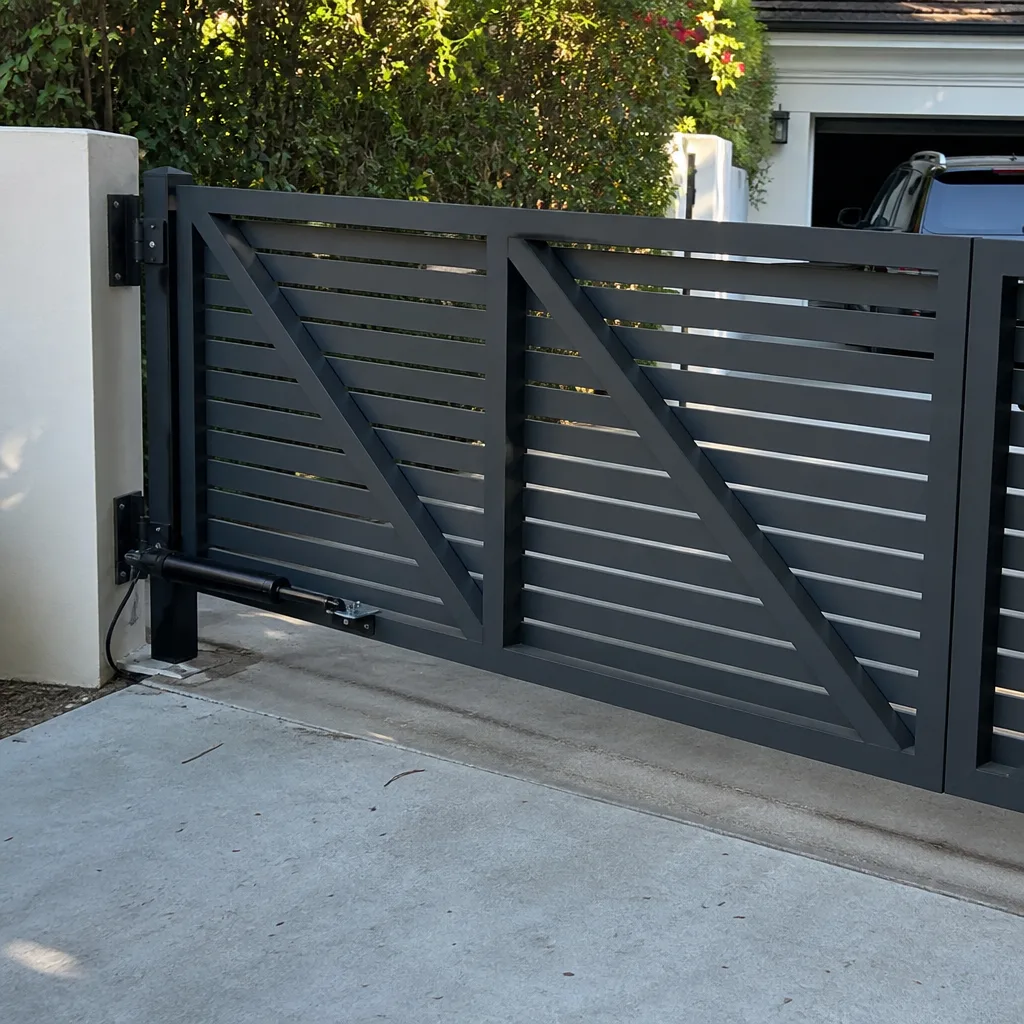 After
After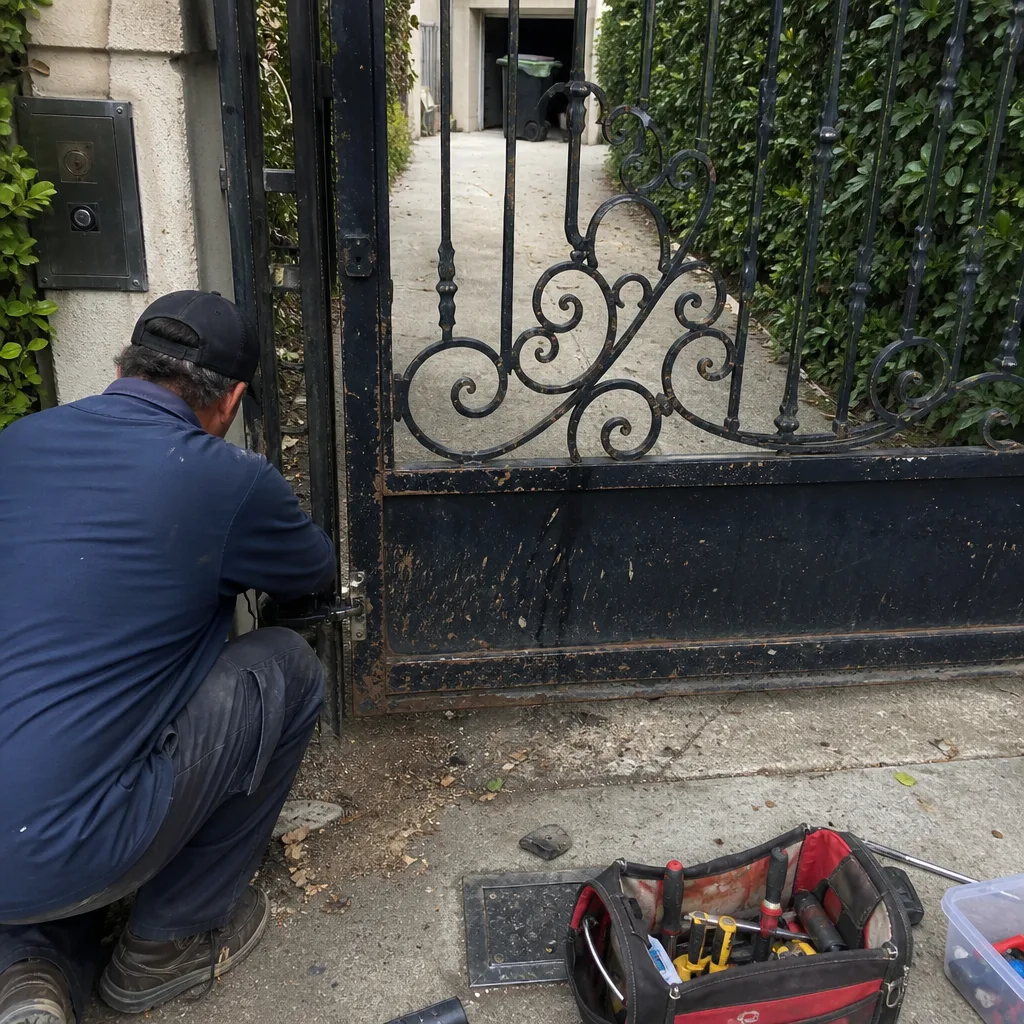 Before
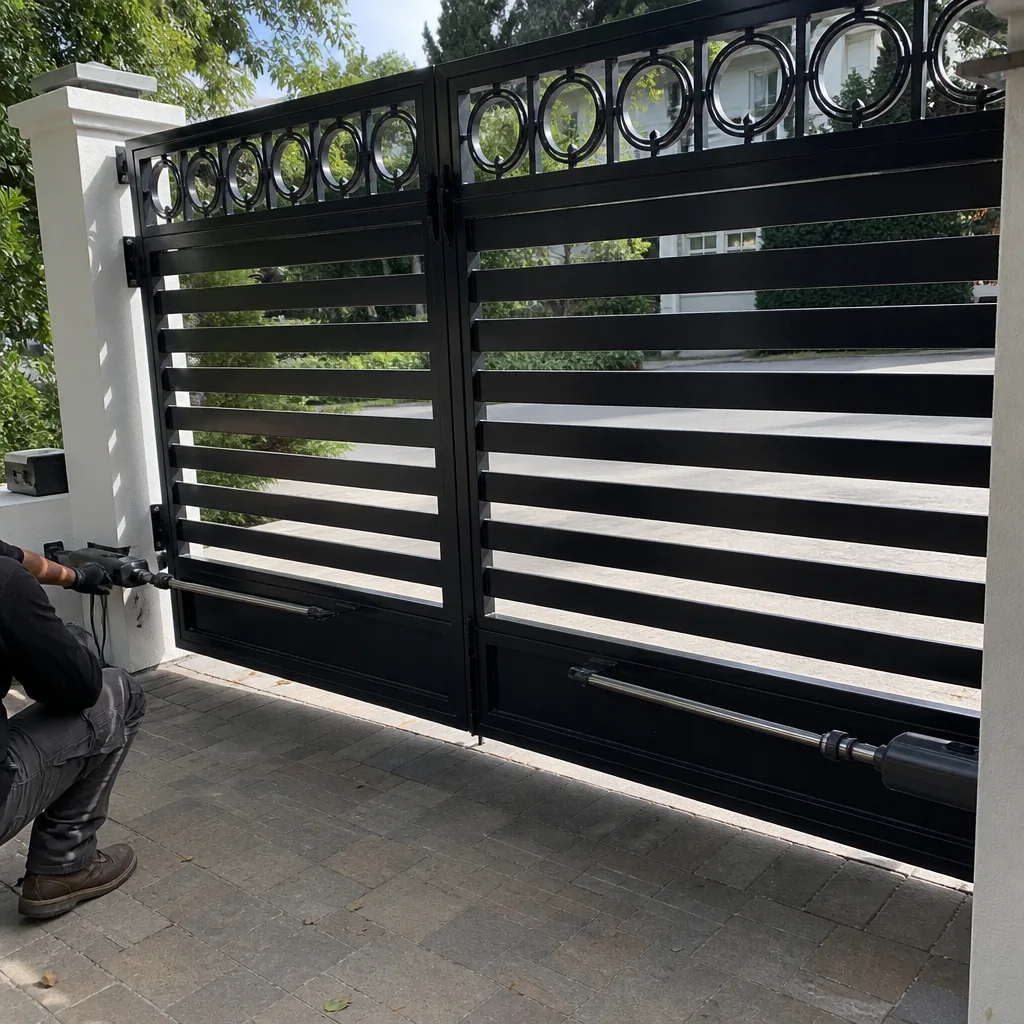 After
AfterFAAC Gate Motor Replacement: The Beverly Hills Owner’s Guide
A failed FAAC gate motor in Beverly Hills typically costs between $1,100 and $2,400 installed, depending on the model and whether we’re matching an original hydraulic unit or switching you to a newer FAAC 24V electromechanical operator. We stock the most common FAAC replacement parts on the truck, and in most Beverly Hills cases we can have your gate running same-day or next morning. The way most owners discover the problem: the gate starts moving slower than usual, groans mid-cycle, or simply stops responding to the remote after years of dependable service. Then the red warning light on the control board starts flashing, and you’re left staring at a gate that won’t budge.
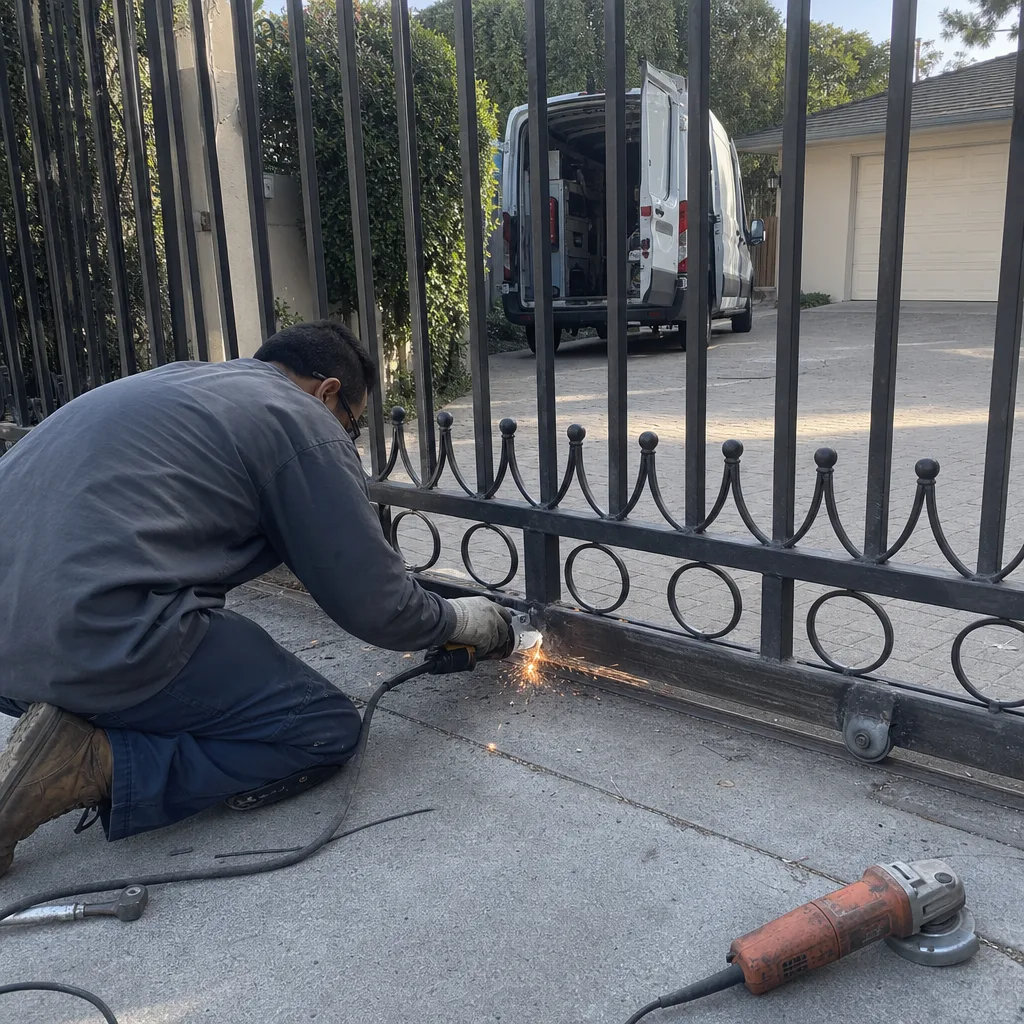
The good news with FAAC is the brand builds its motors to be serviced, not thrown away. Before you assume the whole operator is dead, there’s a solid chance the failure is a specific component inside: a capacitor, a limit switch, a hydraulic hose fitting, or a control board relay. Hal Gatewood has been opening these units in driveways around Beverly Hills since 2001, and more often than not, what looks like a dead motor is a $200 part doing the dying. But when the motor itself has genuinely failed, replacing it correctly the first time is the difference between a gate that runs another decade and a gate that limps along for six months before failing again.
Key Takeaways
- FAAC gate motor replacement in Beverly Hills: $1,100-$2,400 installed, quoted before work starts
- We stock FAAC-compatible motors and internal components on the truck for same-day service in most cases
- OEM FAAC vs quality aftermarket: both have a place, and we’ll be straight about which fits your model
- Your price is agreed upfront, in writing, before a single tool comes out
- Every replacement carries the 90-Day Done Right Promise
Which FAAC Models This Applies To
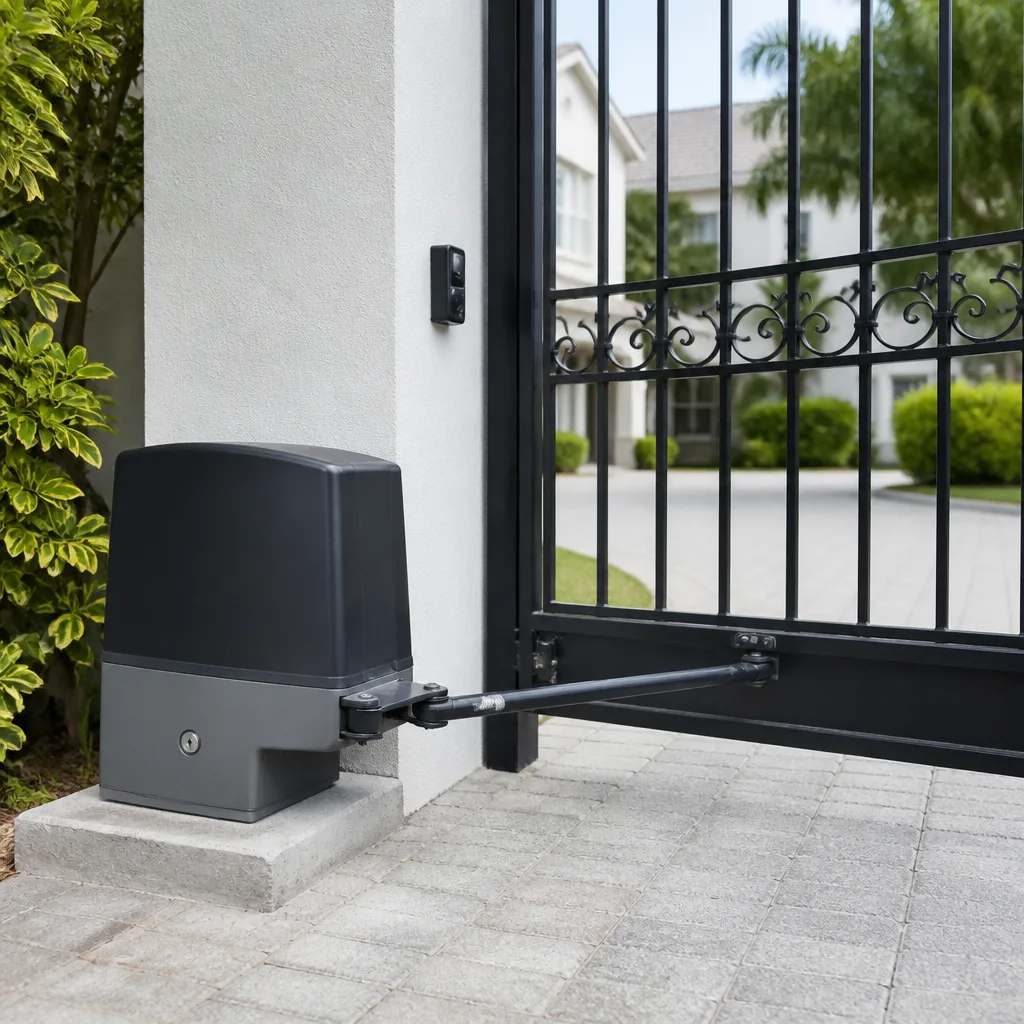
FAAC has been building gate operators since 1965, and Beverly Hills driveways are home to a wide range of their models: the old 402, 412, 415, and 422 hydraulic swing operators, the 540 and 750 series rams, the 844 electromechanical slide-motor, and the newer S418, S800H, and 391 series 24V units that have become common on newer estates. If your gate is 15-plus years old and still original, you’re probably dealing with a hydraulic unit. Those have a pump motor plus a separate ram, and the failure pattern is predictable: the pump seal gives out, or the motor capacitor quits, or the internal gear wears until the gate barely creeps open.
Identifying your model matters more than most companies let on. The good news is FAAC usually stamps the model on the motor housing itself, or on the metal tag riveted to the operator cabinet. If you can’t find it, we can identify the unit by the control board, the hydraulic fill ports, and the motor dimensions. A note on parts: for FAAC specifically, we lean OEM on control boards and hydraulic seals because the tolerances are tight and knockoff boards have a way of failing in the heat. For motors and capacitors, we’ve had excellent results with proven aftermarket equivalents that match the original specs. We stock both, and we’ll tell you honestly which one makes sense for your gate and your budget.
One compatibility gotcha that trips up a lot of Beverly Hills owners: FAAC 415 and 422 units share a similar housing but run on completely different control logic, so a motor that fits one will not communicate with the other’s board. If someone sells you a “universal FAAC motor,” be suspicious. Another local factor worth knowing: the combination of salt air drift from the coast and the dry heat of the basin is hard on capacitor seals, so failures spike in September and October after the long hot summer. If your FAAC gate has been humming but not moving, that capacitor is usually the culprit, and it’s a quick, inexpensive fix when we catch it early.
Signs Your FAAC Gate Motor Replacement Is Failing
- The gate moves noticeably slower than it used to. This is the most common first warning. On hydraulic FAAC units, slow movement usually means the pump is losing pressure, either through worn internal seals or a failing motor that can’t spin the pump at full speed. On electromechanical units, it’s often the motor bearings or a weak capacitor. Either way, it’s not going to get better on its own.
- You hear a humming or buzzing from the operator cabinet, but nothing moves. That hum is the capacitor trying and failing to provide the starting jolt the motor needs. On FAAC hydraulic units, it can also be a pump that’s cavitating because the fluid is low. If you hear that sound, stop pressing the button. Repeated attempts cook the capacitor or the motor windings. It’s the kind of thing Hal finds when somebody has been holding the remote button down for a minute straight, hoping the gate gets the message.
- The gate opens partially or stops mid-cycle and reverses. On an FAAC, this often points to a failing limit switch or an obstruction sensor picking up false readings. But if the gate has been moving slow over the past few months and now it’s stopping entirely, the motor has likely exhausted what it has left. The system is telling you something’s failing, not just being stubborn. Continuing to run it puts strain on the rest of the mechanism.
- The remote works, but the gate only responds after several attempts. That interruption between your click and the motor engaging is often a control board relay failing, but it can also be the motor’s internal start switch. We trace that signal path with a meter, not a guess, because the fix is different depending on where the break is. A gate that responds “sometimes” is a gate that stops responding “always” at the worst possible moment.
- The operator cabinet is warm or smells hot after use. Electric motors give off heat when they’re laboring. If your FAAC smells like an overheated appliance after the gate cycles, the motor’s windings are breaking down and drawing too much current. That heat damage is cumulative. Every cycle makes the next one a little hotter until the motor fails outright, usually during a heat wave or when you’re already late for somewhere.
If you’re seeing any of these, the worst thing you can do is wait for a full failure. A motor replacement is straightforward. A motor replacement plus a fried control board plus a bent drive arm is a different, more expensive conversation. We would rather show up for the simpler repair now, and you would rather pay for the simpler repair now. That math is easy.
Replacement Cost & What’s Included
You can expect to pay between $1,100 and $2,400 for a FAAC gate motor replacement in Beverly Hills, installed. The spread isn’t a mystery: a 24V electromechanical motor on a single swing gate is at the low end because the motor itself is priced lower and the installation is faster. A hydraulic pump replacement on a 415 or a 540-series ram on a double gate is at the higher end because the components cost more and there’s more labor involved in the swap, the bleed, and the adjustment. Here’s the breakdown:
- FAAC motor (OEM or quality aftermarket equivalent): $450-$950 depending on model
- Control board (if needed): $250-$600 OEM
- Capacitor and smaller components: $40-$120
- Labor for motor replacement and testing: $350-$600
- Hydraulic fluid and bleed (hydraulic units only): $80-$150
Every quote we give in Beverly Hills is written, and it’s the price you pay. Not an estimate that changes at the door, not a “we found additional issues” surprise. If we open the cabinet and find a second problem you didn’t know about, we stop, walk you over, show you what we found, and work out the number before another dollar is spent. You approve the work, the price, and the plan before we proceed. The 90-Day Done Right Promise applies to every part and every hour of labor, in writing. If something fails in those 90 days, one call brings us back. No runaround.
DIY or Call Us?
There are a few things you can safely check yourself in Beverly Hills before you call: make sure the gate is properly seated on its hinges and hasn’t sagged out of alignment (a gate fighting its own weight will kill a motor faster than anything). Check that no debris is blocking the track or the hinge posts. Make sure the breaker for the gate isn’t tripped. Those are free checks that often explain a suddenly dead gate. But once you’re opening the FAAC cabinet and looking at the motor, the hydraulic hoses, the capacitor, or the electrical connections, you’re in territory where the safe thing is to stop.
A FAAC hydraulic operator runs on high pressure and 120V or 220V power. The capacitor inside holds a charge even after the breaker is off, and a mistake with hydraulic fluid under pressure is a serious injury waiting on a wrong turn of a wrench. We’ve repaired more than one DIY attempt that ended with stripped fittings, a faceful of hydraulic fluid, and a gate that needed more work than it would have originally. If you want to check the breaker and clear the track before you call (559) 844-6989, we’re all for it. If you’re standing in front of an open cabinet with a socket set and a YouTube video paused, that’s where you close the cabinet and call Hal instead.
FAQs
On average, a FAAC gate motor in Beverly Hills lasts 10 to 15 years depending on the model, how often the gate cycles, and whether the gate itself stays in proper alignment. Coastal air and summer heat push components harder here, but a properly installed and maintained FAAC unit has a long service life. We see hydraulic units from the early 2000s still running when they’ve been serviced periodically. Call (559) 844-6989 to have your unit assessed and we’ll tell you whether you’re looking at a repair or a replacement.
Sometimes, yes. Capacitor failures, worn seals, bad limit switches, and control board issues are all repairable without replacing the motor itself, and that’s where we look first. If the motor windings are burned out or the pump is internally scored, replacement is the honest fix. We’ll show you the failed part before we touch anything, and the final call on repair versus replace is yours after we explain both prices.
Most FAAC motor replacements in Beverly Hills take 2 to 4 hours on site. That includes removal, installation, wiring, calibration of the open and close limits, and testing the full safety system. Hydraulic units may add a little time for flushing and bleeding the system.
We stock the most common FAAC motors, capacitors, control boards, and hydraulic components on the service truck, which is why most Beverly Hills replacements happen same-day or next morning. If you have an unusual model that requires a specific part we don’t carry, we can usually have it in hand within a couple of business days. We’ll give you a straight answer on timing before you commit to anything.
We service and stock parts for nine major brands, including LiftMaster, Mighty Mule, Ghost Controls, and FAAC. So if you have a different operator on another gate on your property, we can handle that too.
If your FAAC gate motor is failing, call (559) 844-6989 and tell us what it’s doing. You’ll get Hal or someone on his crew on the line, not a call center. We’ll give you a straight answer, a written quote, and a time we’ll actually show up. That’s how it’s been done since 2001, and it works just fine.
Written by Hal Gatewood, Owner, Gatewood Fence & Gate at Gatewood Fence & Gate, serving Beverly Hills and nearby areas.